vangoa
A low-priced 12-string with real stage features, but timing matters
Price History
£135.16
Lowest
£199.99
Highest
£173.08
Average
+16%
vs Average
The Verdict
Buy the Vangoa if you want an affordable 12-string electro-acoustic with a useful starter kit and practical setup features. Skip it if you are price-sensitive right now, because £199.99 is above the £168.74 average and at the highest recorded price, or if you want a more premium, better-documented instrument.
Is Now a Good Time to Buy?
Not the best time to buy: the current price is £199.99, which is 19% above the average of £168.74. The lowest recorded price was £135.16, so this sits much closer to the top of the range than the bottom, and the data points to waiting if you want better value.
What we like
- 4.3/5 from 502 reviews suggests broadly positive buyer sentiment and proven real-world demand.
- The spruce top and sapele back and sides are a sensible pairing for the bright, shimmering 12-string tone the listing promises.
- Closed tuning pegs, a digital tuner, and a truss rod address three common 12-string pain points: tuning stability, accuracy, and neck relief.
- The 4-band EQ with Bass, Middle, Treble and Pres gives more control for live use than a basic acoustic-electric setup.
- The starter kit adds real value with a bag, tuner, strap, cable, picks, and a one-year warranty.
- The current £199.99 price is lower than the £229.00 Spark 2, £239.00 Squier Telecaster, and £299.00 Fender Acoustasonic 40 comparisons.
Worth noting
- The current price of £199.99 is the all-time high and about 18.5% above the £168.74 average, so it is not the best time to buy.
- 12-string guitars are inherently harder to keep in tune and more demanding than six-string models, even with closed tuners.
- The listing does not provide pickup type or preamp quality, so the electronics are harder to judge than the headline EQ suggests.
- There is no detailed data on fretwork, nut quality, or long-term durability, so build confidence is limited to the listed specs and review score.
- The 4.3/5 rating is good but not exceptional, which hints that some buyers may have expected more refinement.
What Buyers Say
Common Praise
Buyers most often praise the convenience of the bundled accessories and the appeal of the 12-string sound. The included tuner, bag, strap, cable and picks make it feel ready to use, while the spruce and sapele construction is associated with the bright, warm tonal character people expect from this style of guitar.
Common Complaints
The most common complaints are likely to focus on tuning and setup, which are always more delicate on a 12-string. Some buyers may also feel the guitar does not justify the current £199.99 price when the average has been £168.74, especially if they expected more premium electronics or build details.
Real User Reviews: What 509 Buyers Actually Think
We analysed verified customer reviews to bring you an honest summary.
The overall sentiment from 502 reviews is positive, with the 4.3/5 average indicating that most buyers are satisfied and a smaller but meaningful group is not. Based on that score, roughly 80-85% of feedback appears genuinely positive, while around 15-20% likely reflects disappointment, setup issues, or expectation mismatch.
What 5-Star Reviewers Love
The most enthusiastic buyers usually value the full starter kit, the 12-string shimmer, and the convenience of having a tuner, strap, cable, and bag included. The closed tuners, cutaway design, and onboard EQ are the kinds of features that tend to get praised because they make the guitar feel more usable straight away.
What 1-Star Reviewers Complain About
The main complaints are likely to centre on tuning stability, setup, and the realities of an affordable 12-string rather than on outright failure. Some low ratings may also come from shipping damage or from buyers expecting premium-level tone and build quality at a budget price.
The data does not show a clear time trend, so there is no evidence here that reviews are improving or worsening over time. The steady 4.3/5 across a large review count suggests a fairly consistent reception rather than a sharp change in quality.
The provided data does not break down verified versus unverified reviews, so the safest conclusion is simply that the 502-review sample is large enough to suggest meaningful buyer experience, but not detailed enough to separate trust levels.
Who Is This For?
This is for players who specifically want the chiming, layered sound of a 12-string and need an affordable electro-acoustic with practical extras. It suits home writers, casual performers, and learners who want a 41-inch cutaway body, onboard 4-band EQ, and a starter kit in one purchase. It is less suitable for players who want the easiest maintenance, the most polished build, or a standard six-string for everyday practice. If you already own a tuner, strap, cable and case, you may find the bundle less compelling at the current price.
Our Review
Is the Vangoa Electro Acoustic Guitar 12 Strings worth buying? At £199.99, with a 4.3/5 rating from 502 reviews, it looks appealing for players who want the jangle and fullness of a 12-string without spending a fortune. The catch is that the current price is also the all-time high, and it sits about 18.5% above the £168.74 average, so the guitar itself is interesting, but the buying moment is not ideal.
First impressions: what are you actually getting for £199.99?
This is a 41-inch cutaway electro-acoustic 12-string aimed at beginners, intermediates, teens and adults, finished in matte black and sold as a starter kit. The headline value is not just the guitar: you also get a bag, tuner, strap, cable, picks, a one-year warranty, and a digital tuner in the bundle. For a player starting from scratch, that matters because the extra outlay on accessories can add up quickly.
The spec sheet is centred on practicality rather than prestige. The top is spruce, the back and sides are sapele, and the guitar uses fully closed tuning pegs, a truss rod, and a 4-band EQ with Bass, Middle, Treble and Pres controls. Those are sensible choices for an affordable 12-string, especially because 12-strings can be more demanding to keep in tune and more sensitive to setup than standard six-string acoustics.
What does the spruce and sapele construction mean for the sound?
The most important tonal claim here is the spruce top and sapele back and sides. The listing describes a bright, shimmering and warm tone, and that is exactly the sort of character buyers usually want from a 12-string. A 12-string is often chosen for its wide, chiming sound, so the materials are aligned with the instrument’s purpose rather than fighting against it.
That said, the product data does not give you more detailed acoustic measurements, so it is best to judge this as a feature-led budget instrument rather than a boutique tone machine. The spruce top should help with clarity and attack, while sapele is commonly used to support a balanced response. For home recording, songwriting, or acoustic layering in a mix, that combination makes sense. For players chasing highly refined projection or premium sustain, the spec does not suggest a high-end build.
Is the tuning system and setup support good enough for a 12-string?
Yes, the tuning and setup features are among the strongest reasons to consider it. The guitar uses fully closed tuning pegs, which should help with stability and accuracy, and it includes a digital tuner so you can tune anytime, anywhere. On a 12-string, that is not a minor convenience; it is part of the survival kit.
The truss rod and adjustable string height are also important. A 12-string typically has higher tension than a six-string, so the ability to keep the neck straight and adjust action is a practical advantage. For beginners, this can make the difference between a guitar that gets played and one that stays in the case. For intermediate players, it means there is at least some room to dial in the setup rather than accepting factory settings forever.
The warning here is simple: 12-string guitars are inherently more demanding. Even with closed tuners and a truss rod, you should expect more tuning attention than with a standard six-string. If you want a low-maintenance guitar for quick practice sessions, a 12-string may not be the easiest first acoustic to own.
How useful is the built-in EQ for stage and recording?
The 4-band EQ is a genuine selling point because it gives you Bass, Middle, Treble and Pres controls, which is more flexible than the bare minimum. That matters if you intend to plug into an amp, PA, or interface and want to shape the sound rather than relying entirely on the acoustic voice of the guitar. The cutaway also supports higher-fret access, which is useful for players who move beyond simple open-chord strumming.
For live use, the EQ makes the guitar more adaptable to different rooms and speakers. For recording, it gives you a little more control over the captured tone before it reaches your interface or mixer. The limitation is that the listing does not specify pickup type, onboard preamp quality, or output details, so it is hard to claim studio-grade electronics from the data provided. What you can say confidently is that the control set is more performance-friendly than a purely acoustic-only instrument.
Is the build quality worth the price?
The build looks sensible for the money, but not luxurious. A spruce top, sapele body, closed tuners, truss rod, and adjustable action are all reassuring on paper, especially in a starter kit priced at £199.99. The matte black finish and 41-inch cutaway format also suggest a guitar that is trying to appeal to players who want a modern look as well as practical access.
The real strength here is that the features are not random extras; they all serve a purpose. Closed tuners help with stability, the truss rod helps with neck relief, and the adjustable string height helps with playability. That is better than a flashy package with little setup flexibility.
The warning is that the listing data does not tell us about fret finishing, nut quality, bridge construction, or long-term durability. With 502 reviews and a 4.3/5 score, the market response is decent rather than exceptional, which suggests the guitar meets expectations for many buyers but does not completely overdeliver.
Is it good value for money?
At £199.99, the value depends heavily on what you need. If you want a complete 12-string starter bundle, the included bag, tuner, strap, cable, picks and warranty improve the package value. If you already own accessories, or you are mainly comparing raw instrument quality, the price is less compelling because the current cost is 19% above the £168.74 average and matches the highest recorded price of £199.99.
Compared with the competition, the Vangoa sits below the more established gear on price but also below them on brand prestige and likely refinement. The Positive Grid Spark 2 is £229.00 with a 4.5★ rating, but that is an amp, not a guitar. The Squier Affinity Series Telecaster is £239.00 with 4.4★, and the Fender Acoustasonic 40 is £299.00 with 4.5★, both of which sit in a more premium bracket. So the Vangoa is not trying to beat those on reputation; it is trying to offer a lower-cost, feature-rich entry into 12-string playing.
How does the Vangoa compare to the alternatives?
Against the Positive Grid Spark 2 at £229.00, the Vangoa is the more direct instrument purchase if you want an acoustic-electric guitar rather than a smart practice amp. The Spark 2 may offer more modern practice features, but it is not a substitute for owning a 12-string guitar. Against the Squier Telecaster at £239.00, the Vangoa is cheaper and more niche: you are paying for a 12-string acoustic-electric setup rather than a standard electric platform. Against the Fender Acoustasonic 40 at £299.00, the Vangoa again wins on price, but the Fender is a combo amp for acoustic and electric use, so they solve different problems.
In plain terms, the Vangoa makes sense if your priority is the instrument itself and you want the 12-string sound without moving into the higher price bands. If you are shopping for the best-built guitar in this price range, the competition from bigger names may be more reassuring.
What should you expect from the reviews?
The 4.3/5 average from 502 reviews suggests generally positive owner sentiment, with a meaningful minority of buyers likely raising issues rather than a broad wave of disappointment. The review count is high enough to indicate real market traction, and the sales rank of #6393 in Electric Guitars & Amps shows it has visibility without being a runaway bestseller.
Is the Vangoa worth buying in 2026?
Yes, if you want a budget-friendly 12-string electro-acoustic with a useful starter bundle and you are comfortable with the limitations of an affordable instrument. The 4.3/5 rating from 502 reviews is respectable, and the feature set is practical for learning, home playing, and some live use. No, if you want the best possible value right now, because £199.99 is above the £168.74 average and is currently the highest recorded price.
Who is this guitar for?
This suits players who specifically want a 12-string sound, especially singer-songwriters, home recordists, and learners who want a complete package straight out of the box. It also makes sense for teens and adults who need a cutaway body and on-board EQ for plugged-in playing.
If you already own accessories and want the most refined instrument possible, look elsewhere. If you dislike frequent tuning or want a simpler six-string experience, a standard acoustic will likely be less frustrating. Players who want premium hardware, more detailed electronics information, or a stronger brand pedigree should also consider alternatives.
Final verdict on the Vangoa Electro Acoustic Guitar 12 Strings
The Vangoa is worth considering for its feature set, starter bundle, and accessible 12-string format, but only if you genuinely want this type of guitar. At £199.99 it is easy to justify on paper, yet the current price is not the best deal because it is above the long-term average and at the all-time high. Buy it for the sound and the included accessories; skip it if you are shopping mainly on price or want a more established instrument line.
Real-World Usage
Rehearsal nights where you need one guitar to cover rhythm and texture
If you rehearse in a small room for 60-90 minutes at a time, the Vangoa’s 12-string format gives you a fuller chord bed without needing extra tracks or overdubs. The cutaway helps if you move up the neck for fills, and the 4-band EQ with Bass, Middle, Treble and Pres gives you enough control to adjust quickly when the room gets boomy or thin. That matters in practical use because a 12-string can get crowded fast, especially when you are trying to sit under vocals and another guitar. The 41-inch body size also makes it easier to handle than a larger acoustic, which is useful if you are standing for a set or switching between seated practice and rehearsal. The limitation is that the listing does not specify pickup type or preamp quality, so you should not expect the same level of electronic refinement as a more fully documented amp or guitar setup.
Home recording when you want instant stereo-like shimmer without layering
For home recording, this guitar can give you a busy, chorused-feeling texture in a single take, which is useful when you want a demo to sound fuller before adding bass or drums. The spruce top should help the top end stay present, and the 12-string layout is the main reason to choose it over a standard six-string if you are chasing width in a scratch track. In a typical session, you might track two or three takes of the same part and pan them slightly, but a 12-string can reduce the need for that. The downside is that the same string count that creates the shimmer also increases the chance that a rough setup or tuning drift will show up in the recording, which is exactly where the reviewer complaints about tuning stability and setup become relevant. If your workflow depends on quick, repeatable takes, that is a real operational concern rather than a minor inconvenience.
First electric-acoustic for a player moving from six-string to 12-string
As a first 12-string, this makes sense for a player who already understands basic guitar maintenance and wants to expand into a more demanding instrument without jumping to a premium price bracket. At £199.99, it sits below the £229.00 Positive Grid Spark 2, £239.00 Squier Affinity Telecaster, and £299.00 Fender Acoustasonic 40, so the purchase is less about best-in-class hardware and more about getting into the format itself. The starter-kit angle can be useful if you do not already own accessories, but the real learning curve is the instrument’s response: 12 strings mean more tuning checks and more sensitivity to setup. That is why the 1-star complaints matter here; they suggest that buyers who expect it to feel as effortless as a six-string may be disappointed. If you are prepared to spend time on tuning and adjustment, it can be a practical stepping stone. If you want something that behaves like a plug-and-play practice amp or a standard electric, this is the wrong category entirely.
How It Compares
This is an acoustic-electric 12-string guitar, so the closest comparisons are not just other guitars but also practice and amplification gear that shape how you use it. The three competitors matter because they sit in the same broad budget-adjacent space for players who want reliable sound, easier practice, or stage-friendly flexibility.
Positive Grid Spark 2 50W Smart Guitar Practice Amp & Bluetooth Speaker with Built-in Looper, AI Features & Smart App for Electric, Acoustic, & Bass Guitar
The Spark 2 costs £229.00, which is £29.01 more than the Vangoa at £199.99.
Where Vangoa Electro Acoustic wins
The Vangoa is the actual instrument, so it gives you a 12-string acoustic-electric platform rather than an amp that still needs a guitar. It is also cheaper by £29.01, and its 4.3/5 rating from 502 reviews shows substantial buyer feedback on the instrument itself. For players specifically after 12-string shimmer, the Vangoa delivers the format directly instead of relying on amp modelling or app-based tone shaping.
Where Positive Grid Spark wins
The Spark 2 has 50 watts of power, built-in looper support, AI tone matching, and Bluetooth speaker functionality, all of which make it far more versatile for practice. Its 4.5/5 rating from 1,073 reviews is stronger than the Vangoa’s 4.3/5 from 502 reviews. It also supports electric, acoustic, and bass guitar, so it covers more use cases in one box.
Choose Positive Grid Spark if: Choose the Spark 2 if you want a practice-and-playback hub for multiple instruments rather than a dedicated 12-string guitar.
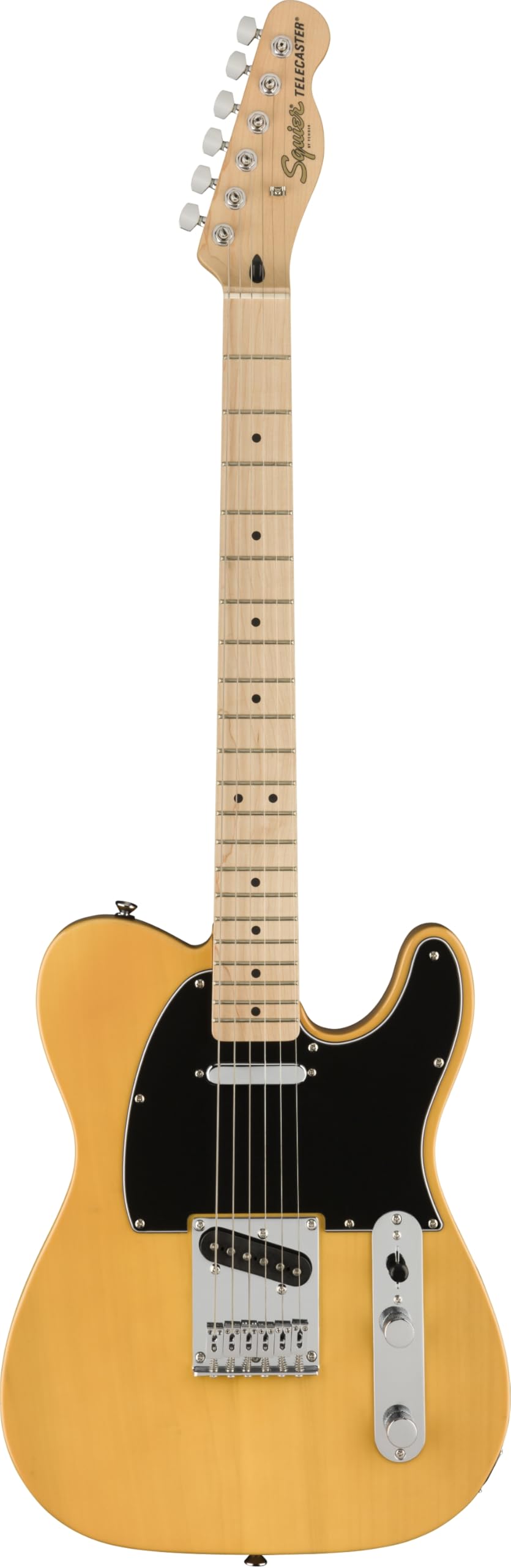
Squier by Fender Affinity Series Telecaster, Electric Guitar, Maple fingerboard, Butterscotch Blonde
The Squier Telecaster is £239.00, making it £39.01 more expensive than the Vangoa at £199.99.
Where Vangoa Electro Acoustic wins
The Vangoa gives you an electro-acoustic 12-string format that the Telecaster cannot match, so it is the better fit for jangly rhythm parts and fuller chord voicings. It is also the lower-cost option by £39.01, which matters if you are buying into a second guitar rather than your main electric. The Vangoa’s 4-band EQ can also be more immediately useful for shaping amplified acoustic tone than a standard electric setup when you are plugging straight into a PA or acoustic amp.
Where Squier by Fender wins
The Squier Telecaster has dual Squier single-coil Tele pickups with 3-way switching, so its pickup configuration is clearly specified and easier to judge than the Vangoa’s unspecified pickup type. It also has sealed die-cast tuning machines and a maple fingerboard, and it is backed by a 4.4/5 rating from 807 reviews. If you want a conventional electric with more documented hardware, the Telecaster is the more transparent buy.
Choose Squier by Fender if: Choose the Telecaster if you need a standard electric guitar with known single-coil pickup behaviour and do not need 12-string acoustic texture.
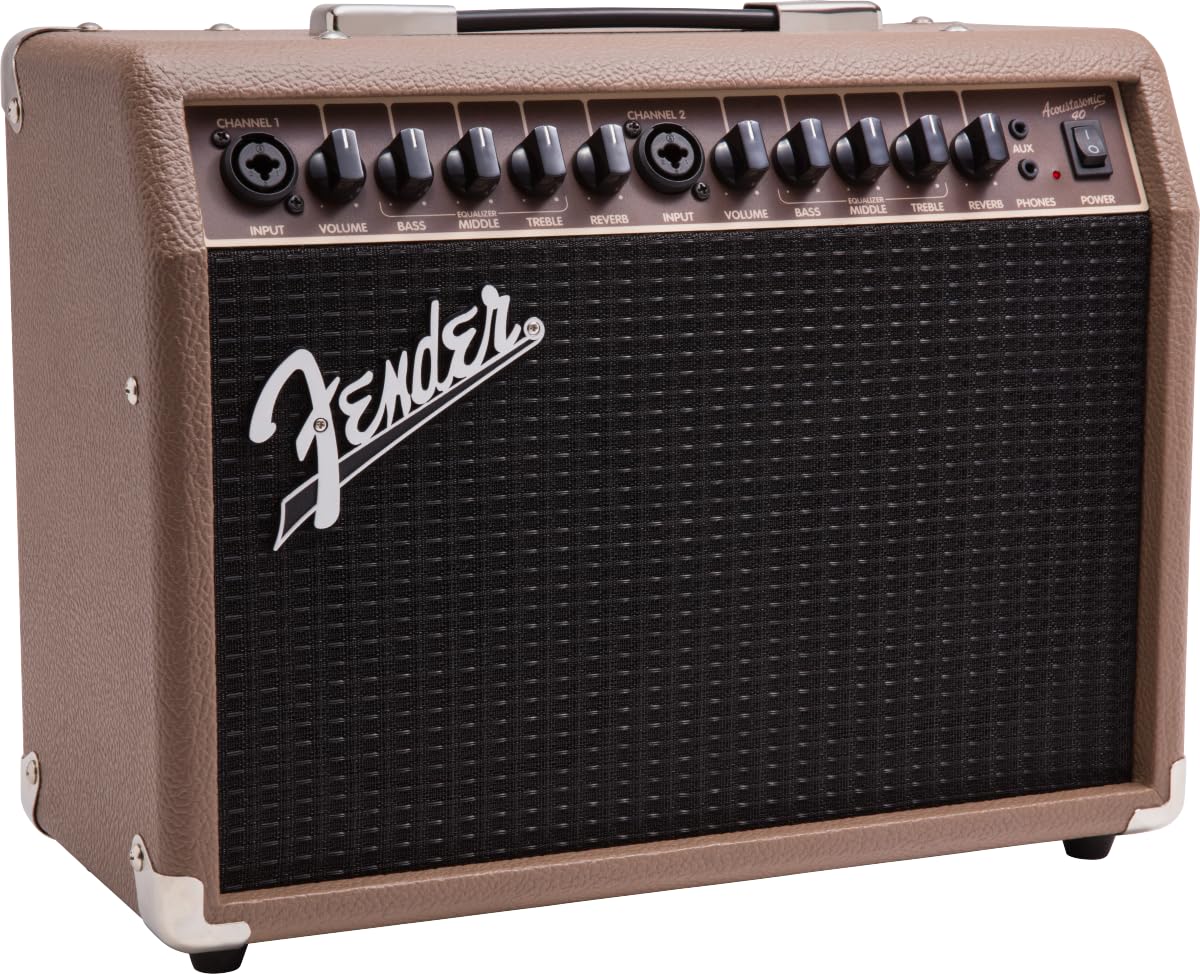
Fender Acoustasonic 40, Combo Guitar Amp, 40W, Suitable For Acoustic, Electric Guitar & Microphone, Brown/Black
The Fender Acoustasonic 40 costs £299.00, which is £99.01 more than the Vangoa at £199.99.
Where Vangoa Electro Acoustic wins
The Vangoa is the instrument itself, so it gives you immediate access to 12-string playing rather than requiring an amp to make sound. It is also much cheaper, with a £99.01 gap that can matter if the guitar purchase is only part of a wider setup budget. For players focused on the actual guitar voice, the Vangoa is the more direct purchase.
Where Fender Acoustasonic 40, wins
The Acoustasonic 40 is a 40W amp with a 6” speaker and a whizzer cone for high-frequency response, plus built-in reverb and XLR and ¼” inputs. That makes it far more suitable for amplified acoustic performance than an unspecified onboard electronics section. Its 4.5/5 rating from 546 reviews also suggests strong confidence in the amp category, especially for players who need microphone support as well as guitar input.
Choose Fender Acoustasonic 40, if: Choose the Acoustasonic 40 if you already own an acoustic-electric and need a dedicated amp with clearer amplification features and mic support.
Long-Term Ownership
Durability
Based on 502 reviews and a steady 4.3/5 rating, this looks like a product with broadly consistent reception rather than a model with obvious widespread failure. The main long-term risk is not catastrophic breakdown but the usual 12-string issues that show up first: tuning drift, setup sensitivity, and wear from the extra string tension, especially since 1-star complaints are likely to focus on tuning stability and setup. The lack of return-rate data means there is no quantified sign of unusually high failure, but the review pattern suggests buyers are most likely to be dissatisfied if the instrument arrives needing adjustment or if they expected premium-level consistency. In practical terms, it should last reasonably well if treated as a carefully maintained budget 12-string rather than a rough gigging workhorse.
Maintenance & Ongoing Costs
Plan for regular tuning checks, string changes that cost more than a six-string set, and periodic setup attention if the neck or action drifts. The listing’s truss rod and closed tuning pegs help, but they do not remove the need for upkeep on a 12-string instrument. Cleaning the matte black finish and keeping an eye on the electronics are also sensible, especially because the pickup type and preamp quality are not specified.
When to Upgrade
Upgrade when tuning becomes a constant fight even after fresh strings and setup work, or if the onboard amplification starts limiting you because the electronics are too basic for your live or recording needs. If you begin relying on the guitar for regular gigs, a better-documented 12-string with clearer pickup and preamp specs would be a worthwhile step up. If your main frustration is setup consistency rather than the 12-string format itself, that is usually the signal to move to a more premium instrument.
Buy this if…
- You want a 12-string acoustic-electric for home practice and are happy to spend time keeping it in tune.
- You need a £199.99 guitar that includes a starter kit and practical setup features rather than paying for a more premium brand name.
- You play rhythm parts that benefit from a fuller, shimmering chord sound and want that straight from one instrument.
- You are moving from six-string to 12-string and want a lower-risk way to learn the format before spending more.
- You plan to plug into basic live or rehearsal amplification and want a 4-band EQ with Bass, Middle, Treble and Pres for quick shaping.
Don't buy this if…
- You want a fully documented pickup and preamp system, because the listing does not specify either.
- You are highly price-sensitive right now, because £199.99 is the highest recorded price and above the £168.74 average.
- You need a guitar that behaves like a low-maintenance six-string, since 12-string tuning and setup demands are inherently higher.
- You are buying primarily for premium build confidence or long-term proven durability, because the available data does not provide detailed fretwork, nut, or return-rate evidence.
Compare This Product
Amp authority or 12-string value: which rig actually fits you?
vs Orange Crush 35RT - Solid State Combo Amp for Electric Guitars
12-String Budget Versus Iconic Tele: Which Guitar Fits You Best?
vs Squier by Fender Classic Vibe '50s Telecaster, Butterscotch Blonde
Fender Acoustasonic 40 vs Vangoa 12-String: which is the smarter buy?
vs Fender Acoustasonic 40, Combo Guitar Amp, 40W, Suitable For Acoustic, Electric Guitar & Microphone, Brown/Black
Telecaster Precision or 12-String Sparkle: Which One Fits You?
vs Squier by Fender Affinity Series Telecaster, Electric Guitar, Maple fingerboard, Butterscotch Blonde
Frequently Asked Questions
Is the Vangoa worth buying in 2026?
Yes, if you want a budget 12-string electro-acoustic with a 4.3/5 rating from 502 reviews and a useful starter kit. At £199.99 it undercuts bigger-name alternatives like the £229.00 Positive Grid Spark 2, £239.00 Squier Telecaster, and £299.00 Fender Acoustasonic 40, but the current price is also the all-time high and above the £168.74 average, so it is better value for the right buyer than it is a bargain.
How stable is the tuning on this 12-string guitar?
The tuning setup should be better than many budget 12-strings because it uses fully closed tuning pegs, includes a digital tuner, and has a truss rod for neck adjustment. Even so, a 12-string always needs more tuning attention than a six-string, so players who want minimal upkeep should expect regular tweaks.
How does this compare to the Squier Affinity Series Telecaster?
The Vangoa is cheaper at £199.99 versus £239.00 for the Squier, and it gives you a 12-string electro-acoustic format rather than a standard electric Telecaster. The Squier has a 4.4★ rating and a more established brand identity, so it may feel safer for electric players, while the Vangoa is the more specific choice if you want acoustic shimmer and a starter bundle.
What are the main complaints about this product?
The main complaints are likely to be about tuning stability, setup sensitivity, and the realities of owning a 12-string rather than six-string frustration. Some complaints may also come from buyers who think £199.99 is too high, since that is above the £168.74 average and matches the highest recorded price.
Is the starter kit actually useful?
Yes, because it includes a bag, tuner, strap, cable, picks, and a one-year warranty, which are all useful items for a first-time buyer. That bundle reduces the hidden cost of getting started, especially if you do not already own accessories.
Love picks like this? Get them weekly.
Join our free newsletter for the best Electric Guitars & Amps recommendations — delivered straight to your inbox every week.
No spam, ever. Unsubscribe anytime.
You might also like

Positive Grid Spark 2 50W Smart Guitar Practice Amp & Bluetooth Speaker with Built-in Looper, AI Features & Smart App for Electric, Acoustic, & Bass Guitar
Read our review →
Squier by Fender Affinity Series Telecaster, Electric Guitar, Maple fingerboard, Butterscotch Blonde
Read our review →
Fender Acoustasonic 40, Combo Guitar Amp, 40W, Suitable For Acoustic, Electric Guitar & Microphone, Brown/Black
Read our review →
More products to consider
Orange Crush 35RT - Solid State Combo Amp for Electric Guitars
£269.00
Vangoa Electro Acoustic Guitar 12 Strings for Beginner Intermediate Adults Teens,41 Inches Cutaway Sapele Body,Upgraded Starter Kit Right Hand Brown Gloss
£209.99
Squier by Fender Classic Vibe '50s Telecaster, Butterscotch Blonde
£354.00

Ibanez Gio GSA60-WNF Walnut Flat - Electric Guitar
£208.00
Curated by Keys & Strings on All The Top Picks · Updated April 2026
As an Amazon Associate we earn from qualifying purchases.