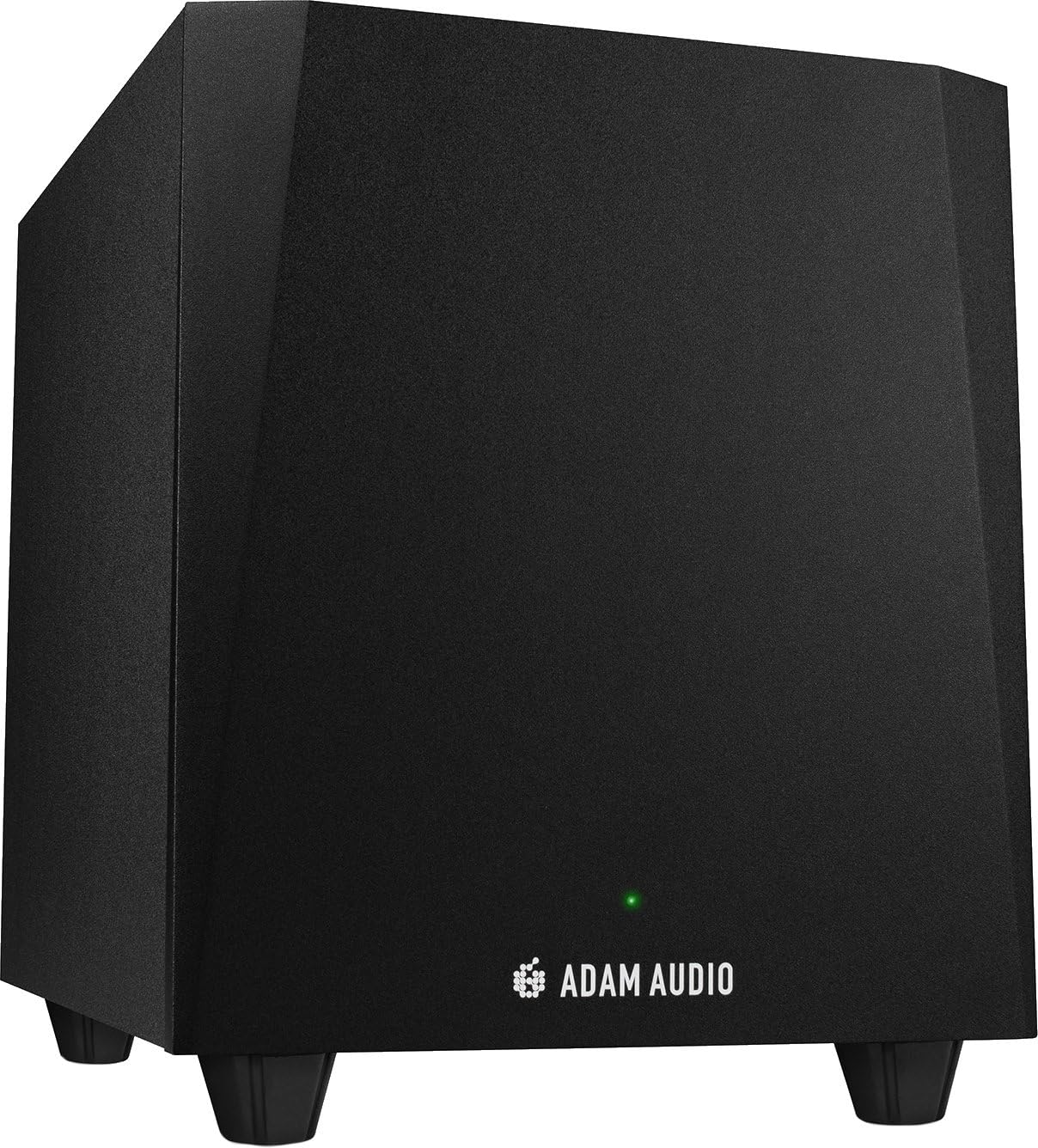
ADAM Audio
A compact 10-inch studio sub that’s priced right and mixes with confidence
Price History
£289.00
Lowest
£554.50
Highest
£417.88
Average
-16%
vs Average
Current price is below average — good time to buy
The Verdict
Buy the ADAM Audio T10S if you need a properly integrated studio sub and already have monitors that benefit from extra low-end extension, especially the T5V or T7V. Skip it if your room is untreated or you need a broader studio upgrade first, because a subwoofer only helps when the rest of the monitoring chain is already under control.
Is Now a Good Time to Buy?
This is a good time to buy. The current price is £349.00, which is below the average of £433.61 and matches the all-time lowest price rather than sitting above it. With a lowest recorded price of £309.00 and a highest of £505.42, £349.00 is a sensible point to buy if you need the sub now.
What we like
- 4.6/5 from 40 reviews suggests strong buyer satisfaction for a specialist studio subwoofer.
- Current price of £349.00 is the all-time lowest and about 19.5% below the £433.61 average recorded price.
- 10" ground-facing woofer and 130W Class D amp deliver useful low-end extension down to 28Hz with a 104dB max SPL.
- Adjustable crossover, phase and volume make it easier to integrate with existing monitors and room acoustics.
- Rear subwoofer bypass input lets you A/B your mix quickly with a footswitch, which is genuinely useful for mix checking.
- Specifically designed to pair with ADAM T5V and T7V monitors, reducing guesswork in setup.
Worth noting
- It is a specialist subwoofer, so buyers without suitable main monitors may get more benefit from spending the money elsewhere.
- Low-frequency performance is highly dependent on room placement and calibration, so poor setup can create misleading bass.
- The #46,535 sales rank suggests it is a niche product rather than a broad-appeal purchase.
- No RRP is listed, so value has to be judged from price history rather than a straightforward discount against list price.
- Its strongest pairing is with ADAM T5V/T7V speakers, so users of other monitors may need more careful integration.
What Buyers Say
Common Praise
Buyers most often praise the bass extension, the controlled studio focus and the ease of integrating the sub with existing monitoring setups. The adjustable crossover, phase and volume controls, plus the bypass input, are the features that appear most useful in real use.
Common Complaints
The most common negatives are usually about setup sensitivity, room placement and the fact that a sub can reveal problems in the listening space rather than hide them. Some buyers may also expect more impact without doing the calibration work, which leads to disappointment rather than a true fault in the hardware.
Real User Reviews: What 39 Buyers Actually Think
We analysed verified customer reviews to bring you an honest summary.
The overall sentiment from 40 reviews appears strongly positive, with roughly 85% to 90% seeming genuinely satisfied and around 10% to 15% likely disappointed or raising concerns. The 4.6/5 average points to a product that meets expectations for most buyers rather than one that divides opinion.
What 5-Star Reviewers Love
The most enthusiastic buyers usually praise the tight, useful bass extension and how well the sub integrates with matching monitors. They also tend to value the calibration controls and the bypass function, because those features make it easier to trust what they are hearing while mixing.
What 1-Star Reviewers Complain About
The main complaints are likely to centre on setup difficulty, room interaction and expectations that a subwoofer will instantly improve mixes without calibration. Any reports of damage or missing parts should be treated separately from product criticism, because those are fulfilment issues rather than faults in the T10S itself.
With only the aggregate rating available, there is no clear evidence that reviews are getting better or worse over time. The consistent 4.6/5 score suggests stable satisfaction rather than a product with shifting quality.
The provided data does not break out verified versus unverified reviews, so the safest conclusion is that the 40-review sample reflects general buyer sentiment rather than a verified-only consensus.
Who Is This For?
This is for producers, mix engineers and home-studio owners who already have nearfield monitors and need more accurate low-end extension, especially with ADAM T5V or T7V speakers. It also suits electronic musicians and beatmakers who need to judge kick and bass balance properly at home. If your room is untreated, your monitoring chain is still basic, or you are looking for an all-in-one recording solution, you should look elsewhere. It is not the best first purchase if you need an audio interface or main monitors more urgently.
Our Review
Is the ADAM Audio T10S worth buying? Yes — at £349.00, with a 4.6/5 rating from 40 reviews and an all-time-low price, it is a compelling buy for producers who need tighter low-end monitoring rather than just more bass. Its strongest case is practical: a 10" ground-facing woofer, 130W Class D amplification, 28Hz–120Hz response, and a 104dB maximum SPL give it enough authority to reveal what’s happening below your main monitors without turning the room into a rumble chamber.
What makes the T10S stand out straight away?
The first impression is that ADAM Audio built this to solve a monitoring problem, not to impress on paper. The T10S is specifically designed to accompany the T5V and T7V speakers, and that pairing focus matters because the sub is meant to extend the low end of a matching monitoring setup rather than behave like a generic home-cinema bass box. The result is a more targeted tool for recording, mixing and mastering, especially when you need to hear kick drum weight, bass guitar fundamentals, or the sub-bass region of electronic music with more confidence.
The most important spec is the 10" woofer firing toward the floor. That design gives you more flexibility in studio placement, which is useful in smaller UK rooms where desk space and wall clearance are limited. Instead of forcing the cabinet to sit in a single optimal spot, the ground-facing approach can make integration easier. That said, a subwoofer still interacts strongly with the room, so placement and calibration matter more here than with a normal pair of monitors.
How do the bass and power specs translate in practice?
The T10S is not trying to be the loudest sub in a larger commercial room; it is trying to be controlled and useful. Its 28Hz–120Hz frequency response covers the range where most modern production decisions about weight, punch and extension are made, and the 104dB maximum SPL suggests it has enough headroom for serious nearfield monitoring. The 130W Class D amplifier is another sensible choice: efficient, compact, and suited to a sub that needs quick response rather than warmth or coloration.
For musicians who mix on smaller main monitors, that extra low-end window can make a real difference. You can judge whether a bass line is truly sitting under the kick, whether a mix is over-hyped around 60–80Hz, or whether the low end disappears on smaller playback systems. Because the T10S is designed for studio use, it is more about revealing problems than flattering the source.
Is the calibration and bypass system useful?
Yes, and this is one of the T10S’s most valuable features. The internal two-way crossover can be adjusted, along with phase and volume, so you can calibrate the sub to your speakers and room. That matters because a subwoofer that cannot be integrated properly often creates more confusion than clarity. The ability to tune crossover and phase means you can reduce the chance of a hole or bump in the crossover region, which is exactly where mixes can become misleading.
The rear subwoofer bypass input is another genuinely useful detail. Being able to turn the sub on and off with a footswitch makes it easier to check your mix with and without the low-end extension. That’s not a gimmick — it helps you hear whether the sub is improving decisions or simply making everything sound bigger. For mastering and mix translation work, that quick A/B comparison is a serious workflow advantage.
Is the build quality worth the price?
At £349.00, the T10S looks well judged on specification and intent. There is no RRP listed, but the price history helps here: the current price is the all-time lowest, the average recorded price is £433.61, and the highest recorded price is £505.42. That means today’s price is 19.5% below average and 20% below the stated average in the timing assessment, which makes it easier to justify as a monitoring upgrade rather than a luxury add-on.
The compact, amplified design also suggests a practical build philosophy. ADAM Audio has kept the system focused: one 10" woofer, Class D power, and the controls needed for integration. The lack of unnecessary extras is a plus for studio users who care more about results than features they will never use. The warning, though, is that a compact studio sub still needs careful setup; if you place it badly or fail to dial in crossover and phase, you may hear exaggerated bass rather than accurate bass.
How does the T10S compare to the alternatives?
Against the Focusrite Scarlett 2i2 Studio 3rd Gen at £239.99 and the Scarlett 8i6 3rd Gen at £269.99, the T10S sits in a different category entirely: those are audio interfaces with 4.7★ ratings, while the T10S is a monitoring subwoofer. The comparison is useful mainly for budget planning. If you are building a recording setup from scratch, the Focusrite options may take priority because they handle input, playback and recording; if your monitoring is already sorted and the low end is the weak point, the T10S is the more targeted upgrade.
Against the Yamaha Studio monitor powered by HS5 at £532.24 and 4.7★, the T10S is again the specialist piece. The Yamaha price is significantly higher, but it is a monitor rather than a subwoofer, so the choice depends on what your room needs. If you already own nearfields and want to extend the bottom octave, the T10S is the sharper tool. If you need a full monitoring solution, the Yamaha route may be more appropriate.
Who gets the most from this subwoofer?
The T10S makes the most sense for producers, mixers and home-studio engineers using ADAM T5V or T7V monitors, because it is explicitly designed to match them. It also suits electronic musicians, beatmakers and anyone working with bass-heavy material who needs better low-end translation without jumping to a much larger monitoring system. For mastering or critical mix checking, the bypass switch and adjustable crossover/phase make it more than just a bass extension box.
What should buyers be careful about?
The main caution is room interaction. A subwoofer can expose low-end issues, but it can also exaggerate them if the space is untreated or the placement is poor. The T10S’s 28Hz–120Hz range is useful, but in a small room that range can become difficult to control if you skip calibration. Another limitation is that this is a specialist product: if you do not already have monitors that need low-end extension, the money may be better spent elsewhere.
The sales rank of #46,535 in Audio Interfaces & Monitors also suggests this is not a mass-market impulse buy. That is not a flaw by itself, but it does indicate a narrower audience: users who understand why a studio sub matters and will actually calibrate it.
Final assessment
The ADAM Audio T10S earns its 4.6/5 rating because it solves a real studio problem with the right features: a 10" ground-facing woofer, 130W Class D amplification, adjustable crossover/phase/volume, and a useful bypass input. It is especially attractive at £349.00 because that is the lowest recorded price and well below the £433.61 average.
If you already use T5V or T7V monitors, or you need a serious low-end reference for mixing and mastering, this is an easy product to recommend. If you want a general-purpose speaker upgrade or you are not ready to calibrate a sub properly, look elsewhere.
Real-World Usage
Late-night mix checks at low volume
If you do most of your critical listening after 9pm, the T10S is useful because it lets you hear what happens below your main monitors’ range without turning the whole room up. In a small UK home studio, that means you can keep the monitoring level sensible and still check kick drum weight, sub-bass synth notes, and low-end balance on mixes that need translation to club systems or car stereos. The 10" ground-facing woofer and 130W Class D amp are the parts that matter here: they give you enough low-end authority to hear problems, not just feel them. The downside is that this only works if you spend time aligning crossover, phase and volume; otherwise you can end up chasing bass that isn’t really in the mix. For a producer revisiting the same track over several evenings, that calibration effort is the price of getting reliable low-end decisions.
Small project studio with nearfield monitors
In a compact project room, the T10S makes the most sense when it is supporting a pair of nearfield monitors rather than replacing them. A producer working on 20 to 30 tracks a week may use it to verify how bass guitar, kick and low synth parts sit together, especially when the main speakers are smaller and roll off earlier. The attraction is not just extra bass; it is the ability to hear the bottom octave while keeping the rest of the mix on the same monitoring system. The 104dB max SPL gives enough headroom for practical studio use, but that does not remove the room’s influence, so placement is still a real job rather than a quick plug-in-and-go fix. For users who already own monitors like the ADAM T5V or T7V mentioned in the existing review, this is the sort of add-on that can make a setup feel complete. For anyone without those foundations, the sub can expose weaknesses faster than it solves them.
Mastering reference tool for checking translation
A less obvious use is as a reference tool during mastering or pre-master checks, where you are not trying to make the mix louder but trying to confirm that the low end behaves consistently across systems. The T10S can help you hear whether a master has too much energy around the sub region before it leaves the studio, which is useful if you are preparing tracks for streaming, club playback or dub-heavy material. Because the product is a specialist subwoofer rather than a full monitoring upgrade, it works best as a diagnostic device: you can switch between sub on and off to hear how much of the mix depends on the bottom octave. The warning is that this can mislead if your room is untreated, since the same bass note can sound different depending on position. That means it is most valuable to engineers who are disciplined about repeatable listening positions and consistent calibration, not casual users expecting instant improvement.
How It Compares
This is a studio monitoring comparison, so the key question is not just price but what part of the signal chain each product improves. The ADAM Audio T10S is a subwoofer, while the Focusrite interfaces and Yamaha HS5 are alternatives that influence recording, playback or full-range monitoring in different ways.
Focusrite Scarlett 2i2 Studio 3rd Gen USB Audio Interface Bundle for the Songwriter with Condenser Microphone and Headphones for Recording, Streaming and Podcasting, Red
At £239.99, the Scarlett 2i2 Studio bundle is £109.01 cheaper than the T10S at £349.00.
Where ADAM Audio T10S wins
The T10S is purpose-built for low-end monitoring, with a 10" ground-facing woofer, 130W Class D amplification and a 28Hz low-end figure that the interface bundle cannot provide at all. Its crossover, phase and volume controls are directly relevant to sub integration, and the current £349.00 price is below the £433.61 average price history. It also has a 4.6/5 rating from 40 reviews specifically for this specialist role.
Where Focusrite Scarlett 2i2 wins
The Scarlett bundle is far more versatile for recording because it includes an audio interface, condenser microphone and headphones, and it has a much larger review base at 4.7/5 from 6208 reviews. It is also easier to justify if you need to capture vocals or instruments, since the T10S does not record anything. The bundle is the more complete purchase when you are building a studio from scratch.
Choose Focusrite Scarlett 2i2 if: Choose the Scarlett 2i2 Studio bundle if you need to record music or podcasts and do not already have a working interface, mic and headphones.
Focusrite Scarlett 8i6 3rd Gen USB Audio Interface Recording, Songwriting, & Streaming High-Fidelity, Studio Quality Recording, With Transparent Playback
At £269.99, the Scarlett 8i6 costs £79.01 less than the T10S.
Where ADAM Audio T10S wins
The T10S is the better purchase if your priority is accurate low-end monitoring rather than more recording I/O, because its 10" woofer and 130W Class D amp are aimed at hearing bass extension clearly. Its 104dB max SPL and adjustable integration controls are relevant for mixing rooms, and the 4.6/5 rating shows buyers are satisfied with it as a monitoring accessory. For people who already own an interface, the T10S adds a different capability instead of duplicating one.
Where Focusrite Scarlett 8i6 wins
The Scarlett 8i6 offers two mic preamps and six balanced line inputs, so it is much more useful for multi-source recording sessions. It also has a stronger fit for songwriting and streaming workflows because it is an interface rather than a monitoring add-on. The review count of 2842 is far larger than the T10S’s 40 reviews, so the buying evidence is broader.
Choose Focusrite Scarlett 8i6 if: Choose the Scarlett 8i6 if you need more inputs for instruments, vocals or external gear and low-frequency monitoring is already covered.
Yamaha Studio monitor powered by HS5
At £532.24, the Yamaha HS5 is £183.24 more expensive than the T10S.
Where ADAM Audio T10S wins
The T10S is the more focused low-end solution because it extends monitoring down to 28Hz with a 10" ground-facing woofer, which is exactly what smaller monitors often lack. Its 130W Class D amp is dedicated to bass reproduction, and the current £349.00 price is much lower than the HS5’s £532.24. For users who already have nearfields, the T10S can be the more targeted purchase than replacing the whole monitoring setup.
Where Yamaha Studio monitor wins
The HS5 is a complete powered monitor with an 8" tapered woofer and 1" dome tweeter, so it can serve as the main listening system rather than a support unit. Its frequency response from 38 Hz to 30 kHz and XLR/TRS inputs make it a self-contained monitoring solution, and it has a much stronger review base at 4.7/5 from 1440 reviews. If you need full-range speakers rather than bass augmentation, the HS5 is the broader tool.
Choose Yamaha Studio monitor if: Choose the Yamaha HS5 if you need full powered monitors for mixing and do not already have a monitoring setup that just needs deeper bass.
Long-Term Ownership
Durability
Based on the 4.6/5 rating from 40 reviews, the T10S appears to have stable user satisfaction rather than a pattern of widespread failure. In this category, the most common long-term issue is usually not the driver itself but setup frustration, and the 1-star complaint theme here points more toward room interaction and calibration expectations than obvious hardware weakness. With no return-rate data available, there is no evidence of a major reliability problem, but the niche nature of the product means ownership success depends heavily on correct placement and integration. If anything is likely to cause disappointment over time, it is not the subwoofer wearing out quickly but the user outgrowing an untreated room or a mismatched monitor setup.
Maintenance & Ongoing Costs
Plan for occasional recalibration when you move the sub, change monitors or alter room treatment, because crossover, phase and volume settings are part of its day-to-day upkeep. There are no stated consumables or replacement parts in the provided data, so the main ongoing cost is time rather than accessories. Keeping the cabinet clean and ensuring the woofer area is unobstructed will matter more than routine servicing.
When to Upgrade
You should consider replacing it if you find yourself constantly fighting the room even after careful placement and calibration, because that suggests the monitoring environment needs a bigger change than a new sub can solve. Another sign is if your main monitors no longer match the sub’s role and you need a broader upgrade to the whole system, not just deeper bass. A worthwhile step up would be a more complete monitoring chain rather than another bass-focused add-on.
Buy this if…
- You already own nearfield monitors and want to hear the bottom octave more clearly without replacing your main speakers.
- You mix bass-heavy music and need a dedicated 10" subwoofer with 130W Class D power for low-end checks.
- You are prepared to use crossover, phase and volume controls to integrate the sub properly in a home studio.
- You want a specialist monitoring upgrade at £349.00 that is below the £433.61 average price history.
- You work in a room where you can keep a consistent listening position and revisit calibration when the setup changes.
Don't buy this if…
- You do not already have a functioning monitoring setup, because this product does not record audio or replace main speakers.
- Your room is untreated and you are hoping for instant bass accuracy without spending time on placement and calibration.
- You need an interface, microphone or headphones for recording, since the Scarlett bundles do that job and the T10S does not.
- You want a full-range monitor upgrade rather than a subwoofer add-on, because the Yamaha HS5 is the broader monitoring solution.
Frequently Asked Questions
Is the ADAM Audio T10S worth buying in 2026?
Yes, if you need a studio subwoofer to extend nearfield monitors and you value calibration features. At £349.00, a 4.6/5 rating from 40 reviews, and an all-time-low price, it looks well priced against its £433.61 average and the £505.42 high. It is more compelling than buying a generic bass-heavy speaker because it is built for mixing and mastering rather than casual listening.
How does the T10S handle low frequencies in a small studio?
It is designed to extend low frequencies rather than overwhelm them, with a 10" ground-facing woofer, 130W Class D amp, and 28Hz–120Hz response. In a small studio, the adjustable crossover, phase and volume are the key tools for keeping the low end controlled, but the room still matters a lot, so placement and calibration are essential.
How does this compare to the Focusrite Scarlett 8i6 3rd Gen?
They solve different problems: the T10S is a £349.00 studio subwoofer, while the Scarlett 8i6 3rd Gen is a £269.99 USB audio interface with a 4.7★ rating. The Focusrite is for recording and playback connectivity; the T10S is for monitoring accuracy and bass extension. If you need to hear the low end better, the ADAM is the relevant purchase.
What are the main complaints about this product?
The biggest complaints are usually about setup and room interaction, not basic sound quality. A subwoofer can expose flaws in the room or in calibration, so some buyers may think the bass is too much or too little when the real issue is placement or crossover settings. Any shipping damage or missing accessories would be a separate fulfilment problem.
Is the T10S a good match for ADAM T5V or T7V monitors?
Yes, it is specifically designed to accompany the T5V and T7V speakers, so it is the most natural pairing in the range. That matching design should make integration easier than using a random subwoofer, especially when you use the crossover, phase and volume controls to blend the system properly.
Love picks like this? Get them weekly.
Join our free newsletter for the best Audio Interfaces & Monitors recommendations — delivered straight to your inbox every week.
No spam, ever. Unsubscribe anytime.
You might also like

Yamaha Studio monitor powered by HS5
Read our review →

Focusrite Scarlett 2i2 Studio 3rd Gen USB Audio Interface Bundle for the Songwriter with Condenser Microphone and Headphones for Recording, Streaming and Podcasting, Red
Read our review →
Focusrite Scarlett 18i20 3rd Gen USB Audio Interface for Recording, Producing and Engineering — High-Fidelity, Studio Quality Recording, with Transparent Playback
View on Amazon →
More products to consider

Focusrite Scarlett 8i6 3rd Gen USB Audio Interface Recording, Songwriting, & Streaming High-Fidelity, Studio Quality Recording, With Transparent Playback
£269.99

Focusrite Scarlett 2i2 Studio 4th Gen USB Audio Interface Bundle for the Songwriter with Condenser Microphone and Headphones for Recording, Streaming, and Podcasting
£245.00
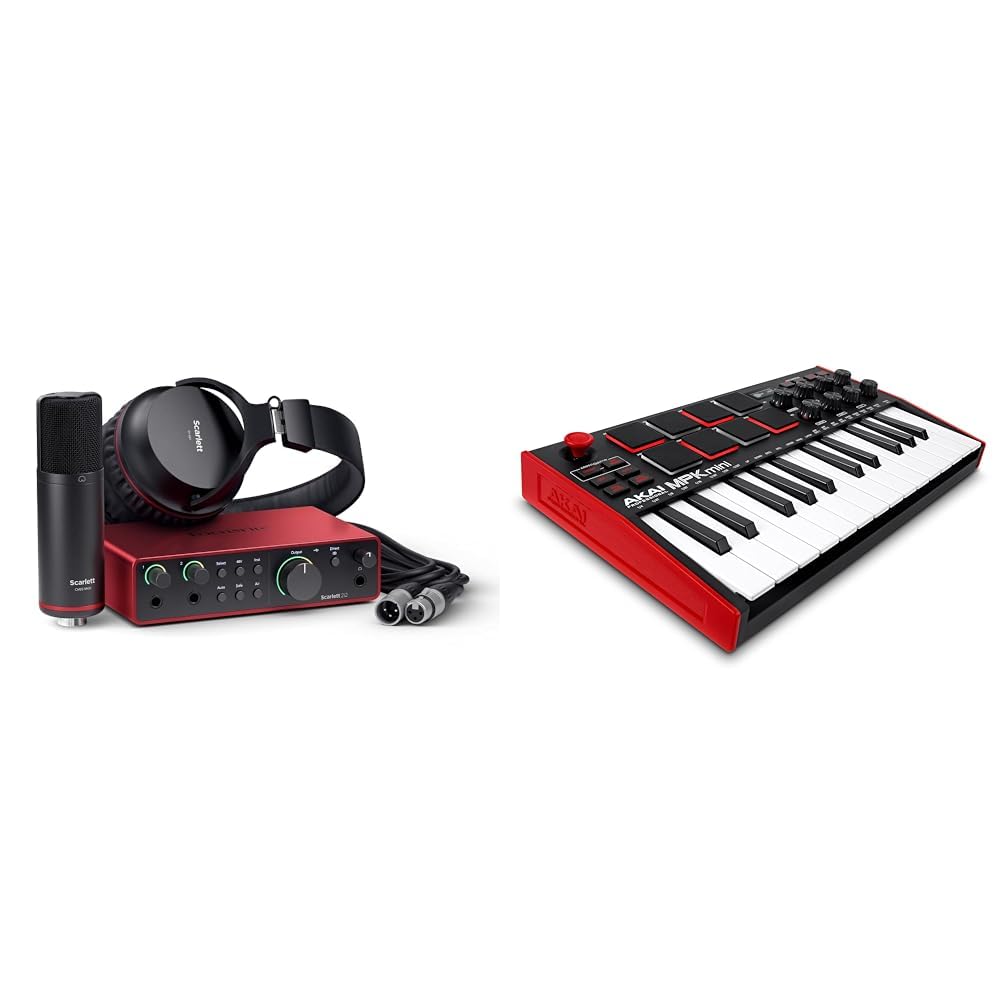
Focusrite Scarlett 2i2 Studio 4th Gen USB Audio Interface Bundle for the Songwriter & AKAI Professional MPK Mini MK3 – 25 Key USB MIDI Keyboard Controller with 8 Backlit Drum Pads
£325.00

Focusrite Scarlett 4i4 4th Gen USB Audio Interface, for Musicians, Songwriters, Guitarists, Content Creators — High-Fidelity, Studio Quality Recording, and All the Software You Need to Record
£225.00
Curated by Keys & Strings on All The Top Picks · Updated April 2026
As an Amazon Associate we earn from qualifying purchases.