Best Welders & Plasma Cutters to Buy in 2026: A Practical Guide for First-Time Buyers
Choosing a welder or plasma cutter can feel overwhelming if you’re new to the category. The right machine depends on what you want to weld or cut, how thick the material is, what power supply you have, and whether you need portability or advanced control. In this guide, we’ll break down the key buying factors, common mistakes to avoid, and which of the reviewed machines makes the most sense for different budgets and jobs. By the end, you’ll know exactly what to look for before spending your money.
Top Picks
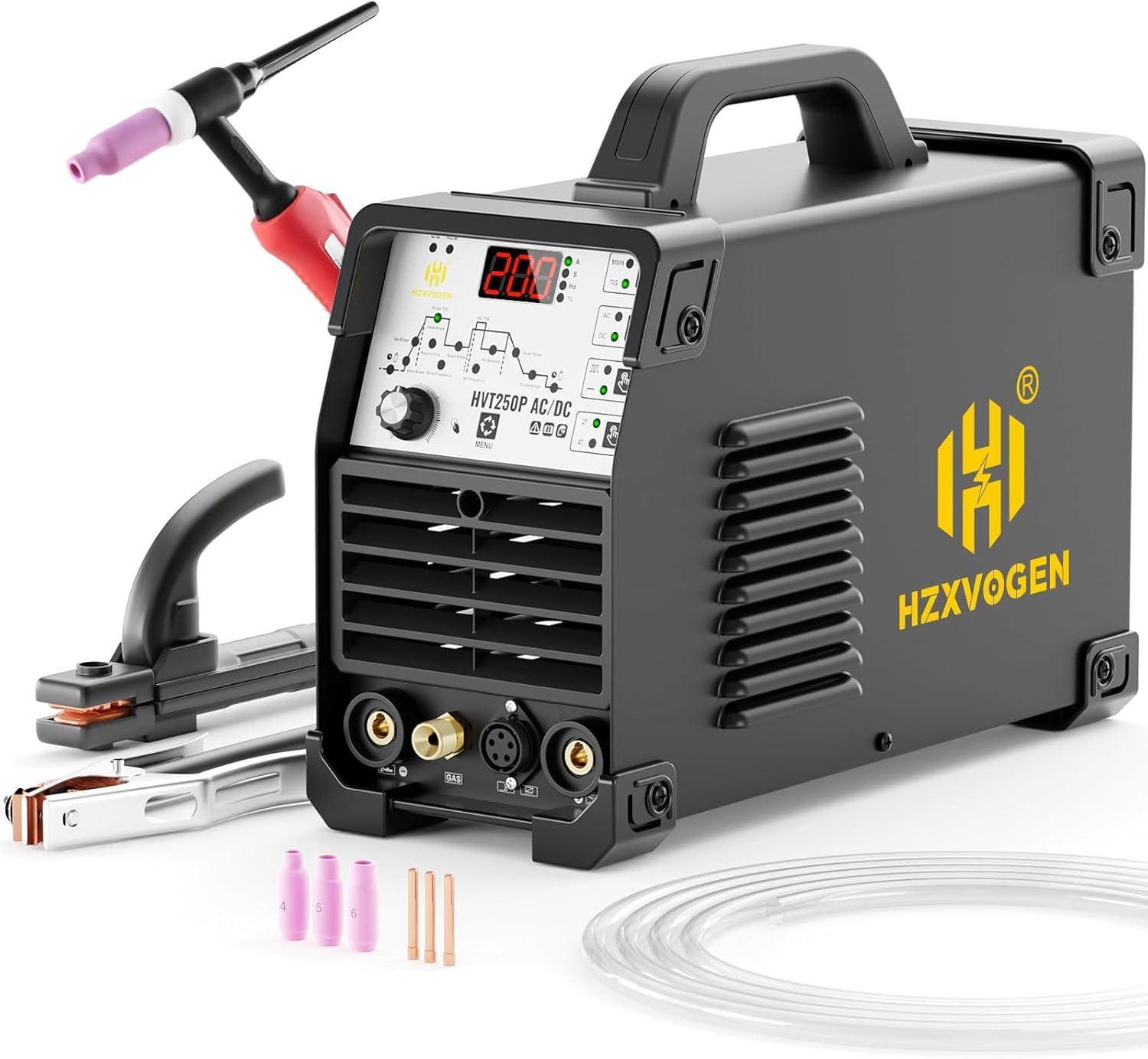
H HZXVOGEN TIG Welder AC/DC 200A with Pulse, 240V 6-in-1 MultiProcess Aluminum TIG Welding Machine with Square Wave/Stick/2T/4T Welder Machine, Digital IGBT Inverter HF TIG Welder, HVT250P
This is the most versatile machine in the lineup, with AC/DC TIG for aluminium, pulse, square wave, stick mode, and 2T/4T control. It’s the strongest choice if you want one welder that can handle the widest range of jobs.

200AMP TIG & MMA/ARC/Stick 2 in 1 DC Inverter Welder Welding Machine with HF ARC Start, Digital Control, HIGH Duty Cycle 60% + Accessories
At £219.99, it offers a very practical mix of features: DC TIG and stick welding, HF start, digital control, and a 60% duty cycle. It’s the best entry point for steel welding without overspending.
H HZXVOGEN TIG Welder AC/DC 200A with Pulse, 240V 6-in-1 MultiProcess Aluminum TIG Welding Machine with Square Wave/Stick/2T/4T Welder Machine, Digital IGBT Inverter HF TIG Welder, HVT250P
Its feature set is the most complete and refined, making it the best choice for users who want serious aluminium capability and more advanced TIG control. The price is higher, but so is the flexibility.
If you’re buying your first welder or plasma cutter, start with the job, not the brand. A machine that’s perfect for thin car panels may be a poor choice for fabrication work, while a powerful AC/DC TIG welder may be overkill if you only need basic stick repairs. The reviewed products here cover the main entry-to-midrange categories: DC TIG/MMA units, AC/DC TIG machines for aluminium, and a plasma cutter with built-in compressor. That makes them a useful snapshot of what buyers in the UK typically need for home workshops, mobile repair work, and light professional use.
1) Process type: match the machine to the metal and the job
TIG welding gives the cleanest, most precise finish and is ideal for stainless steel, mild steel, and aluminium if you choose an AC/DC model. DC TIG machines, like the 200AMP TIG & MMA/ARC/Stick 2 in 1 DC Inverter Welder (£219.99) and the AZZUNO 200A TIG Welder (£288.62), are excellent for steel and general-purpose fabrication, but they won’t weld aluminium properly without AC capability. If aluminium is on the menu, you want AC/DC TIG, such as the H HZXVOGEN TIG Welder AC/DC 200A (£399.99) or the HITBOX 200A Aluminium TIG Welder AC/DC (£299.99). For cutting sheet metal, brackets, or rusty panels, a plasma cutter like the Cut 40 Inverter Plasma Cutter with inbuilt air compressor (£259.99) is the right tool.
2) Power output and duty cycle: don’t buy on amps alone
Amps matter, but duty cycle matters just as much. A 200A label looks impressive, but if the machine can’t sustain output for long, you’ll spend more time waiting than welding. The 200AMP TIG & MMA/ARC/Stick 2 in 1 DC Inverter Welder stands out for its 60% duty cycle, which is strong for the price and suggests it can handle longer runs before overheating. For most DIY and light workshop work, 160A to 200A is enough, but the real question is whether the machine can hold that output at a practical duty cycle. If you’re doing longer beads, thicker sections, or more frequent use, a machine with better thermal performance and a higher-duty design is worth paying for.
3) AC/DC, pulse, and waveform control: useful features, but only if you need them
Advanced TIG features can make a big difference on tricky materials. AC/DC capability is essential for aluminium because AC helps break through the oxide layer. Pulse control can reduce heat input, which is useful on thin stainless, automotive work, and delicate joints. Square wave output, found on the H HZXVOGEN and HITBOX AC/DC models, generally gives a more stable arc and better control than basic AC. The H HZXVOGEN also adds 2T/4T operation, which is handy for longer welds and less trigger fatigue. If you’re a beginner working mainly on steel, you may not need all these features immediately, but they become valuable as your skill and project complexity grow.
4) Ease of use: display, controls, and arc start
A welder that’s hard to set up can turn a simple job into a frustrating one. Digital controls and clear displays help new users dial in settings more confidently. HF start is especially useful because it starts the arc without touching the tungsten to the workpiece, which reduces contamination and improves consistency. The 200AMP TIG & MMA/ARC/Stick machine includes HF arc start and digital control at a very accessible price, which is a big plus for beginners. The AZZUNO 200A also has a large LED display and multiple modes, which may suit users who want more visibility and flexibility. For plasma cutting, a non-touch pilot arc is valuable because it makes starting easier on painted, rusty, or uneven surfaces.
5) Portability, power supply, and workshop practicality
Think about where you’ll actually use the machine. If you’re moving between jobs or working in a small garage, weight and input power matter. Dual-voltage machines are especially useful because they can run from 110V or 220V supplies, making them more flexible in different work environments. The AZZUNO 200A supports 110V and 220V, which is a strong convenience feature. For plasma cutters, built-in compressors reduce the need for a separate air supply, making the Cut 40 a more compact all-in-one option. Also check the outlets and accessories included: a machine that arrives ready to work can save you money on torches, earth clamps, regulators, and consumables.
Common mistakes to avoid
The biggest mistake is buying too much machine for too little task. If you only need to repair gates, brackets, and mild steel fabrications, a basic DC TIG/MMA unit may be all you need. Another common error is ignoring aluminium requirements: DC TIG alone will not give you proper aluminium capability. Buyers also often focus on peak amps and ignore duty cycle, which leads to disappointment in real use. A further mistake is overlooking power supply compatibility; a machine may be advertised as 200A, but your socket, extension lead, or breaker may not support prolonged high-load use. Finally, don’t forget consumables and setup costs. TIG needs tungsten, filler rods, gas, and a proper regulator; plasma cutting needs air quality and consumables, even on machines with built-in compressors.
Price tiers: what to expect
Budget tier: around £200–£260
At this level, you should expect a capable entry-level machine with solid basics, but fewer advanced features. The 200AMP TIG & MMA/ARC/Stick 2 in 1 DC Inverter Welder at £219.99 is a strong budget pick because it combines TIG and stick welding, includes HF start, and offers a 60% duty cycle. The Cut 40 Plasma Cutter at £259.99 also sits near this range and is attractive if cutting is your priority. Budget buyers should look for simple controls, decent duty cycle, and enough output for hobby and light fabrication work.
Mid tier: around £260–£330
This is the sweet spot for many serious DIY users. Here you’ll find more features, better control, and broader process support. The HITBOX 200A Aluminium TIG Welder AC/DC at £299.99 is a good example: it adds AC/DC capability, pulse, and square wave, making it much more versatile than a basic DC machine. The AZZUNO 200A TIG Welder at £288.62 is another strong mid-tier option if you want pulse, cold, spot TIG, stick, and dual-voltage flexibility. In this tier, expect better displays, more welding modes, and improved suitability for mixed-material work.
Premium tier: around £330+
Premium in this group means more process flexibility, better aluminium performance, and more refined control. The H HZXVOGEN TIG Welder AC/DC 200A at £399.99 is the clearest premium pick here. Its 6-in-1 multi-process design, AC/DC support, pulse, square wave, and 2T/4T operation make it the most feature-rich option in the reviewed list. Premium buyers should expect stronger versatility, easier fine-tuning, and better long-term usefulness if they plan to tackle a wider range of projects.
Top picks by category
Best overall: H HZXVOGEN TIG Welder AC/DC 200A (£399.99)
This is the most complete machine in the lineup. It combines AC/DC TIG, pulse, square wave, stick capability, and 2T/4T control, which makes it the best all-rounder for users who want one welder that can grow with them.
Best value: 200AMP TIG & MMA/ARC/Stick 2 in 1 DC Inverter Welder (£219.99)
For the money, this is hard to beat. The 60% duty cycle, HF start, digital control, and included accessories make it a smart first buy for steel work, repairs, and general workshop use.
Best premium: H HZXVOGEN TIG Welder AC/DC 200A (£399.99)
It’s the most expensive option here, but also the most capable. If you want aluminium support, advanced control, and a machine that’s suitable for more serious TIG work, this is the standout premium choice.
Best for aluminium: HITBOX 200A Aluminium TIG Welder AC/DC (£299.99)
If aluminium is a priority and you don’t need the full feature stack of the H HZXVOGEN, the HITBOX offers a strong middle-ground with AC/DC, pulse, and square wave at a lower price.
Best for cutting: Cut 40 Inverter Plasma Cutter w/ inbuilt air compressor (£259.99)
This is the easiest way to get into plasma cutting without adding a separate compressor. The non-touch pilot arc makes it more practical for real-world cutting jobs on less-than-perfect metal.
In short, choose DC TIG/MMA if you mostly weld steel, AC/DC TIG if aluminium matters, and plasma if your main job is cutting. Focus on process type, duty cycle, power supply, and control features, and you’ll avoid most expensive mistakes.
Frequently Asked Questions
What’s the difference between TIG, MMA/ARC, and plasma cutting?
TIG is the most precise welding process and is ideal for clean, high-quality welds on steel and aluminium. MMA/ARC, also called stick welding, is simpler and better for outdoor or rougher work. Plasma cutting doesn’t weld at all; it uses an electrical arc and compressed air to cut metal quickly and accurately.
Do I need AC/DC TIG for aluminium?
Yes, if you want to weld aluminium properly, AC/DC TIG is the correct choice. DC TIG is suitable for steel and stainless steel, but aluminium needs AC to help clean the oxide layer during welding. If aluminium is even a possibility, it’s worth paying for AC/DC capability.
Is a higher amp rating always better?
Not necessarily. A 200A machine sounds powerful, but what matters is whether it can deliver that output for long enough, which is where duty cycle comes in. For most home and light workshop jobs, a well-designed 160A–200A machine with good control and a solid duty cycle is more useful than a bigger number on the box.
Love picks like this?
Get weekly product recommendations straight to your inbox.
Curated by Off Grid Power on All The Top Picks
As an Amazon Associate we earn from qualifying purchases.