HS5 precision or iLoud portability: which monitor fits your studio?
If you’re deciding between the Yamaha HS5 and the IK Multimedia iLoud Micro Monitor, you’re really choosing between two very different monitoring philosophies. The HS5 is a classic nearfield studio monitor built for accurate mixing in a treated room, while the iLoud Micro Monitor is a compact, desk-friendly system aimed at creators who need serious sound from a tiny footprint. Both are well-reviewed, but they suit different spaces, budgets, and working styles. This comparison will help you decide which one is the better buy for your setup.

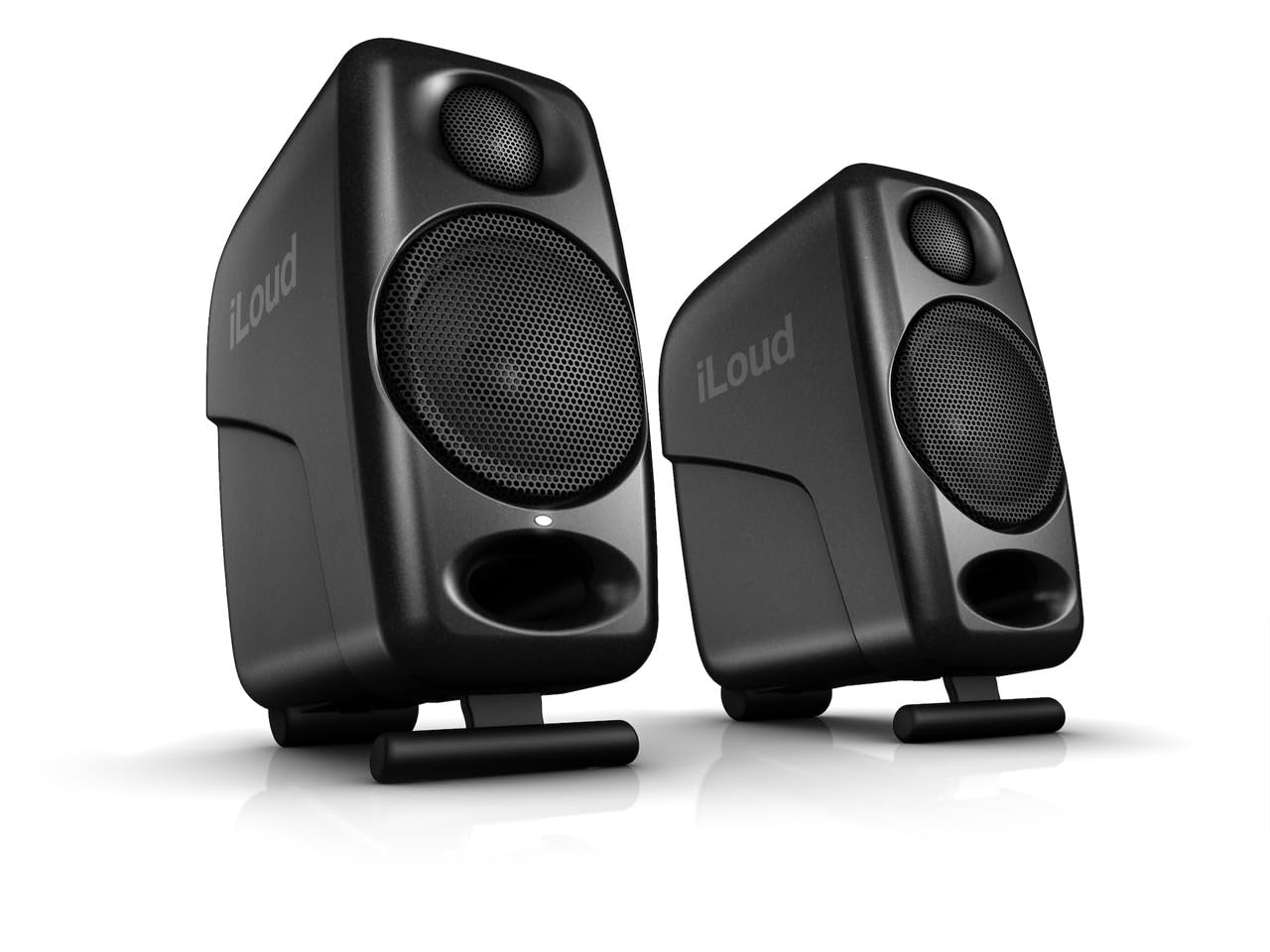
IK Multimedia iLoud Micro Monitor Speaker, Black
Our Recommendation
The Yamaha HS5 is the definitive winner for most musicians who want a proper studio reference monitor. Its larger 5-inch driver, stronger mix translation, and proven 4.7/5 rating make it the better tool for critical listening and production decisions. The IK Multimedia iLoud Micro Monitor is cheaper and more compact, but it cannot match the HS5’s accuracy or authority in a serious studio setup.
Detailed Comparison
Display
There is no display or screen on either product, so this category doesn’t meaningfully separate them. In practical studio terms, the relevant equivalent is how clearly each monitor presents the audio image. The Yamaha HS5 wins here because its larger 5-inch woofer and 1-inch dome tweeter are designed for a more traditional nearfield reference response, giving you a more stable stereo picture at mix position. The iLoud Micro Monitor uses much smaller drivers, which makes it less convincing as a main reference monitor for critical balance decisions.
Performance
The Yamaha HS5 wins on overall monitoring performance for serious mixing. Its reputation is built on honest midrange reproduction, tight low end for its size, and enough output to work reliably in a small-to-medium studio. That makes it especially useful for vocal editing, EQ decisions, and balancing guitars, keys, and drums. The iLoud Micro Monitor is impressive for its size and can sound bigger than expected, but it cannot match the HS5’s authority, headroom, or mix translation when you need to hear problems clearly. If you are producing music rather than just listening casually, the HS5 is the stronger performance tool.
Build quality and design
This is closer than the performance category. Yamaha’s HS5 has the familiar white-cone, black-cabinet studio look and a robust, no-nonsense build that has become a standard in project studios. It is physically larger and heavier, which helps with stability but makes placement less flexible. The IK Multimedia iLoud Micro Monitor wins on compact design: it is much easier to fit on a desk, in a small bedroom studio, or next to a laptop setup. It also includes built-in amplification and is clearly designed for convenience. However, the HS5 feels more like a dedicated professional tool, while the iLoud feels more like a smart portable solution. For durability and studio credibility, Yamaha takes this category.
Battery life
Neither product is battery powered, so there is no battery life advantage to compare. If portability matters, the iLoud Micro Monitor is the more travel-friendly option because of its smaller size and lighter footprint, but it still needs mains power. The HS5 is firmly a fixed studio monitor and is not intended for mobile use. In a strict sense, this category is a tie, but the iLoud is the more flexible choice for compact setups.
Price and value for money
The IK Multimedia iLoud Micro Monitor wins decisively on price and value. At £250.14, it is £282.10 cheaper than the Yamaha HS5 at £532.24, which is a substantial saving. For home producers on a budget, that difference could pay for acoustic treatment, cables, stands, or even an audio interface upgrade. The HS5 is expensive, but its higher price is justified if you need a more trusted reference monitor for mixing. If you are comparing pure pounds-to-performance, the iLoud offers excellent value; if you are comparing value for critical monitoring accuracy, the HS5 earns its premium.
Game library/features
Neither product has a game library, so that category does not apply. Translating this into studio features, the Yamaha HS5 wins for core monitoring usefulness because it is built around a straightforward, professional reference-monitor concept with no gimmicks. The iLoud Micro Monitor offers convenience-oriented features and a more compact all-in-one design, which is appealing for desktop creators, but the HS5 is the more serious mixing tool. For musicians, the important feature is not extras but accuracy, and Yamaha has the edge there.
Overall user experience
The Yamaha HS5 provides the better overall user experience for musicians who want dependable, repeatable mix decisions. Its 5-inch driver size, studio-standard voicing, and strong 4.7/5 rating from 1,440 reviews suggest it is trusted by many users who care about translation. The IK Multimedia iLoud Micro Monitor scores a respectable 4.4/5 from 2,070 reviews, and that higher review count suggests lots of satisfied buyers, especially those with limited space. But the experience it delivers is different: it is convenient, compact, and surprisingly capable, yet still not as revealing or authoritative as the HS5. If you want a monitor that helps your mixes hold up in cars, headphones, and other systems, the HS5 is the safer long-term choice. If your priority is getting strong sound from a tiny desktop footprint without spending over £500, the iLoud is the more accessible and practical product.
Overall summary: the Yamaha HS5 is the better monitor for serious mixing and studio accuracy, while the IK Multimedia iLoud Micro Monitor is the better buy for smaller spaces and tighter budgets. If your room can accommodate them and you want a more trusted reference, choose the HS5. If you need compact, good-sounding monitors at less than half the price, the iLoud is excellent value.
Buy the Yamaha Studio monitor if...
Buy the Yamaha HS5 if you are mixing in a dedicated room, want a more honest midrange, and need a monitor that will expose balance and EQ issues clearly. It is the better choice if you are building a long-term studio setup and care more about accuracy than saving space or money. It is also the stronger option if you already have stands, acoustic treatment, and a desk that can accommodate a larger nearfield monitor.
Buy the IK Multimedia iLoud if...
Buy the IK Multimedia iLoud Micro Monitor if you work in a small bedroom, on a crowded desk, or need a compact monitor system that is much cheaper upfront. It is ideal if you want good sound for writing, editing, and casual mixing without spending over £500. Choose it if portability, convenience, and value matter more than absolute monitoring precision.
Curated by Keys & Strings on All The Top Picks
As an Amazon Associate we earn from qualifying purchases.