Best indoor air monitor for most homes: budget CO2 or premium radon tracking?
These two devices solve very different air-quality problems, so the right choice depends on what you actually need to monitor. The SwitchBot is a budget-friendly CO2, temperature, and humidity monitor that suits everyday UK homes dealing with stuffiness, condensation, and mould risk. The Airthings Corentium Home 2 is a specialist radon detector designed for long-term safety monitoring in homes where radon is a concern. If you want a definitive buy recommendation, it comes down to whether you need routine comfort monitoring or serious radon protection.

SwitchBot CO2 detector with Built-in Hygrometer, Temperature Humidity Monitor with carbon dioxide monitor, Bluetooth CO2 Monitor, 2-Year Data Storage, SwitchBot Hub Required for WiFi Function
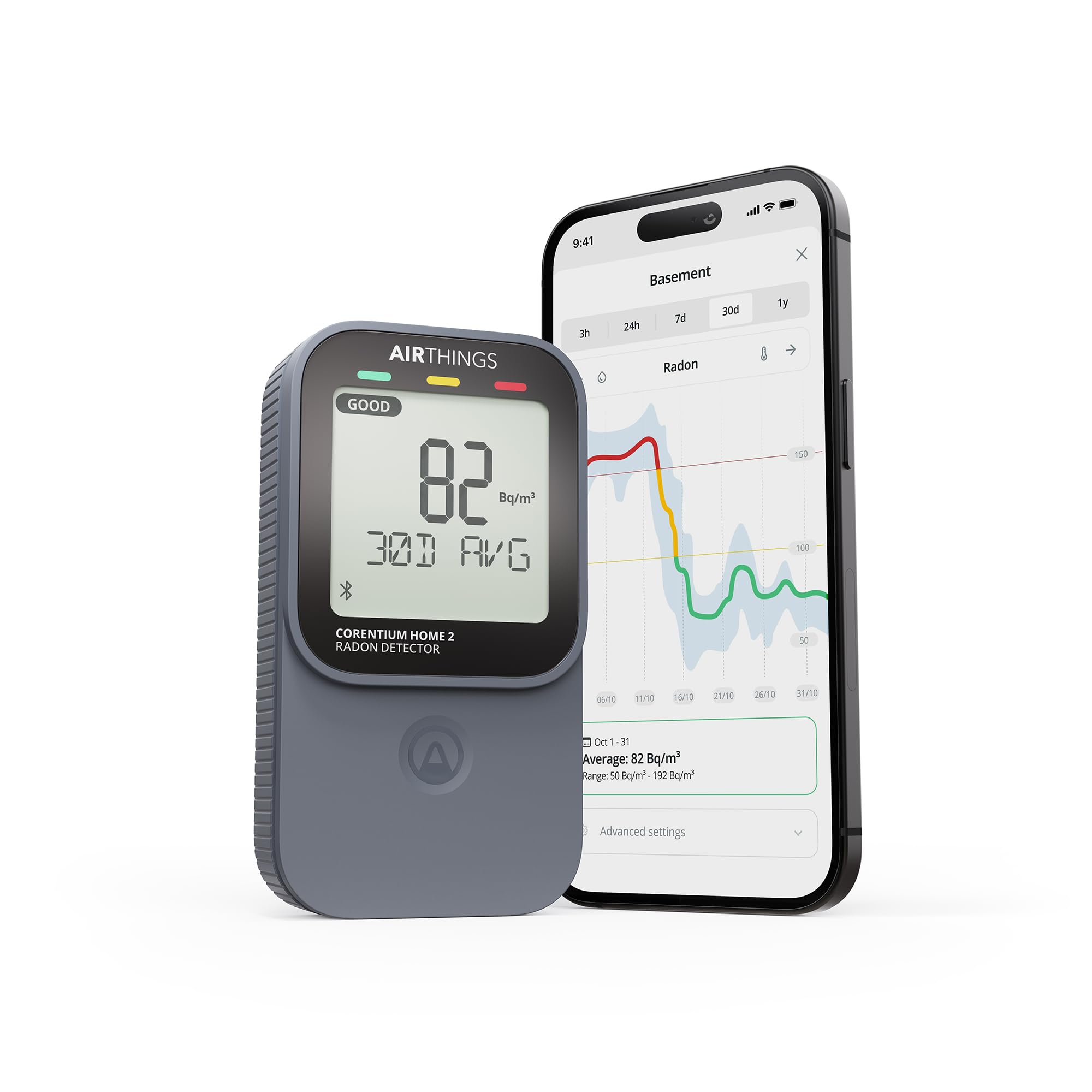
Airthings Corentium Home 2 – Portable Digital Radon Detector (Bluetooth, Temperature & Humidity) • LCD Display – 2×AA Batteries, Up to 3 Years Battery Life • Dark Grey - 325
Our Recommendation
The SwitchBot is the better buy for most people because it monitors the things UK households deal with daily: CO2, temperature, and humidity, all for £55.99. It also stores 2 years of data and gives you a much lower-cost way to spot stuffy bedrooms, condensation, and mould-prone conditions. The Airthings is excellent, but its premium is only justified if you specifically need radon detection. If you want one practical monitor for everyday home use, SwitchBot is the definitive pick.
Detailed Comparison
Display
The SwitchBot wins for everyday readability and practical home use. It’s a CO2 detector with built-in hygrometer and temperature display, so you get the main indoor comfort metrics in one glance. Its value is in convenience: a simple monitor for bedrooms, living rooms, nurseries, and home offices where stale air, winter condensation, and summer humidity swings matter. The Airthings Corentium Home 2 also has an LCD display, but its display is built around radon monitoring rather than general household comfort. If you want a screen that supports day-to-day living decisions like when to ventilate after a shower or during hay fever season, SwitchBot is the more useful display. Winner: SwitchBot.
Performance
This is where the products diverge sharply. SwitchBot measures CO2, temperature, and humidity, which is exactly what most UK households need to manage comfort and mould risk. CO2 is a useful proxy for ventilation: if bedrooms climb high overnight or home offices feel stuffy, you know when to open windows or run extract fans. It also stores 2 years of data, which is excellent for spotting patterns across damp winters and spring allergy season. Airthings Corentium Home 2 is the stronger performer only if your priority is radon detection. Radon is a long-term health risk, especially in some parts of the UK, and the Airthings is purpose-built for that. However, if you’re looking for a general air-quality monitor, it doesn’t replace CO2 monitoring. Winner: tie, because each is better at its own job.
Build quality and design
Airthings feels like the more premium, specialist device. It’s a well-established brand in environmental monitoring, and the Corentium Home 2 is designed as a dedicated, portable detector with a clean, no-nonsense form factor. The 2×AA battery setup and up to 3 years battery life make it easy to place and forget, which is ideal for radon monitoring in a fixed room over months and years. SwitchBot is more consumer-smart-home oriented: compact, modern, and designed to integrate with the SwitchBot ecosystem. The caveat is that WiFi functionality requires a SwitchBot Hub, so the full smart-home experience adds extra cost and complexity. For build quality and design, Airthings wins on purpose-built simplicity; SwitchBot wins if you value app-driven convenience. Overall winner: Airthings, by a small margin.
Battery life
Airthings wins clearly here. Up to 3 years battery life on 2×AA batteries is outstanding and suits a device that should sit quietly in one place gathering long-term data. That matters for radon, where you are not chasing instant readings but tracking exposure over time. SwitchBot’s battery life is not stated in the product title, and while it includes 2-year data storage, the need for more frequent attention is more likely, especially if you use app connectivity or smart-home features. For low-maintenance operation, Airthings is the better choice. Winner: Airthings.
Price and value for money
SwitchBot is the clear value winner. At £55.99, it costs £93.01 less than the Airthings at £149.00, and it covers the three metrics most UK households actually check: CO2, temperature, and humidity. That makes it a strong buy for bedrooms, flats, family homes, and home offices where ventilation and damp control are the main concerns. Airthings is expensive, but the price is justified only if you specifically need radon monitoring. If you don’t have a radon problem to investigate, paying nearly three times as much is hard to justify. Winner: SwitchBot.
Features and ecosystem
SwitchBot offers broader everyday utility. Bluetooth monitoring plus 2-year data storage makes it useful for logging indoor conditions over time, and the Hub requirement for WiFi is the trade-off if you want remote access. In practice, that makes it better for people who want to automate ventilation, track humidity after showers, or monitor a child’s room during winter heating season. Airthings is more specialised: Bluetooth, temperature and humidity support, LCD display, and long battery life, but its core value is radon detection rather than general home comfort. If you want one device to help with mould prevention, bedroom comfort, and general air quality habits, SwitchBot has the better feature set. If you want a dedicated radon instrument, Airthings is the one. Winner: SwitchBot for most users.
Overall user experience
For most UK buyers, the SwitchBot is the easier and more immediately useful product. It solves the common problems people actually notice: stuffy bedrooms, condensation on windows, damp-prone rooms, and keeping indoor humidity in a healthy range. It is especially appealing for flats, newer airtight homes, and winter use when windows stay shut for long periods. The Airthings Corentium Home 2 delivers a more specialised and reassuring experience if you are worried about radon exposure, but it is not the better all-round indoor air monitor. Overall summary: buy SwitchBot if you want the best everyday indoor air monitor for the money; buy Airthings only if radon detection is your specific reason for shopping.
Overall winner: SwitchBot CO2 detector with Built-in Hygrometer, Temperature Humidity Monitor. It offers the best balance of price, practicality, and useful home monitoring for most people. Airthings Corentium Home 2 is the specialist choice, but its higher price makes sense mainly for radon-focused buyers.
Buy the SwitchBot CO2 detector if...
Buy Product A if you want a budget-friendly monitor for bedrooms, nurseries, home offices, or damp-prone rooms. It is the better choice if your main goal is tracking CO2 and humidity to improve ventilation and reduce condensation in a typical UK home. It also makes sense if you want useful data without paying for a specialist radon device.
Buy the Airthings Corentium Home if...
Buy Product B if radon is your actual concern and you want a dedicated long-term detector from a specialist brand. It’s the right choice for homes in higher-radon areas, or if you want a low-maintenance device with very long battery life and a simple LCD-based setup. Choose it when safety monitoring matters more than everyday comfort metrics.
Curated by Clean Air Home on All The Top Picks
As an Amazon Associate we earn from qualifying purchases.