Best Svbony light-pollution filter: budget UHC or premium 2in CLS?
If you’re observing from the UK, the real question is not just which filter is “better”, but which one matches your telescope, eyepieces, and targets. Under our often hazy, moonlit, and light-polluted skies, the right filter can make nebulae pop while the wrong one can simply dim the view. These two Svbony options are aimed at very different setups, so the best buy depends on whether you want a compact 1.25-inch UHC filter for visual use or a larger 2-inch CLS filter for imaging and wider-format observing. This comparison breaks down the practical differences so you can choose with confidence.

Svbony UHC Filter 1.25", Light Pollution Ultra High Contrast Telescope Filter, Reduce City Light Pollution, Nebula Filter for Celestial Observations Astrophotography
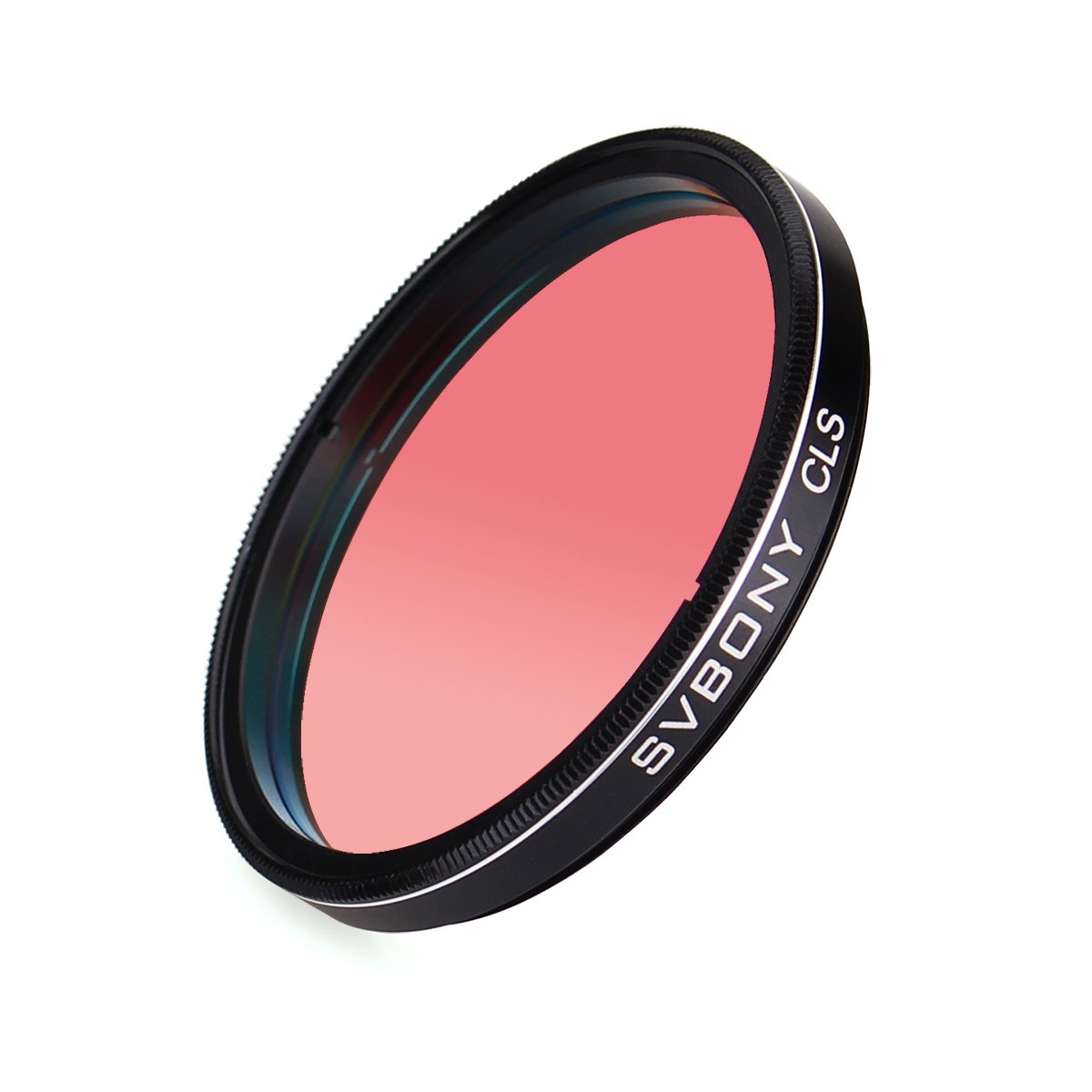
Svbony Astronomy Filters for Telescope, 2inches CLS Filter, Light Pollution Filter for Observing Astronomical Photography, for CCD Cameras and DSLR (2in)
Our Recommendation
Product A is the better choice for most buyers because it is far cheaper, better rated, and more effective for visual nebula observing under UK light pollution. Its 1.25-inch UHC design gives a stronger contrast boost on emission nebulae than the broader CLS filter in Product B. Unless you specifically need a 2-inch filter for DSLR/CCD astrophotography or a 2-inch optical train, Product A offers the best performance per pound.
Detailed Comparison
Display / optical performance
Product A wins for most visual observers. The Svbony UHC Filter 1.25" is designed as a narrowband-style nebula filter, which means it selectively passes key emission lines from objects like the Orion Nebula, Lagoon Nebula, and Veil Nebula while suppressing more of the unwanted city glow. In UK suburban skies, that usually gives a stronger contrast boost on emission nebulae than a broader CLS filter. Product B, the 2-inch CLS filter, is better described as a broad light pollution reduction filter: it trims some of the common artificial lighting wavelengths, but it generally preserves more overall star field brightness and colour. That makes it more versatile for imaging, but less aggressive on nebula contrast. Winner: Product A for visual nebula punch; Product B only if your priority is a wider, gentler filter response for camera work.
Performance
Product A again has the edge for the specific job of making nebulae stand out against light pollution. At £25.49 and with 4.5/5 from 395 reviews, it offers a strong track record for observers who want a simple, effective upgrade without spending much. A 1.25-inch UHC filter is especially useful with small and medium apertures, common beginner and intermediate telescopes in the UK. Product B costs £64.48, nearly £39 more, and while its 2-inch format is more flexible for astrophotography and larger focusers, the broader CLS approach usually gives a subtler improvement visually. If you’re chasing the highest contrast on emission nebulae from a typical garden in Birmingham, Manchester, or the outskirts of London, Product A is the more impactful performer. Winner: Product A.
Build quality and design
This is closer than the performance gap suggests. Both are Svbony products, so you can expect familiar budget-friendly machining and coatings rather than premium-tier glass. Product A’s 1.25-inch format is compact, easy to store, and fits the vast majority of standard eyepieces without needing adapters. Product B’s 2-inch design is more physically versatile for imaging trains and wide-field eyepieces, but that also means it only makes sense if your telescope actually accepts 2-inch accessories. In practical terms, Product B is the more specialised, system-oriented design; Product A is simpler and more universally convenient for visual observing. Winner: tie, with Product A better for convenience and Product B better for larger setups.
Battery life
Neither product uses a battery, so this category does not apply in the usual sense. However, in real-world use, Product A has the lower “setup overhead”: it is quicker to drop into a 1.25-inch eyepiece and start observing. Product B may require a 2-inch focuser, 2-inch eyepieces, or camera adapters to get the best from it, which adds complexity rather than power consumption. Winner: Product A for simplicity.
Price and value for money
Product A is the clear value winner. At £25.49, it is £38.99 cheaper than Product B, and for many UK observers that difference is enough to fund a better eyepiece, a red torch, or a dew heater strap. If your main goal is visual nebula observing from light-polluted skies, Product A delivers the most noticeable improvement per pound spent. Product B only justifies its higher price if you specifically need a 2-inch filter for DSLR/CCD imaging or you already have a fully 2-inch optical train. For most buyers, the price gap is too large to ignore. Winner: Product A.
Game library / features
Translated into astronomy terms, this is about versatility and target range. Product A is the better specialist for emission nebulae and is the more straightforward choice for visual observers who want a stronger contrast boost on classic deep-sky targets. Product B is the more flexible tool for astrophotography, especially if you use a DSLR or CCD and want a 2-inch filter that integrates into a wider imaging setup. It is also the better match if you observe with 2-inch eyepieces and want to avoid vignetting. But for pure “wow factor” on nebulae in a small-to-medium telescope, Product A has the sharper feature set. Winner: tie overall, because Product A is better for visual nebulae while Product B is better for imaging workflows.
Overall user experience
For most people searching these two products, Product A is the easier and more satisfying purchase. It is cheaper, better reviewed, and more immediately useful for the kind of observing many UK amateurs actually do from light-polluted back gardens and local parks. Product B makes sense if you already know you need a 2-inch CLS filter for camera use or a larger optical train, but it is not the best all-round answer for a first or even second filter purchase. In the UK, where clear nights are precious and transparency can change quickly, a filter that gives a strong, obvious effect is often more rewarding than one that is more subtle and expensive. Overall summary: Product A is the best buy for most observers; Product B is a niche upgrade for 2-inch imaging setups.
Buy the Svbony UHC Filter if...
Buy Product A if you mainly observe visually and want the biggest improvement on nebulae from a 1.25-inch eyepiece setup. It is also the smarter choice if you’re on a budget and want the most noticeable contrast boost for the least money. For typical UK suburban skies, it is the more satisfying first filter.
Buy the Svbony Astronomy Filters if...
Buy Product B if your telescope or imaging setup is built around 2-inch accessories and you want a filter for DSLR or CCD astrophotography. It also makes sense if you prefer a broader CLS-style filter that is less aggressive than a UHC and more suited to wide-field workflows. Choose it only when the 2-inch format is genuinely needed.
Curated by Star Seeker on All The Top Picks
As an Amazon Associate we earn from qualifying purchases.