Big-screen bedroom cinema: budget brightness or smarter 4K polish?
If you’re torn between these two portable home cinema projectors, you’re really choosing between value-led brightness and a more refined smart-projector feature set. Both promise Netflix compatibility, auto focus, keystone correction and easy setup for bedroom or outdoor movie nights, but they target slightly different buyers. One is the cheaper, brighter-looking crowd-pleaser; the other aims for a more modern smart experience with HDR10, WiFi 6 and a more flexible zoom system. Here’s the definitive breakdown so you can buy once and enjoy the film night.
![Smart Mini Projector [Compatible with Netflix] 3D Dolby Audio 4K Portable Projector for Bedroom,TOF Auto Focus & Keystone,1800 ANSI,VOPLLS Full HD 1080P WiFi Bluetooth Home Movie Outdoor Projectors](https://m.media-amazon.com/images/I/718aC6qmXzL.jpg)
Smart Mini Projector [Compatible with Netflix] 3D Dolby Audio 4K Portable Projector for Bedroom,TOF Auto Focus & Keystone,1800 ANSI,VOPLLS Full HD 1080P WiFi Bluetooth Home Movie Outdoor Projectors
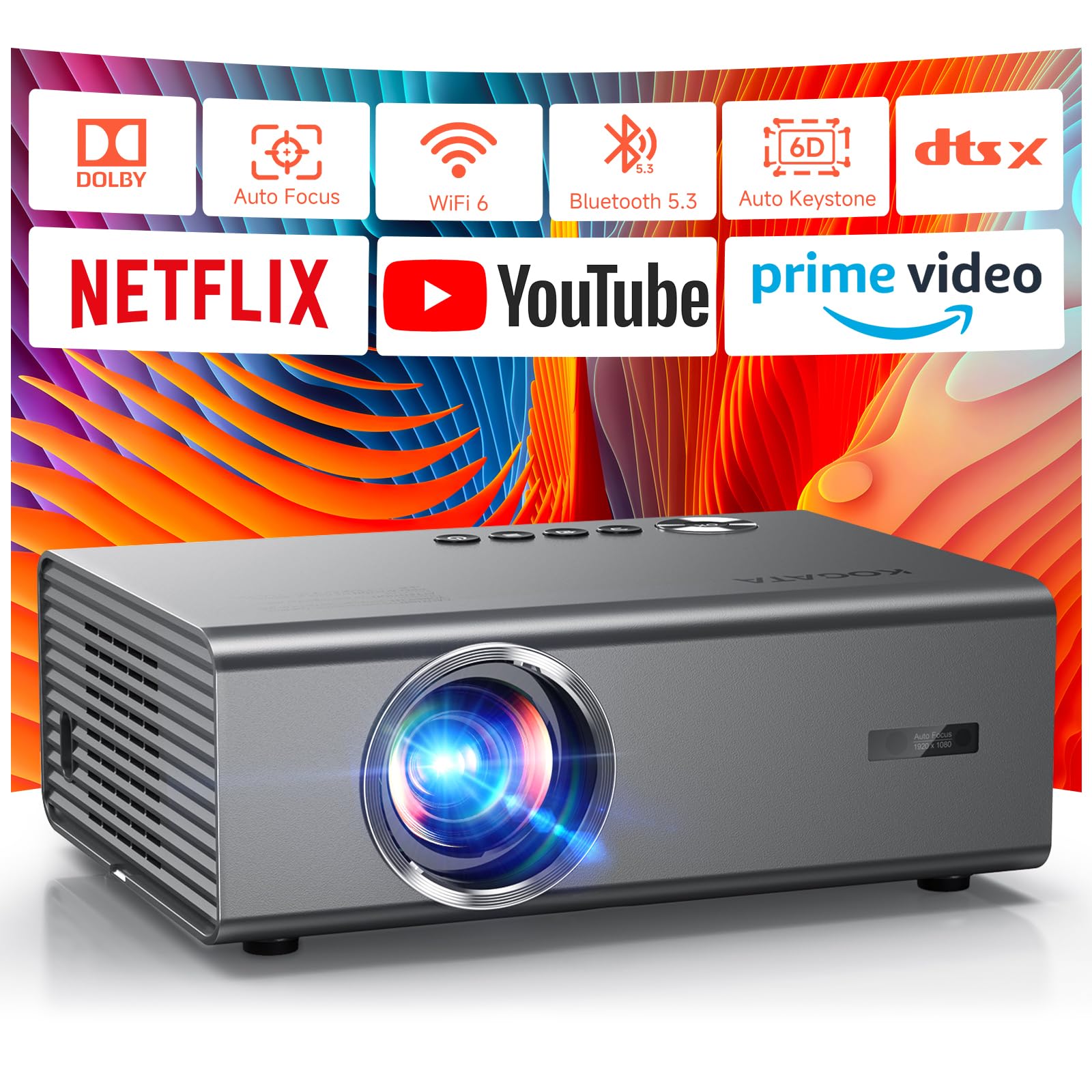
4K Smart Projector for Bedroom | 1200 ANSI, Compatible with Netflix & HDR10 | KOGATA AI Auto Focus, 6D Keystone, 100%–50% Zoom, WiFi 6 & Bluetooth 5.3 | Outdoor & Indoor Home Cinema Projectors
Our Recommendation
Product A is the better buy for most people because it is cheaper, brighter on paper at 1800 ANSI, and better reviewed at 4.5/5 from 1,202 ratings. It also includes Netflix compatibility, Dolby Audio and auto focus/keystone, which covers the essentials without pushing the price up. Product B has nicer extras like HDR10, WiFi 6 and 6D keystone, but those upgrades do not outweigh the stronger value and higher confidence of Product A.
Detailed Comparison
Display
Product A wins on paper for raw brightness: 1800 ANSI versus 1200 ANSI for Product B. That extra brightness should help more in rooms that are not fully dark, and it gives Product A an edge for daytime use, casual sports viewing, or outdoor screenings with some ambient light. Product B counters with HDR10 support, which can improve perceived contrast and highlight detail on compatible content, making films look more cinematic when the room is dark. For pure punch and versatility, Product A wins; for more premium-looking image processing, Product B has the nicer feature set.
Performance
Both projectors are built around smart streaming convenience rather than high-end cinema calibration, and both advertise 4K compatibility while delivering native Full HD 1080P-style output in the case of Product A. Product A’s 1800 ANSI rating suggests stronger brightness performance, while Product B’s AI auto focus, 6D keystone and 100%–50% zoom give it more flexibility in awkward room layouts. If you want the easiest path to a watchable image in more lighting conditions, Product A takes performance. If you want more control over placement and a cleaner fit on different walls or screens, Product B wins on setup finesse.
Build quality and design
Product A is the more affordable, straightforward portable option at £118.28, and its lighter-feeling “mini projector” identity suggests convenience first. Product B costs more at £139.99, but the extra spend is reflected in a more feature-rich design language: WiFi 6, Bluetooth 5.3, AI autofocus, 6D keystone and zoom control all point to a more polished user experience. Neither product is positioned as a premium metal-bodied cinema unit, but Product B feels like the more thoughtfully engineered product. Winner: Product B, because the smarter connectivity and more advanced correction tools matter every time you set it up.
Battery life
Neither listing provides a built-in battery specification, so this is effectively a mains-powered portable projector comparison rather than a true cordless one. That means battery life is not a deciding factor here, and both should be treated as plug-in devices for bedroom, garden or holiday use. Because there is no confirmed battery advantage for either model, this category is a tie.
Price and value for money
Product A is the clear value winner. It is £21.71 cheaper, has a higher rating of 4.5/5 from 1,202 reviews, and claims the brighter 1800 ANSI output. For buyers who want the biggest image for the least money, that combination is hard to ignore. Product B asks for more cash at £139.99 and has a lower 4.2/5 rating from 584 reviews, so it needs its HDR10, WiFi 6, Bluetooth 5.3 and zoom flexibility to justify the premium. On raw value, Product A wins decisively.
Game library/features
Neither projector has a game library in the way a handheld console would, but both rely on smart streaming and home entertainment features. Product A’s Netflix compatibility, 3D support and Dolby Audio make it feel geared toward straightforward movie-night fun, while Product B adds HDR10, WiFi 6 and Bluetooth 5.3 for a more modern connected setup. If you care about plug-and-play entertainment with broad appeal, Product A is the simpler pick. If you want the better feature stack for streaming stability and accessory pairing, Product B wins this round.
Overall user experience
Product A feels like the better all-round bargain for most UK buyers. It has the stronger review score, more reviews, higher claimed brightness and a lower price, which is exactly what you want from a budget home cinema projector. Product B is the more feature-rich and flexible option, especially if you value HDR10, zoom control and newer wireless standards, but it is harder to recommend at the higher price when its rating is lower. In real-world use, Product A is the safer buy for bedroom movie nights, casual outdoor screenings and anyone prioritising brightness per pound spent. Product B is the choice for users who want a more refined setup experience and are happy to pay extra for it.
Overall summary: Product A wins this head-to-head. It offers the better mix of brightness, user trust, and value, making it the stronger recommendation for most shoppers. Product B has the more advanced feature set, but not enough to overcome the higher price and weaker review profile.
Buy the Smart Mini Projector if...
Buy Product A if you want the brightest picture for the lowest spend, especially for bedroom viewing or occasional outdoor movie nights. It is the stronger choice if you care most about reviews, value and simple all-round performance rather than paying extra for premium connectivity features.
Buy the 4K Smart Projector if...
Buy Product B if you want the more advanced setup tools and newer wireless features, especially if your room layout is awkward and you need zoom plus more correction flexibility. It also makes sense if HDR10 support and WiFi 6 matter to you and you are happy to pay a bit more for a more polished smart projector experience.
Curated by Screen Scene on All The Top Picks
As an Amazon Associate we earn from qualifying purchases.