Big-capacity NAS hard drive or fast budget SSD: which is smarter?
This is a classic storage decision for home lab, NAS, and DIY server buyers: do you spend more on a large, purpose-built 8TB NAS hard drive, or save money with a 1TB SATA SSD? The answer depends less on raw speed and more on what you’re actually storing, how many bays your NAS has, and whether you need capacity, endurance, or silence. If you’re building Plex storage, backups, or a RAID/ZFS array, the wrong choice can cost you either performance or usable space. Let’s break down which one makes the most sense.
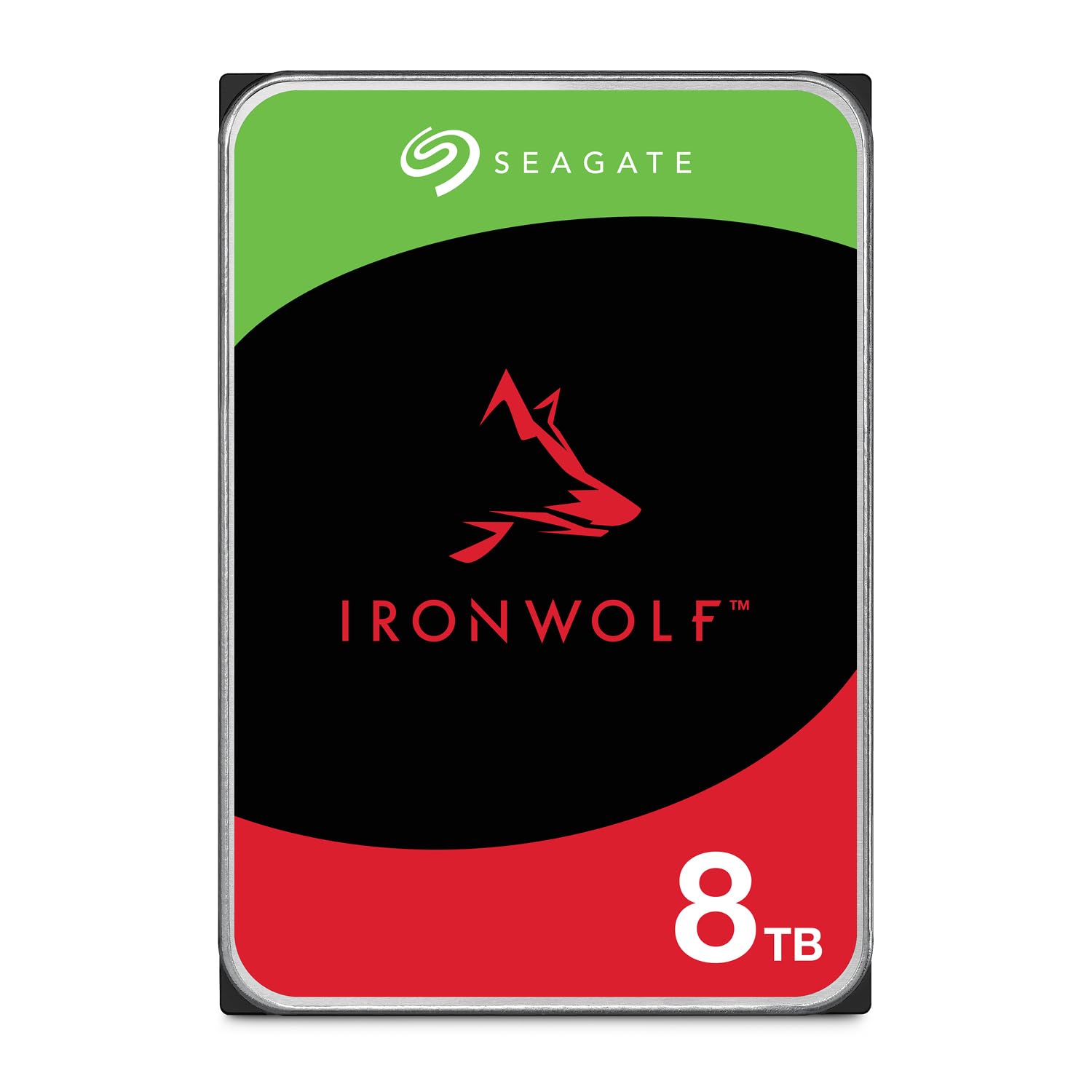
Seagate IronWolf 8TB, Internal NAS HDD, CMR, 3.5 Inch, SATA, 6GB/s, 5.400 RPM, 256MB Cache, Data Rescue Services, (ST8000VNZ02)

ORICO 1TB SATA SSD 2.5 Inch Internal Solid State Drive, Read Speed up to 500MB/s, SATA III 6Gbps for Desktop Laptop NAS DIY External Drive - Y20
Our Recommendation
Product A is the better buy for the vast majority of NAS and home server users because it delivers 8TB of CMR storage, is designed for 24/7 NAS workloads, and includes Data Rescue Services. At £249, it costs more upfront, but the cost per terabyte is far better than Product B and it fits the actual job of bulk storage much more effectively. Product B is faster, but 1TB is a very small capacity for a NAS or Plex library. If you want the drive that makes more sense in a real storage build, Product A wins.
Detailed Comparison
Display
Neither product has a display, so this category is not relevant. For storage hardware, the real equivalent is capacity and interface clarity. Product A offers 8TB of usable spinning storage in a 3.5 inch form factor, while Product B offers 1TB in a 2.5 inch SSD form factor. Winner: Product A, because it delivers eight times the capacity for media libraries, backups, and NAS storage.
Performance
Product B wins on raw speed. Its SATA III interface tops out at up to 500MB/s sequential reads, and in real-world use it will feel much snappier for boot drives, application storage, Docker volumes, and general file access. Product A is a 5,400 RPM HDD with a 256MB cache and a 6Gb/s SATA interface, so it will be far slower for random access and small-file workloads, typically landing around hard-drive territory rather than SSD territory. However, Product A is still the better choice for sustained bulk storage in a NAS, where capacity and continuous operation matter more than benchmark numbers. Winner: Product B for speed, but Product A for NAS-style bulk storage value.
Build quality and design
Product A is the more specialised drive. Seagate’s IronWolf line is built for NAS use, with CMR recording, 24/7 operation focus, and Data Rescue Services included, which is a meaningful safety net for home and small-business storage. The 3.5 inch chassis is designed for NAS bays and desktop drive cages, and the 8TB capacity makes it practical for RAID 1, RAID 5, RAID 6, or ZFS pools where larger drives reduce the number of disks needed. Product B is a generic 2.5 inch SATA SSD from ORICO, which is smaller, quieter, and more shock-resistant, but it is not positioned as a premium NAS-specific SSD with published endurance or power-loss protection details here. Winner: Product A for NAS-focused design and known drive-class suitability.
Battery life
This category is only meaningful for laptops or portable devices. Product B wins because SSDs consume less power, run cooler, and are far better suited to battery-powered systems or compact external enclosures. Product A, as a 3.5 inch HDD, requires more power and is not suitable for portable use. In a NAS or desktop server, though, battery life is irrelevant and power draw becomes a secondary concern. Winner: Product B.
Price and value for money
Product B is cheaper at £119.99, while Product A costs £249.00, a difference of £129.01. On a pure upfront-cost basis, Product B looks attractive, especially if you only need 1TB and want SSD responsiveness. But value for money in storage is about cost per terabyte and suitability for the job: Product A works out at about £31.13 per TB, while Product B is about £119.99 per TB. That makes Product A dramatically better value for bulk storage, especially for media, backups, surveillance footage, and NAS arrays. Winner: Product A by a wide margin.
Game library/features
If you’re using these for game storage, Product B wins on loading speed and responsiveness. Modern games benefit from SSD access times, and a 1TB SATA SSD is a solid place for an OS, a handful of frequently played games, or a working project drive. Product A is better for storing a large library of less frequently accessed games, ROMs, installers, and archived data, but it will not provide the same snappy experience. In NAS terms, Product A also has the advantage of CMR, which is important for RAID rebuilds and sustained write workloads. Winner: Product B for gaming; Product A for NAS features.
Overall user experience
Product B feels faster, quieter, cooler, and more modern in day-to-day use. It is the better drive if your priority is responsiveness, silent operation, or a compact build. Product A is the better home lab choice if your priority is reliable, high-capacity storage in a NAS with multiple bays, especially if you’re running Plex media storage, backups, Time Machine, or ZFS/RAID where CMR and NAS tuning matter. If your NAS has 2, 4, 6, or more drive bays, 8TB per disk is far more practical than 1TB SSD capacity for long-term storage. Overall summary: Product B is the better fast drive, but Product A is the better storage drive, and for most NAS buyers it is the correct purchase.
Final verdict: buy Product A if you are building storage for a NAS, media server, or backup box and need capacity plus NAS-specific reliability. Buy Product B only if you need SSD speed, low power, and silence, and you can live with just 1TB.
Buy the Seagate IronWolf 8TB, if...
Buy Product A if you need a drive for a NAS, Plex media library, backup target, or RAID/ZFS pool and want maximum capacity per bay. It is the better choice if you’re using 3.5 inch drive bays in a Synology, QNAP, custom TrueNAS box, or DIY server and want CMR for sustained writes. It also makes sense if you prefer a known NAS-class HDD with rescue coverage over a generic SSD.
Buy the ORICO 1TB SATA if...
Buy Product B if you want a quiet, low-power SSD for a laptop, compact desktop, or as a fast boot/application drive in a small home server. It is the better choice if your workload is mostly OS, Docker containers, light editing, or a few frequently used games. Choose it only if 1TB is enough and you value speed and silence more than capacity.
Curated by Home Server Hub on All The Top Picks
As an Amazon Associate we earn from qualifying purchases.