IronWolf 4TB or N300 8TB: which NAS drive is the smarter buy?
If you’re building a NAS for Plex, backups, Docker, or shared family storage, these two drives target the same job but at very different price points. The Seagate IronWolf 4TB leans on a lower entry cost and strong review volume, while the Toshiba N300 8TB offers double the capacity, faster 7200 RPM performance, and a heavier-duty spec sheet. The right choice depends on whether you value upfront affordability or long-term storage headroom. For UK buyers, the price gap is large enough that this is less about brand loyalty and more about capacity-per-pound.
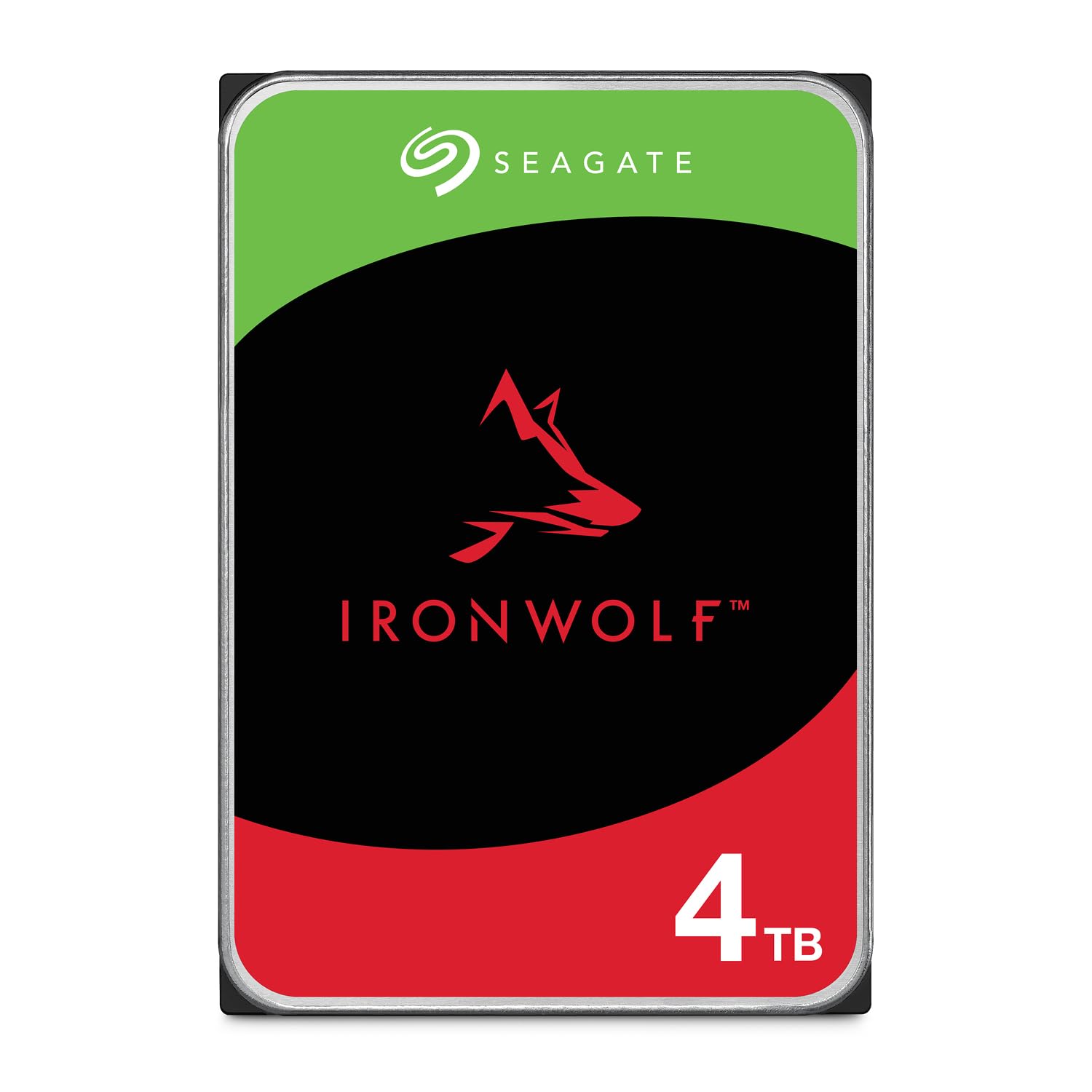
Seagate IronWolf 4TB, NAS, Internal Hard Drive, CMR, 3.5 Inch, SATA, 6GB/s, 5.400 RPM, 256MB Cache, for RAID Network Attached Storage, Data Rescue Services (ST4000VNZ06)

Toshiba N300 8TB Internal NAS Hard Drive, 3.5’’ SATA HDD, 7200 RPM, 24/7 Operation, Supports 1-8 bay systems, 512MB Cache, 180TB/Year workload, 3yr Warranty (MN10ADA800S)
Our Recommendation
The Toshiba N300 8TB is the better overall buy because it offers far more usable storage, faster 7200 RPM performance, a larger 512MB cache, and a higher 180TB/year workload rating. For a NAS, those are the specs that matter most once you start running Plex libraries, backups, Docker containers, or multiple users. Although it costs much more upfront, the extra capacity and stronger performance make it the more future-proof choice. The Seagate is good, but the Toshiba is the more capable NAS drive.
Detailed Comparison
Display
There is no display or screen quality to compare here, so the meaningful equivalent is how clearly each drive’s spec sheet translates into real-world NAS use. On paper, the Toshiba N300 is the more fully specified drive: 8TB capacity, 7200 RPM, 512MB cache, and a stated 180TB/year workload rating. The Seagate IronWolf is more modest at 4TB, 5400 RPM, and 256MB cache, but it still uses CMR recording, which is the key feature for RAID and NAS reliability. Winner: Toshiba N300, because its spec sheet is simply more ambitious and better suited to demanding storage roles.
Performance
This is the biggest differentiator. The Toshiba N300’s 7200 RPM spindle speed and 512MB cache should deliver better sequential throughput and snappier response under mixed NAS workloads, especially when multiple users are streaming, copying files, or indexing media. That matters in a Plex server or a home lab NAS with a 2.5GbE or 10GbE network, where the drive itself can become a bottleneck. The Seagate IronWolf’s 5400 RPM design is slower, but that can also mean lower vibration, less heat, and potentially quieter operation in a small 2-bay box. If your NAS is a Synology or QNAP with only gigabit networking, the speed gap may be less noticeable in day-to-day use. Winner: Toshiba N300, for stronger raw performance and better headroom in busier systems.
Build quality and design
Both are purpose-built NAS HDDs rather than desktop drives, so both are intended for 24/7 operation and RAID use. The IronWolf’s CMR recording is a major plus, and Seagate’s Data Rescue Services adds an extra layer of reassurance if the drive fails outside your normal backup strategy. The Toshiba N300 is also clearly designed for NAS duty, with support for 1-8 bay systems and a 180TB/year workload rating, which is a good indicator of sustained-use tolerance. In practice, the Toshiba’s higher workload spec and 7200 RPM tuning make it feel like the more robust drive for heavier arrays, while the Seagate’s lower-speed profile may be gentler in compact enclosures. Winner: Toshiba N300, narrowly, because its workload rating and multi-bay positioning suggest a tougher design for serious NAS use.
Battery life
Neither product has a battery, so this category doesn’t apply directly. Translating that into practical home-lab terms, the relevant comparison is power draw, heat, and noise. The Seagate IronWolf 5400 RPM drive is likely to run cooler and quieter, which is helpful in a living room NAS or a small cupboard with limited airflow. The Toshiba N300 7200 RPM drive will typically consume a bit more power and may produce more audible chatter, especially in a 4-bay or 8-bay chassis. If you care about a low-noise, low-heat setup, the Seagate has the edge. Winner: Seagate IronWolf, because its slower spindle speed is usually better for thermals and acoustics.
Price and value for money
This is where the decision becomes stark. The Seagate IronWolf 4TB costs £158.66, while the Toshiba N300 8TB is £328.75, a difference of £170.09. That means the Toshiba costs roughly double, but it also gives you double the capacity, so the raw cost per terabyte is broadly similar. The real value question is whether you want one larger, faster drive or a cheaper entry point that can be expanded later. For a single-drive NAS, the Seagate looks easier on the wallet; for a growing media library, the Toshiba is better value because 8TB fills up far more slowly and reduces the need to upgrade soon. Winner: tie, because the Seagate wins on upfront spend while the Toshiba wins on capacity and longevity.
Game library/features
For NAS drives, the closest equivalent to game library/features is feature set and ecosystem support. The Seagate IronWolf benefits from the IronWolf branding, RAID-oriented positioning, and Data Rescue Services, which can be attractive to less technical buyers who want a bit of extra peace of mind. The Toshiba N300 counters with a stronger hardware spec, 1-8 bay support, and a higher workload rating, which matter more if you’re building a proper NAS rather than just storing a few backups. If your setup includes Docker containers, media libraries, VM images, or multiple users, the Toshiba’s extra speed and cache are more useful than Seagate’s bundled recovery service. Winner: Toshiba N300, because its features are more aligned with power-user NAS workloads.
Overall user experience
In a real home-lab or family NAS, the user experience comes down to noise, responsiveness, capacity, and confidence. The Seagate IronWolf 4TB is the easier drive to live with if you want something quieter, cooler, and cheaper to get started with, especially in a 2-bay enclosure where you may later mirror it. The Toshiba N300 8TB feels like the more serious storage device: faster, larger, and more appropriate for a NAS that will actually be used hard, not just lightly backed up. If you are building a Plex server, the Toshiba is better for storing more media and serving it more comfortably. If you’re building a modest backup NAS in a small apartment, the Seagate may be the more pleasant fit. Overall summary: the Toshiba N300 8TB is the better drive for most buyers who want a true NAS disk with more performance and much more capacity, while the Seagate IronWolf 4TB is the better budget-conscious, quieter option for smaller or less demanding setups.
Buy the Seagate IronWolf 4TB, if...
Buy the Seagate IronWolf 4TB if you want the lowest upfront cost and prefer a quieter, cooler-running drive for a small 1-2 bay NAS. It is also a sensible choice if you are building a mirrored pair later and don’t need huge capacity right now. The bundled Data Rescue Services may appeal if you want a little extra peace of mind.
Buy the Toshiba N300 8TB if...
Buy the Toshiba N300 8TB if you want the best all-round NAS drive for Plex, shared storage, or heavier 24/7 use. It is the better choice for 4-bay and larger enclosures, or for anyone who knows they will outgrow 4TB quickly. If your NAS has 2.5GbE or faster networking, the Toshiba’s extra speed is even more worthwhile.
Curated by Home Server Hub on All The Top Picks
As an Amazon Associate we earn from qualifying purchases.