IronWolf HDD or ORICO SSD: which storage is the smarter buy?
If you are choosing storage for a NAS, Plex box, home server, or DIY backup setup, these two drives solve very different problems. The Seagate IronWolf 4TB is a purpose-built NAS hard drive, while the ORICO 1TB is a budget SATA SSD aimed at faster desktop-style storage. The right choice depends on whether you value capacity, endurance, and RAID friendliness, or speed, silence, and lower latency. For UK buyers, price per terabyte and long-term reliability matter just as much as headline specs.
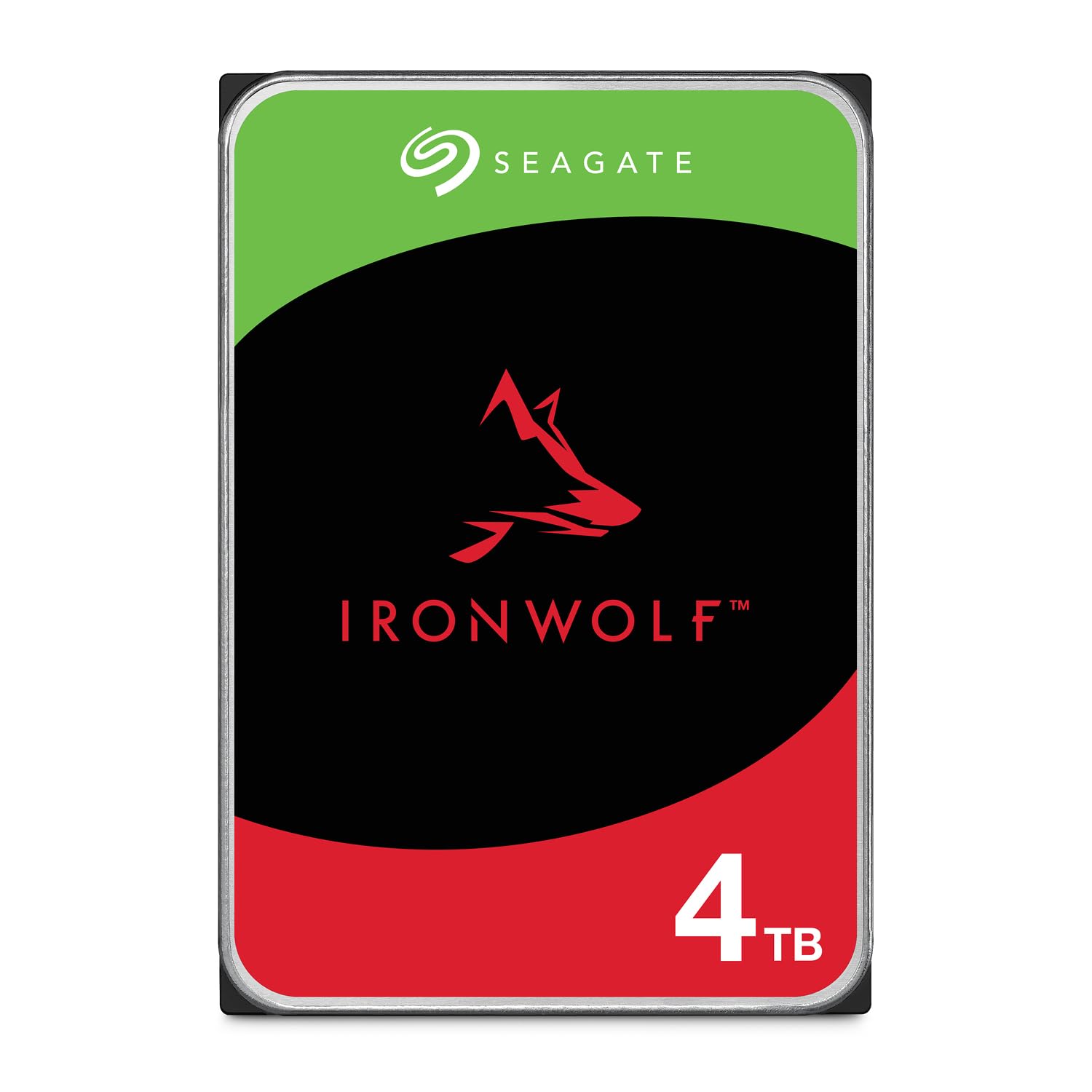
Seagate IronWolf 4TB, NAS, Internal Hard Drive, CMR, 3.5 Inch, SATA, 6GB/s, 5.400 RPM, 256MB Cache, for RAID Network Attached Storage, Data Rescue Services (ST4000VNZ06)

ORICO 1TB SATA SSD 2.5 Inch Internal Solid State Drive, Read Speed up to 500MB/s, SATA III 6Gbps for Desktop Laptop NAS DIY External Drive - Y20
Our Recommendation
The Seagate IronWolf 4TB is the definitive winner for most NAS buyers because it offers four times the capacity, is CMR-based for RAID friendliness, and is purpose-built for 24/7 storage workloads. The ORICO SSD is faster and quieter, but its 1TB capacity is far less useful as primary NAS storage and it lacks the same NAS-specific positioning. If you are building a proper home server or RAID array, the IronWolf is the safer and more future-proof purchase.
Detailed Comparison
Capacity and storage value
The biggest practical difference is simple: the Seagate gives you 4TB, while the ORICO gives you 1TB. That means the IronWolf offers four times the raw capacity for only £37.51 more, which works out to a much better cost per terabyte. For NAS use, media libraries, backups, CCTV footage, and large Docker volumes, that extra space is often the deciding factor. Winner: Seagate IronWolf 4TB, because it delivers far more usable storage for the money.
Performance
On paper, the ORICO SSD is much faster. Its SATA III interface supports up to 500MB/s read speed, and even in real-world use it will feel dramatically more responsive than a 5,400 RPM hard drive for small files, boot drives, app launches, and random access. The IronWolf is limited by mechanical platters, so sequential performance is far lower, though its 256MB cache helps smooth bursts and it is tuned for sustained NAS workloads rather than snappy desktop feel. If you are running a NAS, the SSD wins for speed; if you are storing large sequential media files, the HDD is still perfectly adequate. Winner: ORICO 1TB SSD, because latency and responsiveness are in a different league.
Build quality and design
These products are built for different roles. The Seagate IronWolf is a 3.5 inch NAS drive with CMR recording, 5,400 RPM operation, and RAID-oriented firmware. That matters because CMR is the preferred choice for multi-drive arrays: it is more predictable under sustained writes and rebuilds than SMR, which is important in a RAID enclosure with 2, 4, 6, or more bays. Seagate also includes data recovery services, which adds peace of mind for important data. The ORICO is a 2.5 inch SATA SSD, so it has no moving parts, runs silently, and is more shock-resistant, but it is a generic consumer SSD rather than a NAS-specialised model. Winner: Seagate IronWolf 4TB for NAS-specific build quality and RAID suitability; ORICO wins only if silence and vibration resistance are the priority.
Reliability and long-term use
For a NAS, reliability is not just about failure rates; it is about how the drive behaves under constant use. The IronWolf line is designed for 24/7 operation in multi-bay systems, and the CMR format is a major advantage if you plan to run RAID 1, RAID 5, RAID 6, or ZFS mirrors. SSDs can also be reliable, but this ORICO drive is not positioned as a premium endurance-focused NAS SSD, and its 1TB capacity may fill quickly if used as primary storage. For write-heavy shared storage, the IronWolf is the safer bet. Winner: Seagate IronWolf 4TB.
Power, noise, and thermals
The SSD wins here easily. The ORICO will be silent, cooler, and typically lower power than a spinning 3.5 inch disk, which can matter in compact mini-ITX builds, fanless enclosures, or living-room servers. The IronWolf will generate vibration and noise, and in a small NAS with only one or two drive bays that may be noticeable. However, in a proper NAS chassis with decent cooling and multiple bays, the noise is usually acceptable. Winner: ORICO 1TB SSD.
Price and value for money
At £157.50, the IronWolf is more expensive upfront, but its value is much stronger because of capacity. At £119.99, the ORICO is cheaper by £37.51, but the savings are modest compared with losing 3TB of storage. If you need speed more than space, the SSD may still be worth it, but as a general-purpose NAS purchase the IronWolf gives far better storage economics. Winner: Seagate IronWolf 4TB.
Use-case fit
If your NAS has 2 to 8 drive bays and you are building a media server, backup target, or home file server, the IronWolf is the more appropriate drive. It is especially sensible if you are planning RAID or ZFS and want one or more matching drives. The ORICO SSD makes more sense as a boot drive, a cache drive in a system with NVMe or SATA slots, or a compact single-drive setup where speed and silence matter more than bulk storage. Winner: depends on the job, but for a NAS primary data drive the IronWolf is the clear match.
Overall user experience
The ORICO SSD will feel faster every time you click, boot, or open small files. The IronWolf will feel slower in day-to-day desktop use, but in a NAS the user experience is about dependable capacity, easy RAID compatibility, and fewer headaches during rebuilds and heavy writes. For most people searching these products specifically, that means the IronWolf is the more sensible buy unless they are deliberately building a small, quiet, speed-first system. Overall summary: the Seagate IronWolf 4TB is the better all-round NAS drive, while the ORICO 1TB SSD is the better choice only when low latency and silence matter more than capacity.
Buy the Seagate IronWolf 4TB, if...
Buy the Seagate IronWolf 4TB if you are building a NAS with 2+ drive bays, planning RAID or ZFS, or need a primary data drive for media, backups, or shared files. It is the better choice if you care about capacity, predictable sustained writes, and NAS-specific reliability features.
Buy the ORICO 1TB SATA if...
Buy the ORICO 1TB SSD if you want a silent, shock-resistant drive for a compact PC, a boot drive, or a small NAS where speed matters more than storage size. It also makes sense if you are prioritising quick access times for apps, containers, or frequently used files rather than bulk capacity.
Curated by Home Server Hub on All The Top Picks
As an Amazon Associate we earn from qualifying purchases.