IronWolf 2TB or WD Red Plus 4TB: the NAS drive choice that really matters
If you are building a NAS, Plex box, or small home server, these two drives solve the same problem in very different ways. The Seagate IronWolf 2TB and WD Red Plus 4TB are both CMR NAS HDDs designed for RAID use, but one prioritises lower upfront cost while the other delivers double the capacity and a more future-proof storage pool. The right choice depends less on brand loyalty and more on how many bays you have, how much redundancy you want, and whether you are trying to minimise cost per terabyte or total spend. This comparison cuts through the spec sheet to show which drive makes more sense in a real home-lab setup.
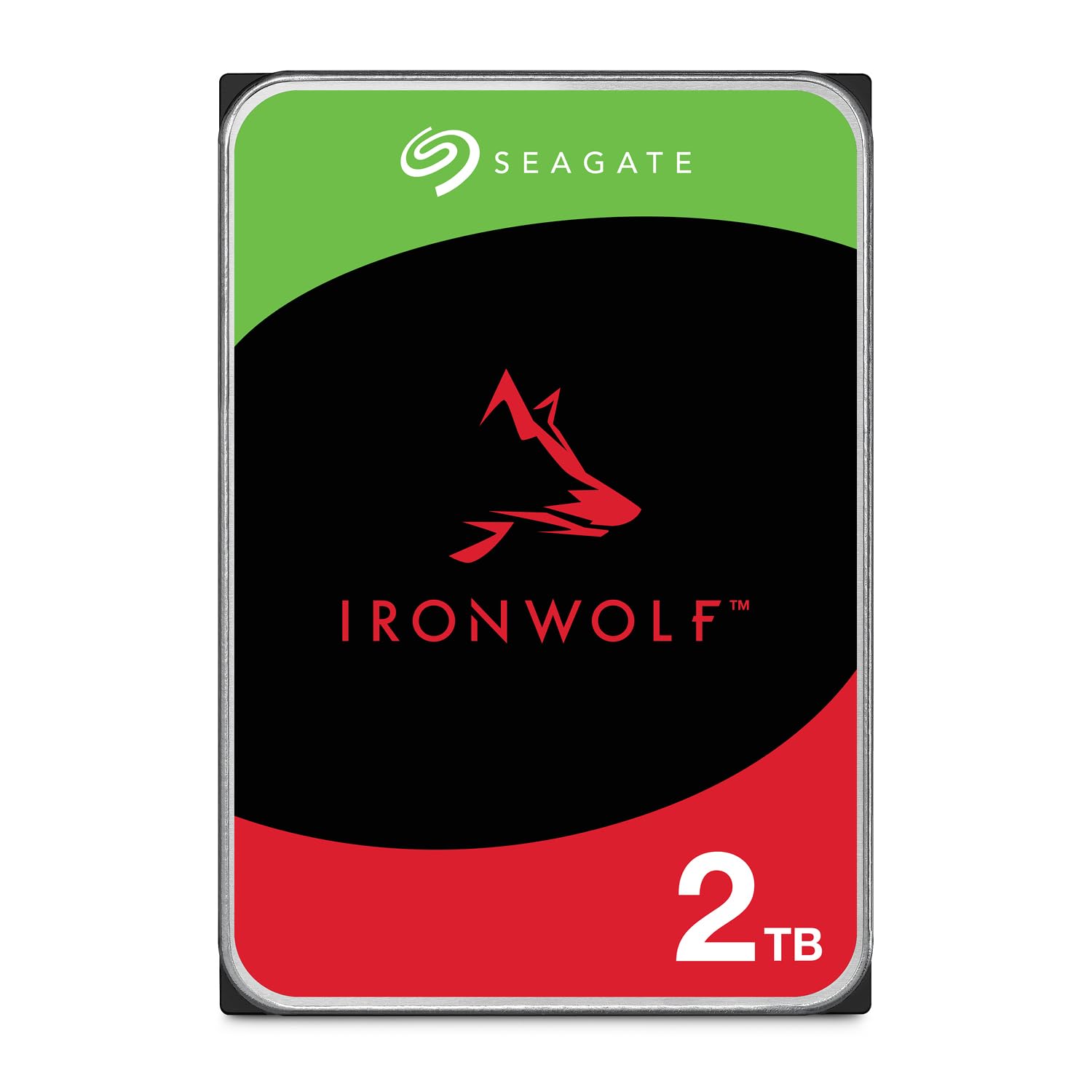
Seagate IronWolf 2TB, Enterprise Internal NAS HDD, CMR 3.5 Inch, SATA 6GB/s, 5900 RPM, 256MB Cache for RAID NAS, Data Rescue Services, Frustration Free Packaging (ST2000VNZ03)

Western Digital WD40EFZX WD Red Plus 4TB SATA 6Gb/s 3.5" HDD
Our Recommendation
The WD40EFZX WD Red Plus 4TB is the better all-round NAS drive for most buyers. It costs more upfront, but you get double the capacity, much better cost per terabyte, and more practical headroom for RAID, Plex, backups, and future growth. Unless your budget is tightly capped or you only need a very small mirror, the WD drive is the smarter long-term purchase.
Detailed Comparison
Display
Neither product has a display, screen, or visual interface, so this category does not apply. For NAS buyers, the equivalent concern is drive transparency and compatibility: both are 3.5-inch SATA 6Gb/s hard drives with CMR recording, which is exactly what you want for RAID and ZFS. Winner: tie, because there is no display-related difference.
Performance
On paper, the Seagate IronWolf 2TB runs at 5900 RPM with a 256MB cache, while the WD Red Plus 4TB is part of WD’s NAS-focused Red Plus line and is also tuned for 24/7 use in multi-bay systems. In practical home NAS workloads, both are aimed at sustained sequential transfers, media serving, backups, and light container storage rather than desktop-style random I/O. The WD drive wins performance overall because its 4TB capacity gives you more usable throughput in real life: larger single-drive capacity means fewer disks needed for the same storage target, less RAID overhead, and more headroom for Plex libraries, VM images, or photo archives. If you are building a mirrored pair, two 4TB drives give you 4TB usable in RAID 1, whereas two 2TB drives only give you 2TB usable. That matters more than a small RPM/cache advantage on a spec sheet. Winner: Product B.
Build quality and design
Both drives are built for NAS duty rather than desktop use, so both should be treated as sensible 24/7 storage parts rather than performance SSD replacements. The Seagate IronWolf line is specifically marketed for RAID NAS use and includes Data Rescue Services, which is a useful value-add if you are worried about recovery after an accidental failure. The WD Red Plus family has a strong reputation in home NAS circles for compatibility with Synology, QNAP, TrueNAS, and DIY Linux boxes, and the WD40EFZX model’s 4TB capacity makes it a more flexible building block for 2-bay, 4-bay, or 6-bay systems. In pure design terms, the WD drive wins because the extra capacity reduces the number of drives you need to buy, cable, cool, and monitor. Fewer disks usually means less vibration, less heat, and lower failure exposure over time. Winner: Product B.
Battery life
Neither product has a battery, so this category does not apply directly. For NAS buyers, the relevant power consideration is idle and active consumption, and the 2TB IronWolf with its lower spindle class may have a slight edge in power draw versus a larger-capacity 4TB drive. However, that possible efficiency advantage is usually too small to outweigh the storage gains of the WD Red Plus unless your NAS is running on a very tight power budget or off UPS for long periods. In most home labs, the practical winner is still the drive that reduces the number of bays populated for the same usable capacity. Winner: tie on the literal category, but slight real-world efficiency nod to Product A if power is your top priority.
Price and value for money
This is the most decisive section. Product A costs £127.87 for 2TB, which works out to about £63.94 per TB. Product B costs £189.91 for 4TB, which works out to about £47.48 per TB. Even though the WD drive costs £62.04 more upfront, it is far better value per terabyte and gives you double the capacity for only about 48.5% more money. For any NAS build where storage space matters — media, backups, surveillance footage, or document archives — the WD Red Plus is the more economical long-term buy. The Seagate only wins if your absolute budget is capped at around £130 and you only need 2TB. Winner: Product B.
Game library/features
Hard drives do not have game libraries, but the closest equivalent is feature set. The Seagate IronWolf’s main feature advantage is Data Rescue Services, which can be reassuring if you are storing irreplaceable files and want an extra layer of recovery support. The WD Red Plus counters with the more practical feature: 4TB capacity, which is much more useful for Plex libraries, Steam backups, VM snapshots, Time Machine backups, or ZFS datasets. In a home server, capacity is the feature that changes daily experience the most. Winner: Product B.
Overall user experience
For a 2-bay NAS, the Seagate IronWolf 2TB is easier to justify if you only need a small mirror for documents, family photos, or a lightweight backup target. It has a strong review score at 4.6/5 from 6,579 reviews, suggesting broad user satisfaction and confidence in the IronWolf NAS line. But the WD Red Plus 4TB has the more compelling overall experience because it gives you more room to grow, fewer drive swaps, and better cost per TB, even though its rating is slightly lower at 4.4/5 from 2,738 reviews. In a real home-lab setup, capacity and flexibility usually beat a small difference in review score. If you have a 4-bay NAS, the WD drive lets you build a more balanced array with less waste; if you have a 2-bay NAS, it still gives you much better usable space per bay. Overall summary: the WD Red Plus 4TB is the better buy for most NAS users because it offers significantly better value, more usable capacity, and more headroom for future storage growth. The Seagate IronWolf 2TB only makes sense when you need the lowest upfront spend, want a smaller RAID mirror, or specifically value the included data recovery service more than raw capacity.
Buy the Seagate IronWolf 2TB, if...
Buy Product A if you only need 2TB, want the lowest upfront spend, or are building a very small two-bay mirror for documents and photos. It is also the better pick if the included Data Rescue Services matter to you and you are comfortable trading capacity for that extra peace of mind.
Buy the Western Digital WD40EFZX if...
Buy Product B if you are building a NAS for media, backups, Docker containers, or anything likely to expand over time. It is especially strong in 2-bay and 4-bay systems because 4TB gives you more usable space per drive and better value per terabyte.
Curated by Home Server Hub on All The Top Picks
As an Amazon Associate we earn from qualifying purchases.