IronWolf 2TB vs WD Red Plus 4TB: the smarter NAS drive buy?
If you’re building or upgrading a NAS, Plex box, or small home server, these two drives target the same job but make very different trade-offs. The Seagate IronWolf 2TB is the cheaper, faster-spinning option with a strong review score and NAS-focused features, while the WD Red Plus 4TB gives you double the capacity for more headroom in a RAID array. The right choice depends on whether you value upfront price and a proven NAS pedigree, or raw storage capacity and better long-term flexibility.
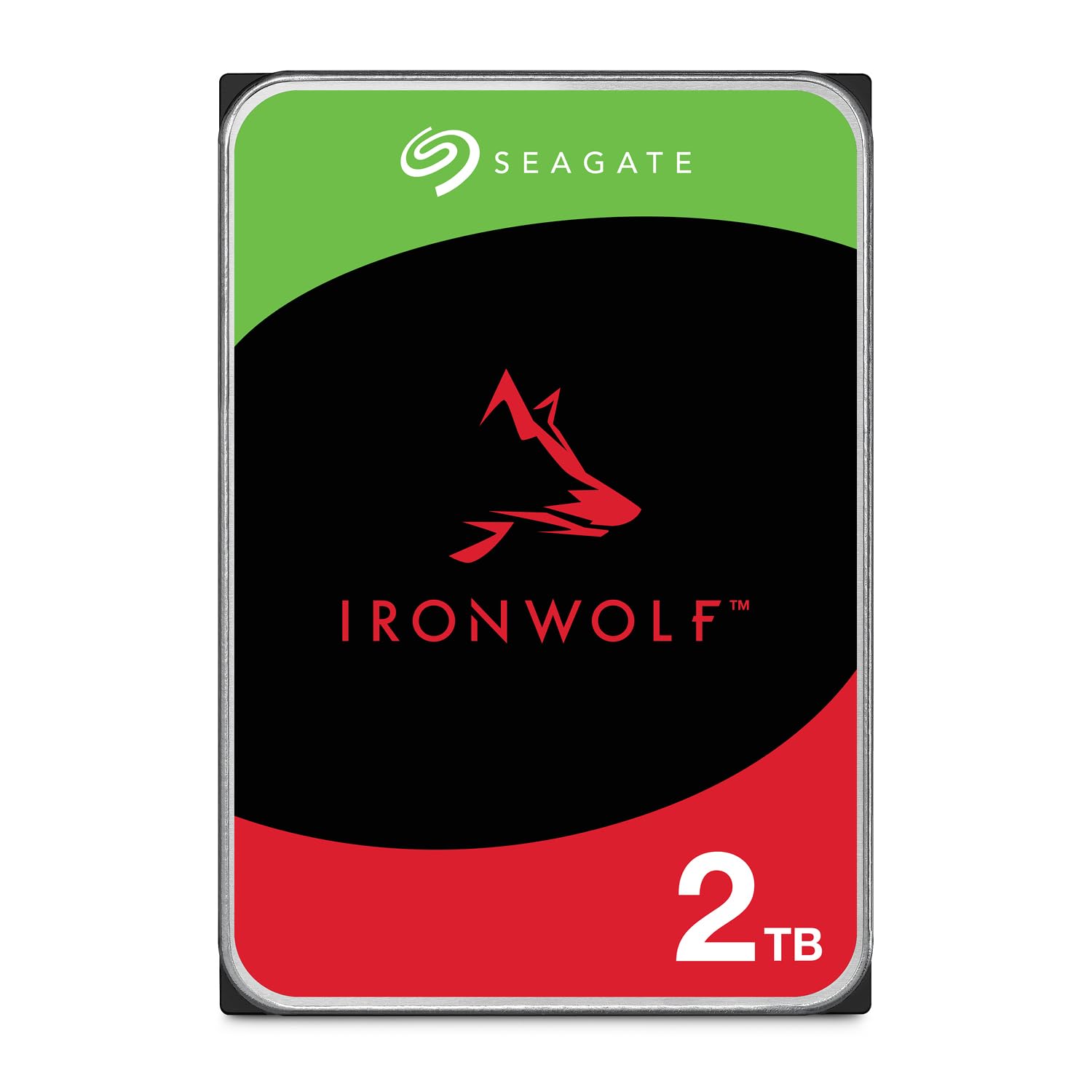
Seagate IronWolf 2TB, Enterprise Internal NAS HDD, CMR 3.5 Inch, SATA 6GB/s, 5900 RPM, 256MB Cache for RAID NAS, Data Rescue Services, Frustration Free Packaging (ST2000VNZ03)

WD Red Plus 4TB NAS 3.5" Internal Hard Drive - 5400 RPM Class, SATA 6Gb/s, CMR, 256MB Cache
Our Recommendation
The WD Red Plus 4TB is the better overall NAS drive for most buyers because it gives you double the capacity for only £74 more, which works out far better per terabyte. Its 5400 RPM class operation is well-suited to quiet, cool 24/7 storage, and the extra space is a major advantage in RAID1, ZFS mirrors, or a Plex server. The Seagate IronWolf 2TB is cheaper and slightly faster on paper, but 2TB is cramped for a modern NAS once you account for parity, backups, and media growth.
Detailed Comparison
Display
This category doesn’t apply here because these are hard drives, not screens. For NAS buyers, the equivalent “spec visibility” is the drive’s workload fit: both are CMR drives, both use a 3.5-inch SATA 6Gb/s interface, and both have 256MB cache. On paper, they are both suitable for RAID and always-on storage, so there’s no display winner to call.
Performance
Winner: Product A, narrowly, for mixed NAS responsiveness; Product B wins for capacity-per-drive.
The Seagate IronWolf 2TB runs at 5900 RPM, which should give it a small edge in seek times and general responsiveness over the WD Red Plus 4TB’s 5400 RPM class rating. That can matter in a home NAS doing lots of small-file access, Docker containers, media library scraping, or multiple users hitting shares at once. The WD drive is still a 5400 RPM class NAS HDD, so it’s not slow, but it is positioned more for quiet, efficient bulk storage than outright responsiveness.
That said, performance in a NAS is not just spindle speed. The WD Red Plus 4TB’s extra capacity can improve real-world experience because you hit less frequent space pressure, fewer parity rebuilds are needed per terabyte stored, and you have more room for Plex media, backups, and snapshots. If your NAS is a 2-bay unit, 4TB per drive also delays the point where you outgrow the array. So while Product A is the slightly snappier drive, Product B is the better performer in terms of usable storage system performance over time.
Build Quality and Design
Winner: Tie, with a slight edge to Product B for practical NAS sizing.
Both drives are built for 24/7 NAS use, both use CMR recording, and both have 256MB cache, which is what you want for RAID consistency and predictable write behaviour. Seagate’s IronWolf line is specifically aimed at NAS environments and includes Data Rescue Services, which is a useful safety net if a drive fails outside of normal redundancy. The WD Red Plus line also has a strong reputation in multi-bay NAS systems and is designed to avoid the SMR pitfalls that plagued some older consumer NAS models.
From a design standpoint, neither is flashy, but the WD Red Plus 4TB is the more sensible physical choice for a home server because capacity matters more than branding. In a 2-bay NAS, 4TB drives are generally a better long-term fit than 2TB drives because they reduce the likelihood of immediately running short on space. If you’re using a Synology, QNAP, or TrueNAS box with limited drive bays, bigger drives usually mean a cleaner upgrade path.
Battery Life
Winner: Not applicable.
These are internal hard drives, so battery life is not relevant. In NAS terms, the closest equivalent is power efficiency and heat output. The 5400 RPM class WD Red Plus should typically run a bit cooler and draw slightly less power than the 5900 RPM IronWolf, which can matter in a compact 2-bay enclosure with limited airflow or if you’re stuffing multiple drives into a small mini-server chassis.
Price and Value for Money
Winner: Product A for upfront cost; Product B for value per terabyte.
At £120, the Seagate IronWolf 2TB is £74 cheaper than the WD Red Plus 4TB at £194. On raw purchase price, Product A is clearly easier on the wallet and may be the only realistic option if you’re trying to get a NAS up and running on a tight budget. It also has the stronger user rating here, 4.6/5 from 6,617 reviews versus 4.3/5 from 4,188 reviews, which suggests broad buyer satisfaction.
However, the WD drive is far better value on a capacity basis. Product A costs £60 per TB, while Product B costs £48.50 per TB. That means the WD Red Plus is cheaper per unit of storage and gives you twice the usable capacity, which is especially important for RAID1 mirroring, ZFS mirrors, or a two-drive NAS where every terabyte counts. If you are building for growth, Product B is the better long-term value despite the higher upfront spend.
Game Library/Features
Winner: Product A, if you want the extra included service; otherwise tie.
Again, this category doesn’t literally apply to hard drives, but in feature terms the Seagate has the edge because it includes Data Rescue Services. For a home lab user, that’s a meaningful bonus if you’re storing family photos, documents, or a Plex library and want some extra peace of mind. Both drives support RAID NAS use, both are CMR, and both are suitable for Docker host storage, media streaming, and backups.
If you care about ecosystem features, Seagate’s warranty/support package is often a tiebreaker for first-time NAS builders. WD’s Red Plus line is more about straightforward, dependable storage with less emphasis on bundled extras. In practical terms, Product A wins the features category by a small margin because the rescue service adds tangible value.
Overall User Experience
Winner: Product B for most NAS builders; Product A for budget-conscious buyers.
The Seagate IronWolf 2TB is the more affordable drive and offers a slightly faster 5900 RPM class speed plus a strong review score. It makes sense for a small NAS where you need one or two drives, your data footprint is modest, and you want the lowest initial spend. The WD Red Plus 4TB, however, is the more future-proof choice: more capacity, better cost per terabyte, and a quieter, cooler 5400 RPM class profile that suits 24/7 storage.
For most people buying a NAS drive today, 4TB is the more practical floor than 2TB. In a 2-bay NAS, 4TB drives give you more breathing room for RAID1 or mirrored ZFS pools, and in a Plex server they reduce the risk of filling up quickly with 4K media and backups. If you can afford the extra £74, the WD Red Plus 4TB is the better overall buy because capacity is what usually becomes the bottleneck first.
Overall summary: Product A is the cheaper, slightly faster, feature-rich choice, but Product B is the better NAS drive for most users because it delivers double the capacity, lower cost per TB, and better long-term headroom. If you want the best all-round purchase, buy the WD Red Plus 4TB. If budget is tight and your storage needs are small, the IronWolf 2TB is still a solid, reputable option.
Buy the Seagate IronWolf 2TB, if...
Buy the Seagate IronWolf 2TB if your budget is tight and you need the lowest upfront spend to get a NAS online now. It also makes sense if you only need a small mirror for documents, photos, or a light Docker setup and you value the included Data Rescue Services. Choose it if you prioritise a slightly faster 5900 RPM class drive over raw capacity.
Buy the WD Red Plus if...
Buy the WD Red Plus 4TB if you want the better long-term NAS choice and can stretch to the higher price. It is the stronger option for Plex libraries, backups, and 2-bay NAS mirrors because 4TB gives you much more usable headroom. Choose it if you want better value per terabyte and a quieter, cooler drive for 24/7 use.
Curated by Home Server Hub on All The Top Picks
As an Amazon Associate we earn from qualifying purchases.