IronWolf 2TB vs Toshiba N300 8TB: the smarter NAS drive depends on your goal
If you’re building a NAS for Plex, backups, or a small home lab, these two drives sit in very different parts of the market. The Seagate IronWolf 2TB (ST2000VNZ03) is a lower-capacity, lower-cost NAS drive with strong review volume and RAID-friendly features. The Toshiba N300 8TB (MN10ADA800S) is a much larger, faster, and more expensive option aimed at heavier 24/7 workloads. The right choice depends less on brand loyalty and more on whether you value upfront cost or long-term storage density.
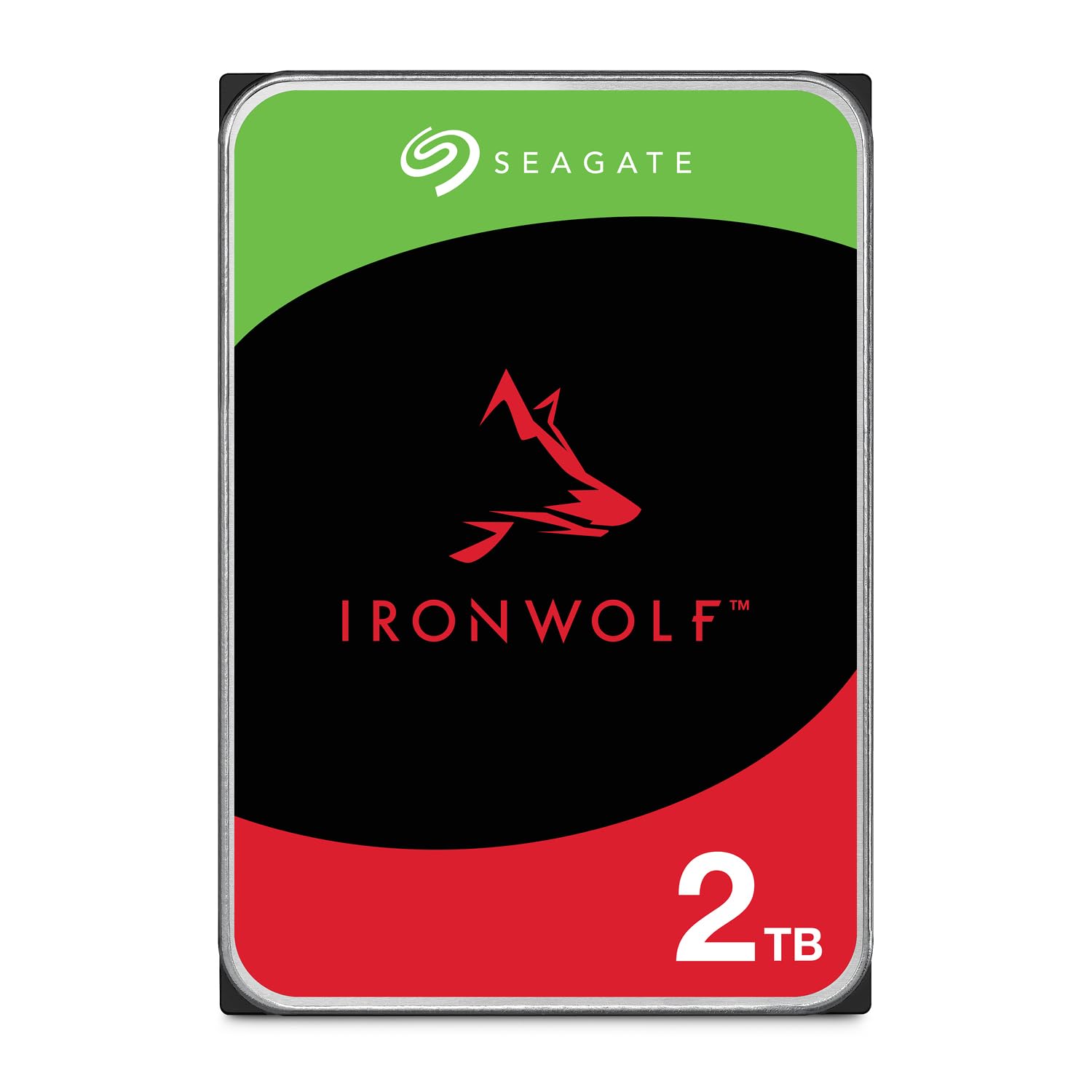
Seagate IronWolf 2TB, Enterprise Internal NAS HDD, CMR 3.5 Inch, SATA 6GB/s, 5900 RPM, 256MB Cache for RAID NAS, Data Rescue Services, Frustration Free Packaging (ST2000VNZ03)

Toshiba N300 8TB Internal NAS Hard Drive, 3.5’’ SATA HDD, 7200 RPM, 24/7 Operation, Supports 1-8 bay systems, 512MB Cache, 180TB/Year workload, 3yr Warranty (MN10ADA800S)
Our Recommendation
The Toshiba N300 8TB is the better buy for most NAS users because it offers four times the capacity, a faster 7200 RPM spindle, a larger 512MB cache, and a 180TB/year workload rating. It is also much better value per terabyte at roughly £41/TB versus the Seagate’s £64/TB. If you are building a NAS to last, the Toshiba gives you more usable storage and more headroom for RAID rebuilds, Plex libraries, and backups. The Seagate only makes sense if you prioritise lower noise, lower heat, or a smaller upfront spend.
Detailed Comparison
Capacity and value for money
This is the biggest difference, and it heavily shapes the verdict. The Seagate IronWolf offers 2TB for £128.00, which works out at about £64/TB. The Toshiba N300 offers 8TB for £328.75, or about £41/TB, which is substantially better value per terabyte despite the higher purchase price. For anyone building a NAS where storage fills quickly, the Toshiba is the stronger buy on raw economics. Winner: Toshiba N300.
Performance
On paper, the Toshiba has the edge for sustained throughput thanks to its 7200 RPM spindle speed and 512MB cache. The Seagate runs at 5900 RPM with a 256MB cache, which usually means lower sequential performance but also slightly lower power draw and less noise. In a Plex server, media editing share, or backup target, the Toshiba will generally feel snappier when copying large files or rebuilding arrays. If your workload is mostly light file serving, the Seagate is still perfectly adequate, but the Toshiba is the faster drive. Winner: Toshiba N300.
Build quality and design
Both are CMR 3.5-inch SATA 6Gb/s NAS drives designed for RAID use, so neither is a cheap desktop disk pretending to be a NAS model. The Toshiba N300 is rated for 24/7 operation, supports 1-8 bay systems, and carries a 180TB/year workload rating, which signals a more robust design for heavier use. The Seagate IronWolf line is also NAS-focused and includes Data Rescue Services, which is a nice extra for recovery peace of mind, but the 2TB model’s lower-capacity positioning makes it less compelling for serious expansion. On build intent and workload headroom, Toshiba has the stronger spec sheet. Winner: Toshiba N300.
Reliability and warranty support
Both are intended for RAID/NAS environments, but the Toshiba’s 3-year warranty and 180TB/year workload rating make it easier to justify in a multi-bay array that will be busy around the clock. Seagate’s IronWolf range has a strong reputation and the included Data Rescue Services is a practical benefit if you value vendor recovery support, but the product page details here do not offset the Toshiba’s clearer endurance advantage. For users who want a drive to sit in a 4-bay or 8-bay NAS and take sustained writes, the Toshiba is the safer long-term bet. Winner: Toshiba N300.
Noise, power, and thermals
This is the one area where the Seagate can make sense. A 5900 RPM drive typically runs cooler and quieter than a 7200 RPM model, which matters if your NAS is in a bedroom, living room, or under-stairs cupboard. In a compact 2-bay NAS with limited airflow, the IronWolf 2TB may be easier to live with day to day. If acoustics and heat are a priority, Seagate wins this category. Winner: Seagate IronWolf.
Price and value for money
Although the Seagate is cheaper upfront at £128.00, it is far worse value per terabyte. The £200.75 price gap is large, but you are getting 6TB more usable capacity, a faster spindle speed, a larger cache, and a higher workload rating with the Toshiba. If you need only a small amount of storage and want to spend as little as possible today, the Seagate is the lower cash outlay. If you care about value over the life of the NAS, the Toshiba wins decisively. Winner: Toshiba N300.
User experience in a home NAS
For a basic NAS with a few shares, backups, and perhaps a small Plex library, both drives will work. The Seagate suits users who want a quieter, cooler drive for a modest 1-2 bay setup and do not need much capacity. The Toshiba suits anyone planning a more serious home lab build, especially a 4-bay or 8-bay NAS where drive bays are precious and larger disks reduce the number of slots consumed. In practical terms, the Toshiba is the better experience for growth, while the Seagate is the gentler choice for a small, low-noise setup. Winner: Toshiba N300.
Overall summary: the Toshiba N300 8TB is the better NAS drive for most buyers because it delivers far more capacity, better performance, stronger workload specs, and better cost per terabyte. The Seagate IronWolf 2TB only wins if you specifically want a quieter, cooler, lower-commitment drive for a small NAS and you do not need much storage. For most people comparing these two, the Toshiba is the definitive recommendation.
Buy the Seagate IronWolf 2TB, if...
Buy the Seagate IronWolf 2TB if you are building a small, quiet NAS in a 1-bay or 2-bay enclosure and only need a modest amount of storage. It is also the better choice if you want to minimise heat and power draw, or if your budget is tight and you would rather get started now than pay for extra capacity you will not use yet.
Buy the Toshiba N300 8TB if...
Buy the Toshiba N300 8TB if you are building a 4-bay or 8-bay NAS, running Plex, storing backups, or expect your storage needs to grow quickly. It is the stronger choice for RAID arrays, heavier 24/7 use, and anyone who wants the best value per terabyte and fewer drive upgrades later.
Curated by Home Server Hub on All The Top Picks
As an Amazon Associate we earn from qualifying purchases.