NAS reliability vs SSD speed: the smarter buy for your storage build
These two drives solve very different problems, even though they’re being compared as alternatives. The Seagate IronWolf 2TB is a 3.5-inch CMR NAS hard drive built for multi-bay reliability, while the ORICO 1TB is a 2.5-inch SATA SSD aimed at faster everyday responsiveness. If you’re choosing storage for a NAS, Plex box, home server, or DIY desktop build, the right answer depends on whether you value capacity, endurance, and RAID friendliness or speed, silence, and low power. The price gap is small, so the real decision comes down to workload and long-term suitability.
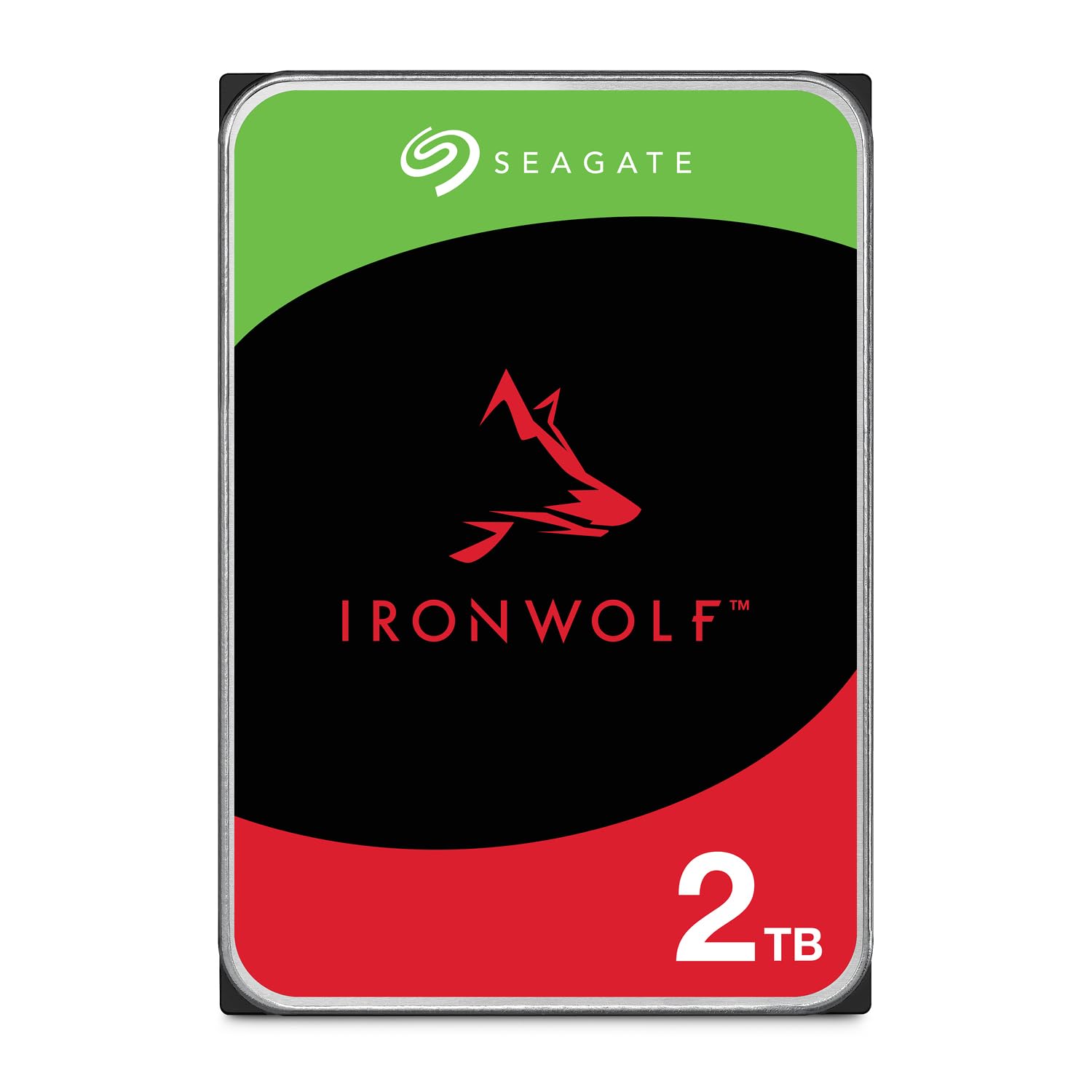
Seagate IronWolf 2TB, Enterprise Internal NAS HDD, CMR 3.5 Inch, SATA 6GB/s, 5900 RPM, 256MB Cache for RAID NAS, Data Rescue Services, Frustration Free Packaging (ST2000VNZ03)

ORICO 1TB SATA SSD 2.5 Inch Internal Solid State Drive, Read Speed up to 500MB/s, SATA III 6Gbps for Desktop Laptop NAS DIY External Drive - Y20
Our Recommendation
The Seagate IronWolf 2TB is the better buy for most people comparing these two products. It gives you twice the capacity for only £7.88 more, plus NAS-specific features like CMR recording, a 256MB cache, RAID suitability, and Data Rescue Services. The ORICO SSD is faster and quieter, but it is a much less compelling primary storage choice when the use case is a NAS or home server. If you want the safest, most practical option for storage, the Seagate wins.
Detailed Comparison
Capacity and storage value
Winner: Seagate IronWolf 2TB
On raw capacity, the Seagate is the clear winner. You get 2TB for £127.87, versus 1TB for £119.99 on the ORICO, so the Seagate delivers double the usable space for only £7.88 more. That makes it much better value if you’re storing media libraries, backups, VM images, photo archives, or surveillance footage. For NAS users, capacity per pound matters more than almost anything else, and the IronWolf wins decisively here.
Performance
Winner: ORICO SSD
The ORICO SSD wins on speed, and by a wide margin in real-world responsiveness. Its SATA III interface is rated up to 500MB/s read, which is close to the practical limit of SATA SSDs, and far ahead of a 5900 RPM hard drive. The Seagate IronWolf’s 5900 RPM mechanical design means much slower random access, longer boot times, and lower transfer responsiveness, even if it can still handle sustained sequential NAS workloads well. If your use case includes Docker containers, VM storage, application data, or a desktop boot drive, the SSD is noticeably faster.
That said, the Seagate is not trying to compete on speed in the same way. Its strengths are consistent NAS-style throughput, CMR recording for better RAID behaviour, and predictable performance under sustained use. For bulk media storage and file serving, it is good enough; for system speed, the SSD wins easily.
Build quality and design
Winner: Seagate IronWolf 2TB
The IronWolf is purpose-built for NAS environments. It uses a 3.5-inch form factor, CMR recording, 256MB cache, and a design intended for RAID arrays and always-on operation. Seagate also includes Data Rescue Services, which adds a layer of confidence if the drive fails and you need recovery support. These are meaningful advantages for a home NAS or small business setup where reliability matters more than peak benchmark numbers.
The ORICO SSD is simpler: a 2.5-inch SATA drive with no moving parts, which makes it resistant to shock and vibration and physically easier to mount in compact systems. However, the product listing does not provide the same level of enterprise/NAS-focused design detail as the Seagate. For build quality in a storage appliance context, the IronWolf’s NAS-specific engineering gives it the edge.
Noise, heat, and power
Winner: ORICO SSD
The ORICO SSD wins comfortably here. SSDs are silent, run cooler, and use less power than spinning hard drives. In a compact NAS, mini PC, or living-room Plex server, that can make a noticeable difference to case temperatures and overall system acoustics. If your machine sits near a desk or TV, the lack of drive noise is a real quality-of-life upgrade.
The Seagate IronWolf will generate some noise, vibration, and heat because it is a mechanical 3.5-inch HDD. In a proper NAS chassis with good airflow and rubber mounts this is manageable, but it will never be as quiet or efficient as an SSD.
Reliability and RAID suitability
Winner: Seagate IronWolf 2TB
For RAID NAS use, the Seagate is the better technical fit. CMR is important because it maintains more consistent write behaviour under sustained loads and during rebuilds, whereas SSDs and consumer drives can vary more in how they handle long writes and endurance over time. The IronWolf line is specifically designed for multi-drive NAS operation, which is exactly what many buyers want when they search for a NAS drive.
The ORICO SSD can absolutely work in a NAS, but it is better viewed as a fast single-drive OS volume, cache, or application drive rather than the primary bulk-storage device in a RAID array. Unless you have a very specific SSD-based NAS design, the IronWolf is the safer long-term choice for data storage.
Price and value for money
Winner: Seagate IronWolf 2TB
Even though the ORICO is £7.88 cheaper, the Seagate offers much better value because of the extra 1TB of capacity and its NAS-focused feature set. On a per-terabyte basis, the IronWolf is clearly ahead. If you are building a RAID1, RAID5, or simple single-disk NAS volume, paying almost the same price for half the capacity is hard to justify.
The ORICO only becomes better value if you specifically need SSD characteristics: silence, low latency, and lower power draw. Otherwise, the Seagate gives you more storage and a more appropriate feature profile for the money.
Overall user experience
Winner: Tie, depending on use case
If your priority is a home NAS, media server, or backup box, the Seagate IronWolf is the more sensible and defensible purchase. It is built for 24/7 NAS duty, RAID compatibility, and larger-capacity storage, which is what most buyers in this category actually need. If your priority is a fast, quiet, low-power drive for a small system or application volume, the ORICO SSD will feel much snappier in day-to-day use.
For a typical UK home lab builder, the IronWolf is the better all-round storage drive, while the ORICO is the better performance drive. The decisive factor is whether you are buying bulk NAS storage or a speed-focused SATA SSD. Overall, the Seagate IronWolf is the stronger choice for most NAS and RAID buyers, while the ORICO is the niche pick for users who prioritise responsiveness and silence over capacity.
Buy the Seagate IronWolf 2TB, if...
Buy the Seagate IronWolf 2TB if you are building a NAS, RAID array, Plex media library, or backup server and want the most sensible bulk-storage option. It is also the better choice if your chassis has 3.5-inch bays and you care about long-term reliability, sustained writes, and recovery support. This is the drive to choose for capacity-first storage.
Buy the ORICO 1TB SATA if...
Buy the ORICO 1TB SATA SSD if you want a silent, low-power drive for a compact PC, NAS OS volume, Docker/applications, or a desktop/laptop upgrade. It makes sense if you care more about fast boot times and responsive file access than raw capacity. This is the better pick only when SSD speed and quiet operation matter more than storage space.
Curated by Home Server Hub on All The Top Picks
As an Amazon Associate we earn from qualifying purchases.