Roku vs Fire TV: the UK streaming stick that’s easier to live with
If you’re choosing between these two at almost exactly the same price, you’re really deciding between Roku’s simple, app-first approach and Amazon’s Alexa-led Fire TV ecosystem. Both are strong budget streaming sticks, both are rated 4.7/5, and both are aimed at people who want to add smart TV features without paying Sky or Virgin prices. The right choice depends less on raw specs and more on which interface, app layout, and ecosystem will suit your living room best. For UK buyers, that matters because the experience around BBC iPlayer, ITVX, Channel 4, My5, Netflix, Disney+, Prime Video and live-TV apps is just as important as the hardware.

Roku Streaming Stick+ | 4K/HDR/HD streaming player with 4x the wireless range & voice remote with TV power and volume
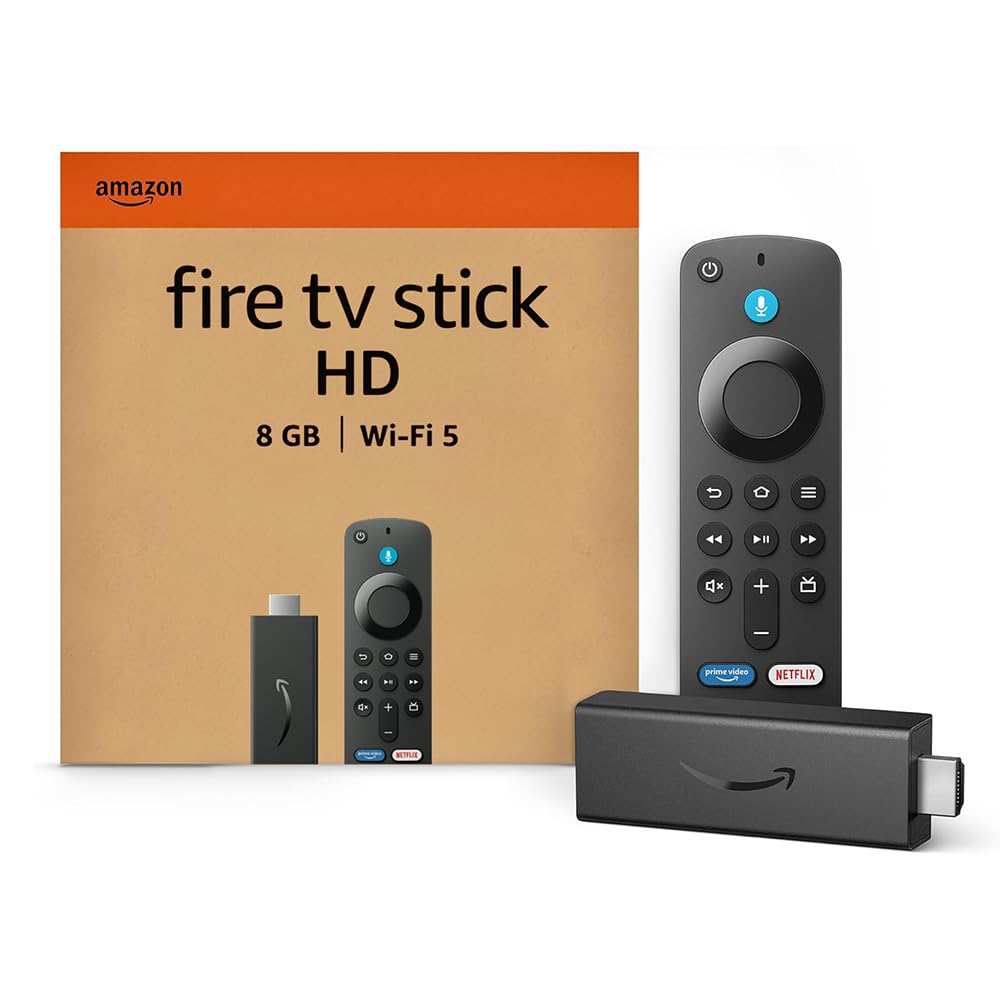
Amazon Fire TV Stick HD (Newest gen), free and live TV, Alexa Voice Remote, smart home controls, HD streaming
Our Recommendation
Buy the Roku Streaming Stick+ unless you have a very specific reason to want Amazon’s ecosystem. It gives you 4K and HDR support for effectively the same price as the Fire TV Stick HD, which is only HD. Roku also has the stronger reputation for a simpler, less cluttered streaming experience, plus the 4x wireless range claim is genuinely useful in real UK homes with awkward router placement.
Detailed Comparison
Display
Product A wins. The Roku Streaming Stick+ supports 4K, HDR and HD streaming, while Product B is an HD-only stick. That means Roku is the better pick if you have a 4K TV and want sharper detail, richer contrast and better future-proofing. Fire TV Stick HD is perfectly fine on an older 1080p set, but it simply cannot match the image potential of Roku on modern TVs. If picture quality matters, Roku is the clear winner here.
Performance
Product A wins again, mainly because it is built for higher-end streaming. Roku’s 4x wireless range claim is a practical advantage for homes where the router is not right next to the TV, and that can mean fewer buffering issues and a more stable stream. Product B is fine for HD streaming, but Amazon’s HD stick is more basic and is aimed at affordability rather than maximum performance. In everyday use, Roku tends to feel lighter and more direct, with less clutter and fewer prompts, while Fire TV can feel busier because Amazon pushes more recommendations and storefront content.
Build quality and design
This is close, but Product A edges it. Roku’s stick design is compact, neat and easy to hide behind the TV, and the included voice remote with TV power and volume makes it a proper one-remote solution. Fire TV Stick HD also includes an Alexa Voice Remote with TV controls, so it is not behind on the basics, but Amazon’s interface and home screen are more ad-heavy and can feel less elegant. In terms of physical product design, Roku is the cleaner, more understated option.
Battery life
Tie. Both products use standard TV remotes powered by replaceable batteries rather than rechargeable packs, so there is no meaningful difference in battery life from a buyer’s point of view. In normal use, both remotes should last a long time before needing new batteries, and neither product has a standout advantage here. If you are comparing day-to-day convenience, this category does not separate them.
Price and value for money
Product A wins by a hair, and by more than the headline price suggests. At £39.98 versus £39.99, Roku is technically cheaper, but the real value gap is that Roku gives you 4K/HDR support for effectively the same money as an HD-only Fire TV Stick. That is much better value if you own a 4K television or plan to upgrade soon. Fire TV Stick HD only makes more sense if you are certain you will never need 4K and you strongly prefer Amazon’s ecosystem.
Game library/features
Product B wins narrowly on features tied to Amazon’s ecosystem. Fire TV’s big advantage is Alexa integration and smart home controls, so if you already use Echo speakers, Ring devices or other Alexa gear, it becomes more useful as a home hub. That said, neither of these is a gaming device in any serious sense, and both are primarily for streaming apps and catch-up TV. On pure entertainment features, Roku still has the stronger streaming proposition because 4K/HDR support matters more than smart-home extras for most people.
Overall user experience
Product A wins decisively for most UK viewers. Roku is usually the easier platform to live with if you want quick access to apps like BBC iPlayer, ITVX, Channel 4, My5, Netflix, Disney+ and Prime Video without feeling pushed into one company’s ecosystem. Fire TV Stick HD is good if you love Alexa, shop on Amazon a lot, or want a more Amazon-centric interface, but it is more limited on display quality and can feel more cluttered. Roku’s combination of 4K/HDR support, strong wireless range, simple remote and near-identical price makes it the better all-round buy for the majority of people.
Overall summary: if you want the best value and the best picture potential, buy the Roku Streaming Stick+. If you are deeply invested in Alexa and only need HD streaming, the Fire TV Stick HD is still a solid choice. But at this price, Roku is the smarter purchase for most homes.
Buy the Roku Streaming Stick+ if...
Buy Product A if you have a 4K TV, want the best picture quality, or need a stick that is likely to perform better when the Wi-Fi signal is not perfect. It is also the better choice if you want a straightforward streaming interface for UK catch-up TV and subscription apps without Amazon pushing its storefront everywhere.
Buy the Amazon Fire TV if...
Buy Product B if you already use Alexa heavily and want your TV stick to slot neatly into an Amazon smart-home setup. It also makes sense if your TV is only HD and you do not care about 4K or HDR at all, especially if you prefer Amazon’s app layout and recommendations.
Curated by Stream Free on All The Top Picks
As an Amazon Associate we earn from qualifying purchases.