Reolink 4K PoE or Hikvision 5MP DVR: which CCTV system fits you best?
If you are choosing between these two kits, you are really deciding between a newer, easier-to-use PoE NVR system and a more traditional DVR package from a major CCTV brand. Both can secure a typical UK home well, but they suit different priorities: Reolink leans toward simplicity, app quality, and extra expansion, while Hikvision leans toward lower upfront cost and a familiar CCTV format. The right answer depends on whether you value modern convenience and storage headroom, or whether you just want a solid wired system for less money.
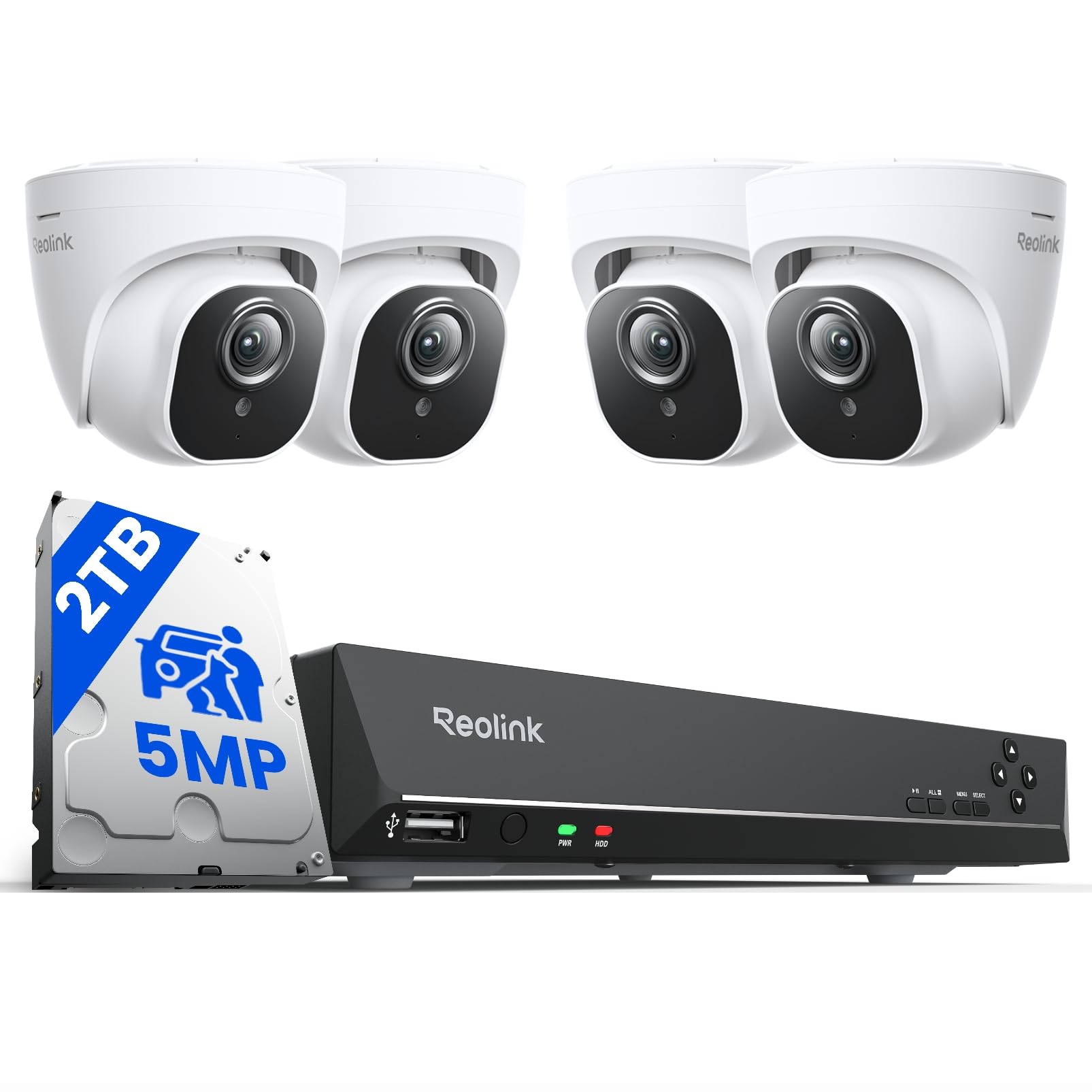
Reolink 4K NVR 8CH PoE CCTV Security Camera System, with 2TB HDD and 4X 5MP Motion Detection Outdoor PoE IP Cameras, 100ft Night Vision Remote Access, RLK8-520D4-5MP

HIKVISION 5MP CCTV SECURITY SYSTEM 4K DVR 4CH 1TB H.265+ HIK 5 MP CAMERA OUTDOOR NIGHT VISION KIT UK SELLER DS-7204HUHI-K1
Our Recommendation
Reolink is the better buy for most people because it gives you an 8-channel NVR, 2TB storage, stronger review volume, and a more polished PoE experience. That extra flexibility matters if you later want to cover a driveway, side passage, garage, or rear garden without replacing the recorder. Hikvision is cheaper, but the 4-channel DVR makes it the more limited system over time. If you want the most practical, future-proof home CCTV choice, Reolink wins.
Detailed Comparison
Display
There is no monitor included in either kit, so the real question is image quality and how well the footage holds up when viewed on playback or exported to a phone, tablet, or PC. Product A, the Reolink RLK8-520D4-5MP, uses 5MP cameras with a 4K-capable NVR and typically produces cleaner, more user-friendly footage in the Reolink app. Product B, the Hikvision DS-7204HUHI-K1 kit, also uses 5MP cameras, but the DVR-based setup is more traditional and often depends more heavily on the installer’s configuration and the exact camera model supplied by the seller.
Winner: Product A. The Reolink system is more modern in how it presents footage and remote viewing, and its 8-channel NVR gives you more room to add cameras later without replacing the recorder.
Performance
For home security, performance means reliable recording, motion handling, remote access, and night capture. Reolink’s motion detection is generally easier to live with for homeowners because the app and alerts are straightforward, and the system is built around IP cameras over PoE, which reduces signal loss and usually makes setup cleaner. The 100ft night vision claim is strong, and Reolink’s remote access tends to be one of its biggest strengths for non-technical users.
Hikvision’s H.265+ compression is a genuine advantage for storage efficiency, and Hikvision hardware has a long reputation for dependable CCTV recording. However, the kit only includes a 4-channel DVR, so your expansion ceiling is lower. If you later want to add cameras for a driveway, side alley, garage, or rear garden, you may hit the limit sooner than with the 8-channel Reolink system.
Winner: Product A. Hikvision’s H.265+ is efficient, but Reolink wins on expansion potential, simpler remote access, and the better fit for most homeowners who want a system that feels modern rather than fiddly.
Build quality and design
Both are outdoor-rated wired systems, which is what you want for reliability. Reolink’s PoE IP cameras are generally neat, compact, and designed for straightforward DIY installation. The system architecture is also cleaner: one cable per camera for both power and data, which is easier to route and troubleshoot. The 2TB HDD included in Product A is also a plus for a ready-to-go installation.
Hikvision’s kit is more old-school in design, using a DVR and coax-style camera architecture. That can be perfectly robust, but it is less elegant to install and less flexible if you ever want to move cameras around. The seller branding also matters here: Product B is sold as a Hikvision DVR and cameras bundle through a third-party UK seller, so the exact camera specification may vary more than with the Reolink package.
Winner: Product A. Reolink’s PoE design is cleaner, more flexible, and easier for a homeowner to manage over time.
Battery life
Neither of these systems is battery-powered in the normal sense, so battery life is not a primary product differentiator. What matters instead is power resilience and whether you can keep recording during an outage. Both systems will stop recording if mains power fails unless you add a UPS. Reolink’s lower-power PoE architecture can be easier to support with a small battery backup, and the NVR format is often simpler to integrate with a UPS than a mixed legacy CCTV setup.
Winner: Product A, narrowly, because the PoE/NVR setup is usually easier to back up cleanly with a UPS. Still, if battery backup is important, you should budget for a UPS with either system.
Price and value for money
Product B is cheaper at £313.50, saving £76.49 versus Product A at £389.99. On raw price alone, Hikvision looks attractive, especially if you just want four outdoor cameras and a recorder. But value is not only about the sticker price. Reolink includes an 8-channel NVR and 2TB HDD, which gives you more storage headroom and future expansion. It also has a much larger review base: 4.4/5 from 3365 reviews versus Hikvision’s 4.3/5 from 95 reviews, which is a meaningful sign of broader real-world user confidence.
Winner: Product A. The Reolink costs more, but the extra £76.49 buys you a better long-term platform, more channels, and far stronger evidence of consistent user satisfaction.
Game library/features
For CCTV, this category translates to features: app quality, motion detection, remote access, storage, and upgrade potential. Reolink clearly wins here. The 8CH NVR gives room to expand, the 2TB HDD is generous for a four-camera kit, and Reolink’s app experience is usually more polished for live viewing, alerts, and playback. The 100ft night vision claim also suggests strong low-light coverage for typical UK gardens and driveways.
Hikvision’s H.265+ is efficient and the brand has serious CCTV pedigree, but the 4CH DVR limits future growth. If you want a set-and-forget system that you can later turn into a 6- or 8-camera setup, the Hikvision kit is less future-proof.
Winner: Product A. It offers the better mix of storage, app usability, and expansion headroom.
Overall user experience
Reolink is the easier recommendation for most homeowners. It is the more modern package, it has a larger NVR, a bigger included hard drive, stronger review volume, and a more user-friendly path for remote viewing and future expansion. Hikvision remains a respectable, lower-cost option, especially if you trust the brand and only need four cameras in a fixed layout.
Winner: Product A. It is the better all-round system for most buyers because it is more flexible, more future-proof, and better supported by user feedback.
Overall summary: Buy the Reolink if you want the safer long-term purchase. Buy the Hikvision only if your budget is tighter and you are certain four cameras is enough for the life of the system.
Buy the Reolink 4K NVR if...
Buy Product A if you want a cleaner DIY PoE setup, better app usability, and room to expand beyond four cameras later. It is also the better choice if you want the reassurance of 3365 reviews and a 2TB HDD included from the start. Choose it if you expect to add cameras for a larger property, or if you prefer a system that feels more modern and easier to manage remotely.
Buy the HIKVISION 5MP CCTV if...
Buy Product B if your budget is tighter and you know you will only ever need four cameras. It is the cheaper option by £76.49 and still gives you a recognised CCTV brand with H.265+ compression. Choose it if you want a straightforward wired system for a smaller home or flat and do not care about future expansion beyond the included kit.
Curated by Fortress Home on All The Top Picks
As an Amazon Associate we earn from qualifying purchases.