EcoFlow DELTA 2 or OUPES Mega 1: which backup power buy wins?
If you’re choosing a portable power station for UK home backup, camping, or keeping essentials running during outages, these two are closely matched on paper but very different in value. Both use LiFePO4/LFP batteries, both offer expandable capacity, and both are rated 4.6/5 by buyers. The real decision comes down to how much you want to spend upfront, how much confidence you place in the brand ecosystem, and whether the cheaper OUPES can do enough for your needs.
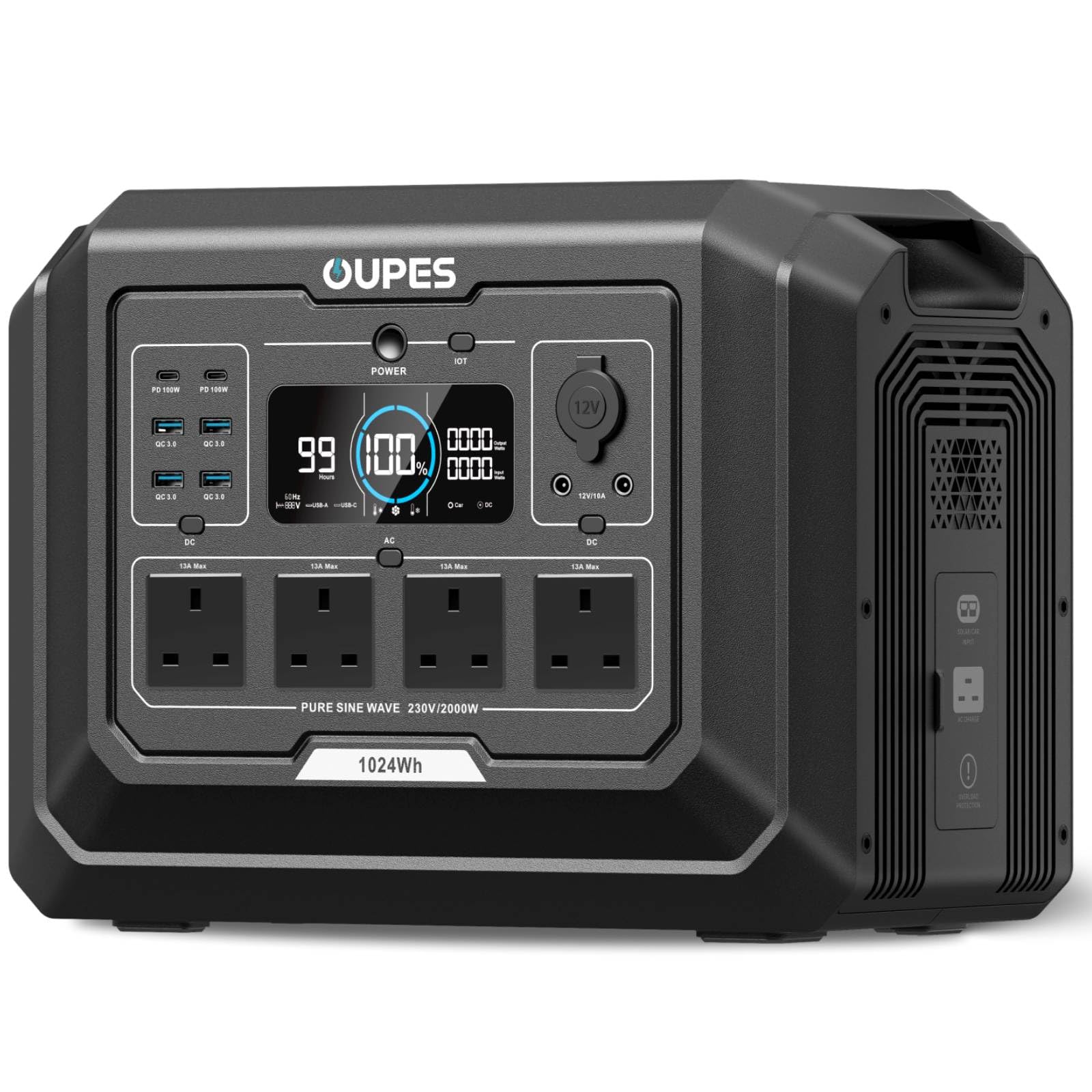
OUPES Mega 1 Portable Power Station 2000W - 1024Wh LiFePO4 Battery, 36 Min Fast Charge, 100W USB-C Output, Capacity Expandable to 5kWh, UPS, Solar Generator for Home Backup, Power Outages, Camping

EcoFlow DELTA 2 Portable Power Station with 1-3kWh Expandable Capacity, LFP Battery, Fast Charging, Use as a Solar Generator for Home Backup Power, Camping & RVs
Our Recommendation
The OUPES Mega 1 is the better buy overall because it costs £79.01 less while advertising stronger headline specs: 2000W output, 1024Wh base capacity, 100W USB-C, UPS support, and expansion up to 5kWh. For UK buyers, that is a much better value proposition for home backup and camping. EcoFlow DELTA 2 remains the more proven premium option, but it does not justify the higher price for most shoppers.
Detailed Comparison
Display
Neither product listing provides detailed display specifications, so there’s no clear winner on screen quality from the data supplied. In practical use, both should offer the usual portable power station essentials: input/output readouts, battery percentage, and charging status. Because the EcoFlow DELTA 2 is from a more established ecosystem, it likely has the more polished app and interface experience overall, but that is an ecosystem advantage rather than a hard spec advantage. Winner: EcoFlow DELTA 2, by reputation and user experience rather than published display specs.
Performance
On raw output, the OUPES Mega 1 takes the lead. It’s rated at 2000W, which is a strong figure for running kettles, microwaves, power tools, and other higher-draw appliances within limits. The 1024Wh base capacity is similar in class to the DELTA 2, but OUPES advertises expansion up to 5kWh, which is notably higher than EcoFlow’s 1–3kWh expandable range. That means the OUPES has the better ceiling for longer outages or heavier household backup. EcoFlow DELTA 2 is still a very capable unit, but on pure specs the OUPES wins for expandability and headline power. Winner: OUPES Mega 1.
Build quality and design
EcoFlow has the stronger reputation for fit, finish, app integration, and long-term product refinement. DELTA 2 is part of a mature product line widely used in the UK for backup and camping, and that usually translates into better confidence around design consistency and accessory compatibility. OUPES looks aggressive on paper, but it is the newer and less proven brand of the two. If you value polish, ecosystem maturity, and a product family with a deeper track record, EcoFlow has the edge. Winner: EcoFlow DELTA 2.
Battery life
Both units use LiFePO4/LFP chemistry, which is exactly what you want for a battery that may sit partly charged, get cycled often, and power home backup loads. LFP is safer, more stable, and typically lasts far longer than older NMC-based packs. The OUPES Mega 1’s 1024Wh base capacity plus the ability to expand to 5kWh makes it the more scalable long-term solution if you expect to add battery modules. EcoFlow DELTA 2’s 1–3kWh expansion is still useful, but it is less ambitious. For battery life in the sense of usable runtime and future expansion, OUPES wins. Winner: OUPES Mega 1.
Price and value for money
This is where the OUPES becomes very hard to ignore. At £399.99, it is £79.01 cheaper than the EcoFlow DELTA 2 at £479.00, while also advertising a higher 2000W output and much larger expansion potential. For UK buyers facing high electricity prices and wanting a practical outage backup for fridges, routers, lights, and device charging, that price gap matters. EcoFlow is the safer premium buy, but OUPES offers the stronger pound-for-pound value if the specs hold up in real-world use. Winner: OUPES Mega 1.
Game library/features
These are not gaming products, so “game library” does not apply. In terms of features, both are designed as solar generators for home backup, camping, and RV use, with UPS capability and fast charging. OUPES gets a notable advantage from the advertised 100W USB-C output and the much larger expansion ceiling, which increases flexibility for laptops, cameras, and modern USB-C devices. EcoFlow’s strength is more in its broader ecosystem and user-friendly software experience. Winner: OUPES Mega 1 for feature set, EcoFlow DELTA 2 for ecosystem polish.
Overall user experience
For everyday ownership, EcoFlow DELTA 2 is the more reassuring choice if you want a premium, widely trusted brand with a strong support ecosystem and a very refined product experience. It is the safer pick for buyers who want fewer unknowns and are willing to pay more for confidence. The OUPES Mega 1, however, is the better value proposition for most people because it delivers more headline capability for less money: 2000W output, 1024Wh base capacity, 100W USB-C, UPS support, and expansion up to 5kWh. In the UK, where winter outages, storm-related interruptions, and expensive grid electricity all make backup power more appealing, that extra capacity-per-pound is compelling. Overall summary: EcoFlow DELTA 2 is the premium, lower-risk choice; OUPES Mega 1 is the better buy for most value-conscious shoppers who want maximum capability for the money.
Buy the OUPES Mega 1 if...
Buy the OUPES Mega 1 if you want the most power and expansion for the least money. It’s the better choice if you’re building a budget-conscious home backup setup for outages, want more capacity growth later, or need stronger value for solar charging and campsite use. It also makes sense if you want the highest spec sheet per pound and are comfortable with a less established brand.
Buy the EcoFlow DELTA 2 if...
Buy the EcoFlow DELTA 2 if you value brand reputation, product maturity, and a more polished ownership experience. It’s the better fit if you want a premium unit from a widely trusted ecosystem and are willing to pay extra for that reassurance. Choose it if you prioritise peace of mind over maximum capacity per pound.
Curated by The Electric Home on All The Top Picks
As an Amazon Associate we earn from qualifying purchases.