Best value or best capacity? OUPES Mega 1 vs Anker C2000 Gen 2
If you’re choosing between these two portable power stations, you’re really deciding between value and premium capacity. The OUPES Mega 1 is far cheaper and still offers serious home-backup features, while the Anker SOLIX C2000 Gen 2 brings a much larger battery, higher output, and the reassurance of a premium brand. For UK buyers dealing with power cuts, camping, or wanting to trim electricity costs with solar, the right answer depends on how much runtime you need and how much you’re willing to pay upfront. Here’s the straight comparison so you can buy once and buy confidently.
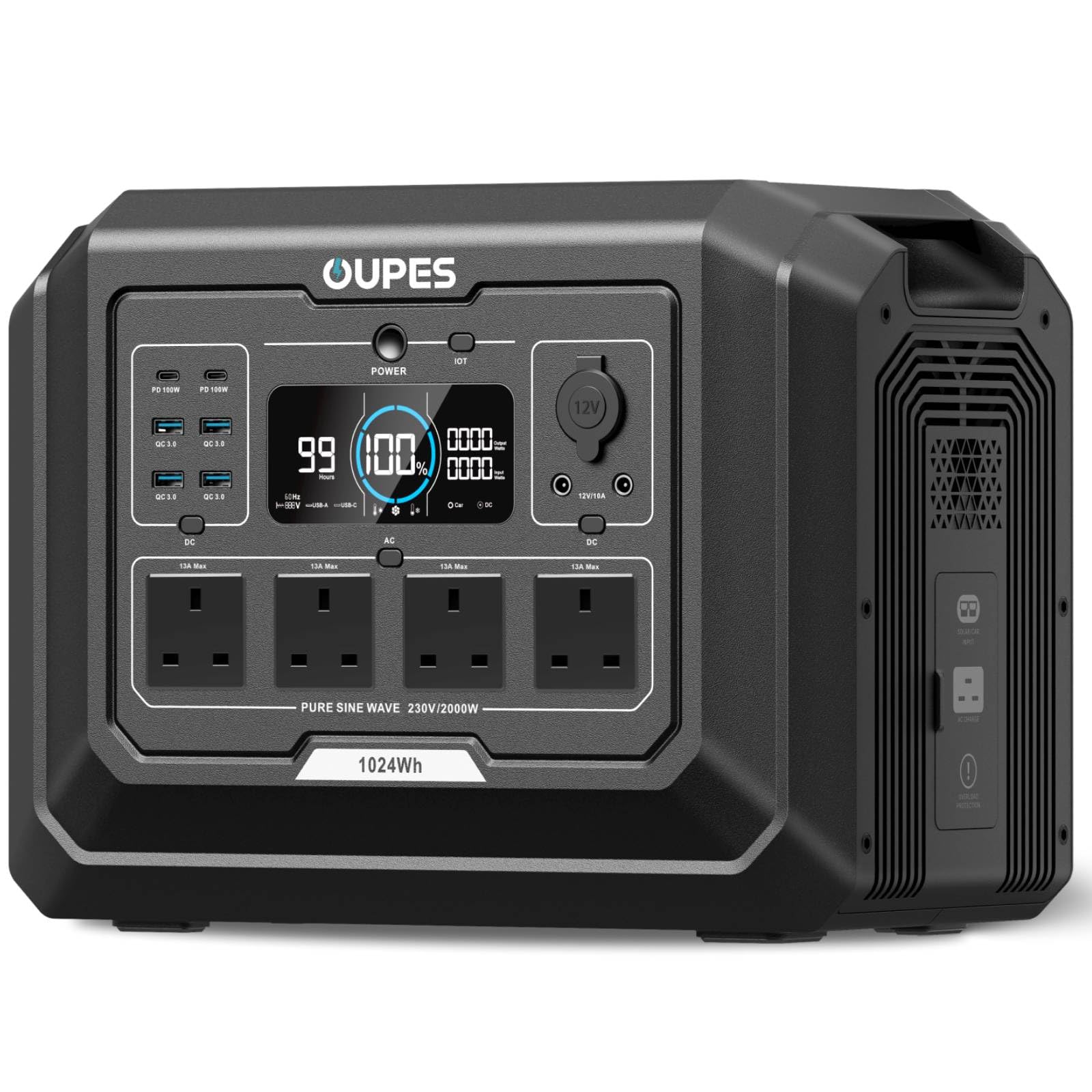
OUPES Mega 1 Portable Power Station 2000W - 1024Wh LiFePO4 Battery, 36 Min Fast Charge, 100W USB-C Output, Capacity Expandable to 5kWh, UPS, Solar Generator for Home Backup, Power Outages, Camping
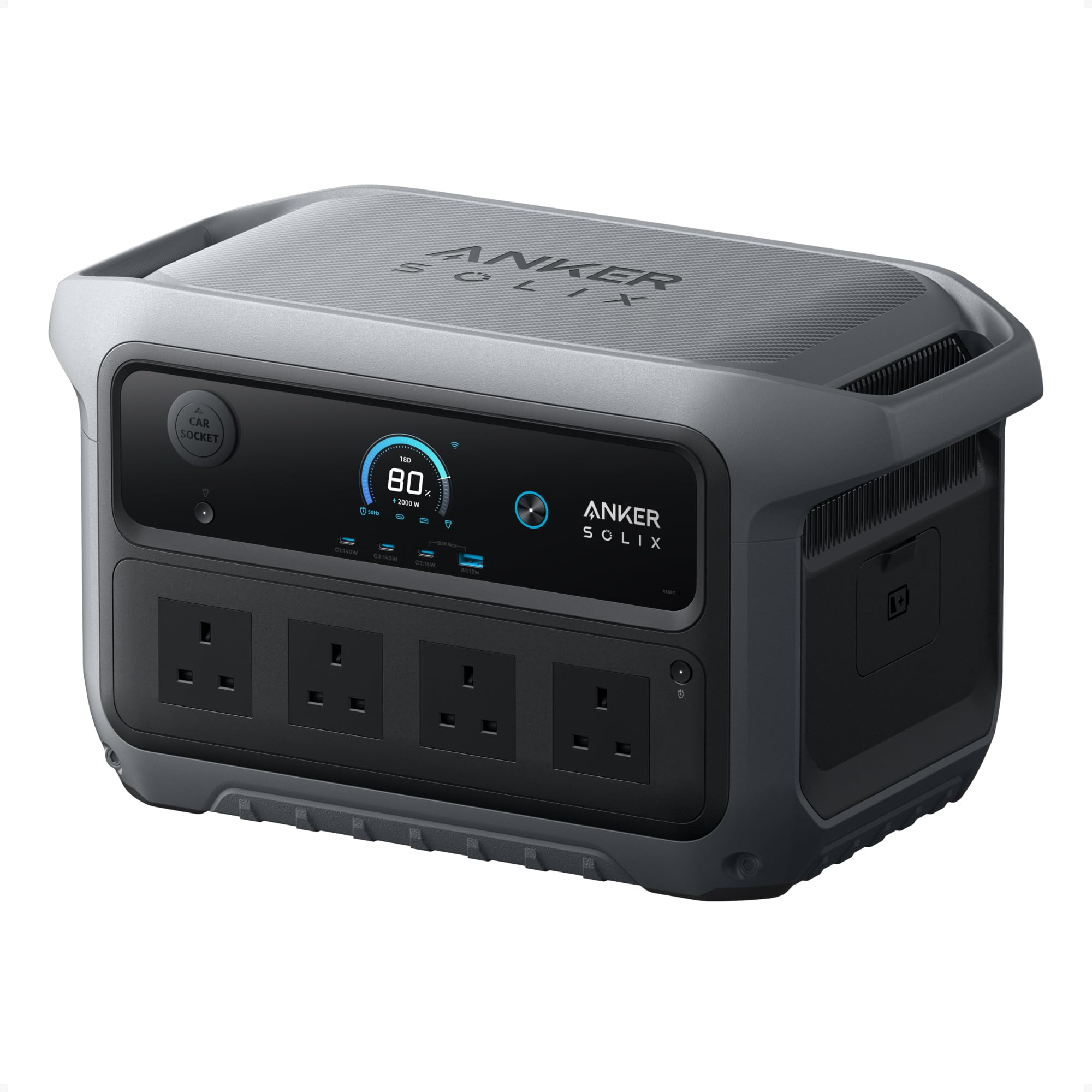
Anker SOLIX C2000 Gen 2 Portable Power Station, 2,400W (Peak 4,000W) Solar Generator, 2,048Wh LiFePO4 Battery, Full Charge in 58 Min, for Home Backup, Camping, RVing & Power Outages
Our Recommendation
The OUPES Mega 1 is the definitive buy for most people because it delivers the best balance of price, capability, and flexibility. At £399.99, it undercuts the Anker by £699.01 while still offering 2000W output, 1024Wh LiFePO4 storage, UPS support, 100W USB-C, and expandability to 5kWh. Unless you specifically need the Anker’s larger 2048Wh battery and 2400W output, the OUPES is the smarter investment.
Detailed Comparison
Display
Neither product listing provides enough detail to compare screen quality in a traditional sense, but in practical use the display matters because it tells you battery percentage, input/output wattage, and estimated runtime. On paper, this category is effectively a tie because both are designed as modern power stations with app-style status visibility rather than complex displays. If the OUPES or Anker app/monitoring is clearer in real-world use, that would tip the balance, but from the specifications provided there is no decisive winner.
Performance
The Anker SOLIX C2000 Gen 2 wins on raw performance. It delivers 2,400W continuous output with 4,000W peak, compared with the OUPES Mega 1 at 2,000W. That extra headroom matters in the UK for kettles, microwaves, power tools, and appliances with compressor or surge loads. The Anker also has a much larger 2,048Wh battery versus 1,024Wh for the OUPES, so it can run the same loads for roughly twice as long. In pure capability, Anker is the stronger machine.
Build quality and design
Anker wins here as well, mainly on brand reputation and product positioning. Anker’s SOLIX line is typically aimed at buyers who want a more polished ecosystem, stronger support, and a premium finish. The OUPES is still a serious LiFePO4 unit with UPS support and expandable capacity, but the much lower price suggests more compromise in materials, refinement, or ecosystem depth. If you want the more confidence-inspiring long-term purchase, Anker takes this category.
Battery life
This is a split win depending on what you mean by battery life. In terms of outright stored energy, Anker wins with 2,048Wh, which is double the OUPES at 1,024Wh. For a UK home backup scenario, that means more hours for Wi-Fi, lighting, laptops, CPAP machines, and fridge cycling during a power outage. However, OUPES wins on expandability because it can grow to 5kWh, which is far beyond the Anker’s base capacity if you add expansion batteries. So if you mean out-of-the-box battery life, Anker wins; if you mean long-term scalable runtime, OUPES has the better ceiling.
Price and value for money
OUPES wins decisively on value. At £399.99 versus £1,099.00, it is £699.01 cheaper, which is an enormous gap in a market where many buyers are trying to avoid high electricity bills and prepare for outages without overspending. For the money, the OUPES gives you 2000W output, 1024Wh LiFePO4 storage, 36-minute fast charging, 100W USB-C, UPS functionality, and expandability to 5kWh. That is a very strong feature set for the price. Anker is better equipped, but the premium is steep; you are paying for more capacity, more output, and likely a more refined product, not better value.
Game library/features
This category is best interpreted as features and versatility, since these are power stations rather than gaming devices. The OUPES is impressive here because it includes 100W USB-C output, UPS support, fast charging in 36 minutes, and capacity expansion to 5kWh. That makes it a flexible home-backup and off-grid option for budget-conscious users. The Anker counters with a bigger battery, higher peak output, and a 58-minute full charge, which is excellent, but it does not match the OUPES on sheer feature-per-pound value. For feature density, OUPES wins.
Overall user experience
For everyday use, the Anker SOLIX C2000 Gen 2 is the easier recommendation if you want fewer compromises. The larger battery and higher output translate into less anxiety about what you can plug in and for how long, which is especially useful during winter outages in the UK when solar generation is weaker and you need more stored energy. But the OUPES is the smarter buy for most people because it gives you a lot of the same core benefits at less than half the price. If your priority is keeping essentials running, charging devices, and backing up a small home setup, the OUPES delivers outstanding practical value. If your priority is running more demanding appliances for longer and you want the premium option, the Anker is the better experience.
Overall summary: Anker SOLIX C2000 Gen 2 is the superior power station on paper thanks to its larger 2,048Wh battery, 2,400W output, and stronger premium positioning. But the OUPES Mega 1 is the better buy for most shoppers because it is dramatically cheaper, still highly capable, and offers expandable capacity that can eventually exceed the Anker’s base storage. In short: Anker wins on performance, OUPES wins on value, and the best choice depends on whether you want maximum capability now or the best pound-for-pound deal.
Buy the OUPES Mega 1 if...
Buy Product A if you want the best value home-backup option and your loads are mainly essentials like Wi-Fi, lights, phones, laptops, TV, and a fridge. It is also the better pick if you plan to build capacity gradually, because expansion to 5kWh makes it far more scalable than the base spec suggests. For UK buyers trying to stay prepared for outages without spending over £1,000, this is the sensible choice.
Buy the Anker SOLIX C2000 if...
Buy Product B if you need the extra battery capacity and higher output straight away, especially for heavier appliances, longer outages, or more demanding camping and RV use. It is the better pick if you want a premium, higher-confidence product and are happy paying for it. If you expect to run more power-hungry gear or want longer runtime without expansion batteries, the Anker is worth the extra money.
Curated by The Electric Home on All The Top Picks
As an Amazon Associate we earn from qualifying purchases.