The £119 Question: Budget NiPoGi or Faster GEEKOM Mini PC?
If you’re choosing between these two mini PCs, you’re really deciding between value and headroom. The NiPoGi Pinova P1 is the cheaper option at £309.99, while the GEEKOM A5 PRO costs £429 but brings a much newer Ryzen 5 7430U, twice the SSD capacity, and a stronger overall spec sheet. For home office use, Plex, light editing, or a compact Windows box, both are viable — but they target different buyers. Here’s the straight answer on which one makes more sense.
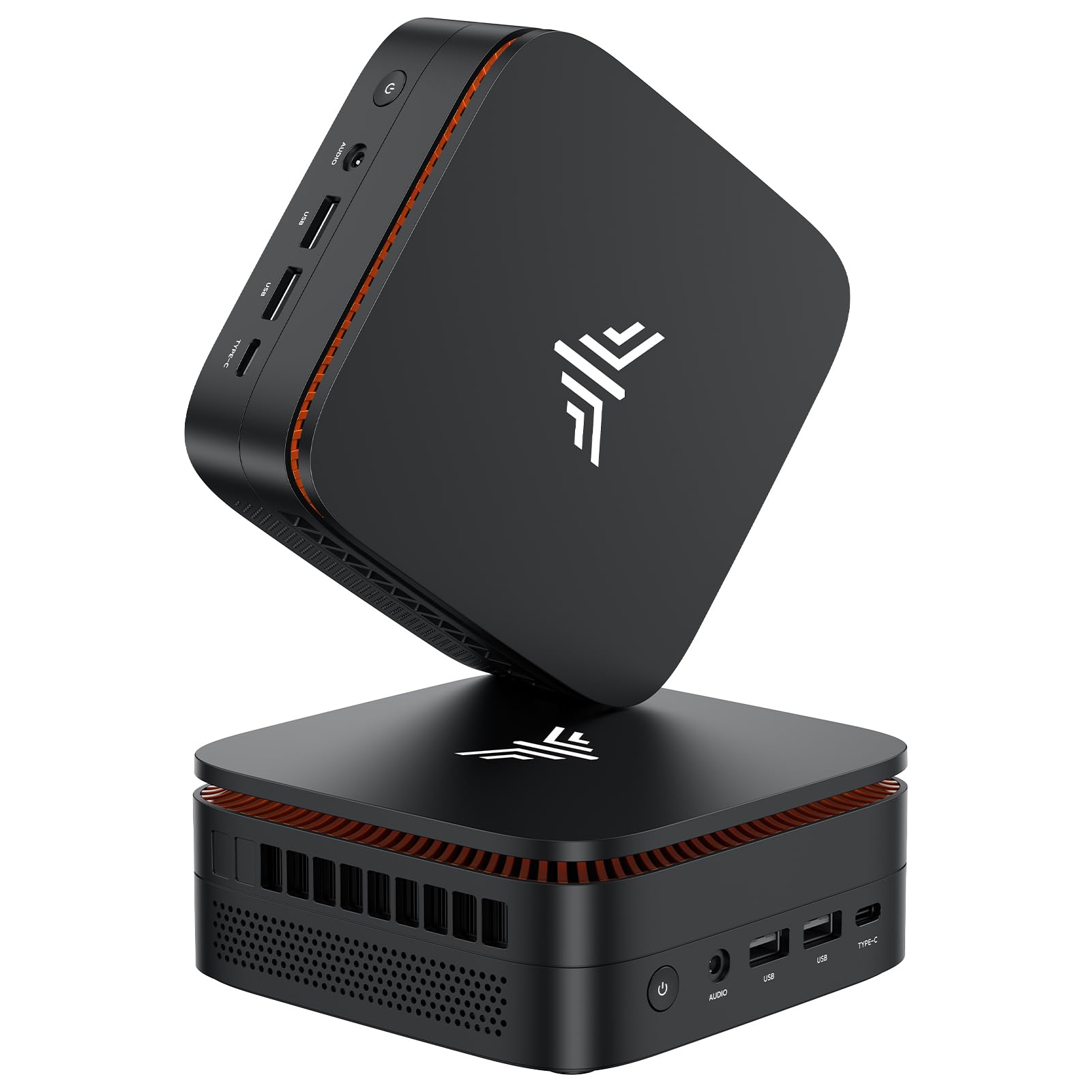
NiPoGi Pinova P1 Mini PC, AMD Ryzen 4300U(Βeats 3300U/N150/N97,Up to 3.7 GHz) Mini Computer, 16GBRAM 256GB SSD Mini PC Windows 11 Pro, Triple 4K Display/USB 3.2/Type-C/HDMI/WiFi/BT for Home Office
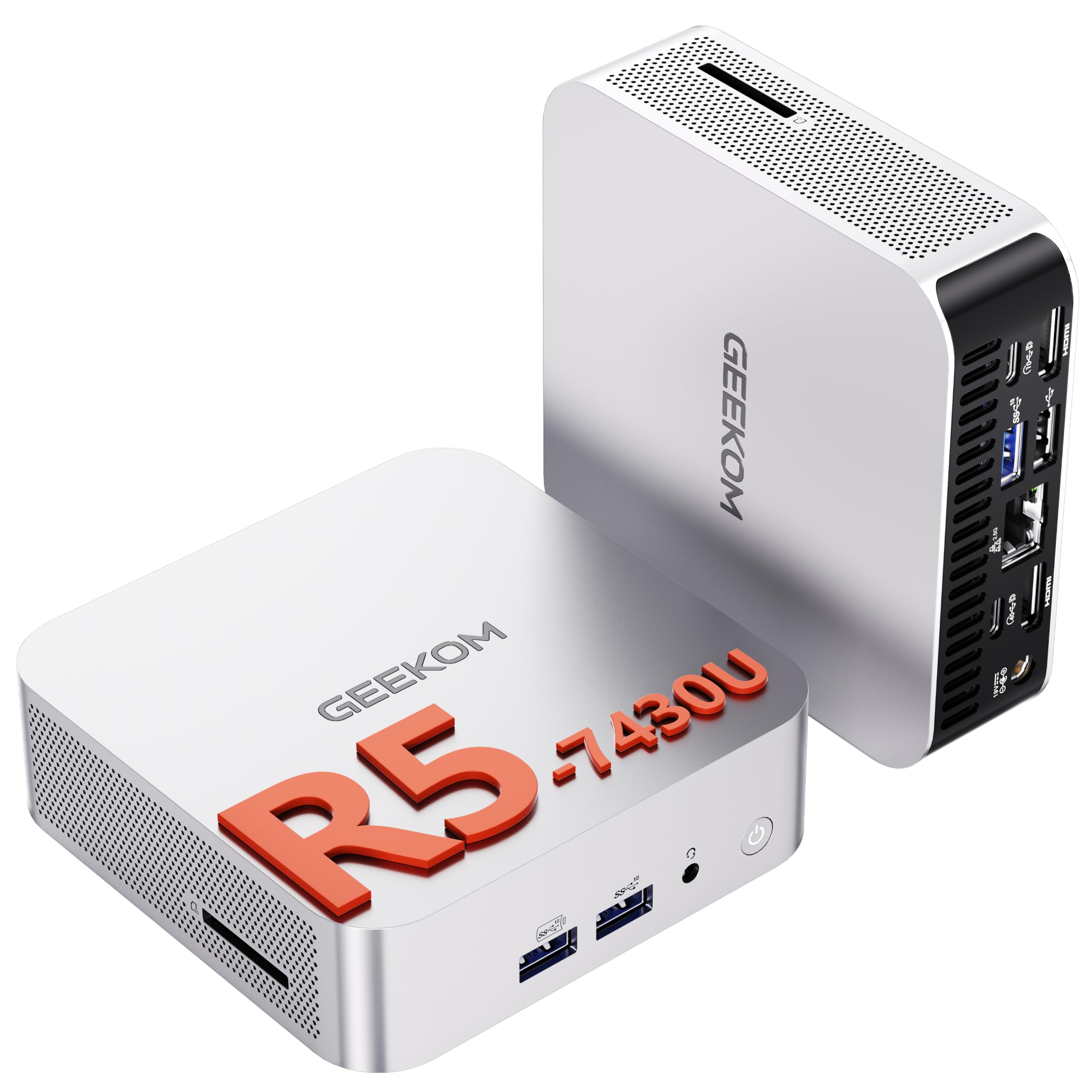
GEEKOM [2026 The Best Mini PC A5 PRO Mini PC Windows 11 Pro,with AMD Ryzen 5 7430U(Up to 4.4GHz) 16GB RAM & 512GB(Upgradable) SSD,Dual HDMI Quad Display/WIFI 6/6×USB for Video Editing/Graphic Design
Our Recommendation
The GEEKOM A5 PRO is the better buy because its Ryzen 5 7430U is significantly faster than the older Ryzen 4300U, and that difference will be obvious in everyday use. You also get a 512GB SSD instead of 256GB, stronger multi-display support, and a more future-proof platform for productivity, editing, and light creative work. The NiPoGi is cheaper, but the performance gap is large enough that the GEEKOM is the more rounded machine for most buyers.
Detailed Comparison
Display
Neither mini PC has a built-in screen, so display quality depends on your monitor(s). On paper, Product A supports triple 4K output via USB 3.2, Type-C, and HDMI, while Product B supports dual HDMI and quad display. If your priority is simply connecting multiple monitors, GEEKOM wins because the quad-display support is more flexible for productivity setups, especially if you want a mixed workspace with multiple 4K screens or a TV plus monitors. NiPoGi still does well for a compact office desk, but its triple-display setup is the weaker of the two. Winner: Product B.
Performance
This is the biggest gap. The NiPoGi uses an AMD Ryzen 4300U, a 4-core/4-thread older Zen 2 chip that is fine for web browsing, Office, streaming, and light multitasking, but it is not a high-end performer by 2026 standards. The GEEKOM’s Ryzen 5 7430U is a far stronger 6-core/12-thread processor with a boost up to 4.4 GHz, which means better responsiveness, faster app launches, smoother multitasking, and much stronger performance in workloads like photo editing, coding, light video editing, and running containers or VMs. If you’re comparing real-world speed rather than marketing claims, Product B is decisively ahead. Winner: Product B.
Build quality and design
Both are compact mini PCs, so neither is meant to be a premium workstation tower. That said, GEEKOM has a stronger reputation for better chassis design, cooling, and overall fit-and-finish, and its higher price usually reflects that. NiPoGi tends to compete aggressively on cost, which is great for value, but it can mean a more basic enclosure and less thermal/power headroom. For a quiet desk setup that needs to feel robust over time, Product B is the safer bet. Winner: Product B.
Battery life
Neither product has a battery, so this category doesn’t really apply in the same way it would for a laptop. In practical terms, both are mains-powered mini desktops, so you should think about power efficiency and idle draw instead. The Ryzen 4300U in Product A may use less power under light load, but Product B’s newer 7430U is still efficient enough for a small home office machine while delivering much more performance per pound spent on capability. Because battery life is not relevant here, this is effectively a tie, with a slight efficiency nod to Product A and a performance-efficiency balance advantage to Product B. Winner: Tie.
Price and value for money
This is where NiPoGi fights back hard. At £309.99, Product A is £119.01 cheaper than the GEEKOM, and it still includes 16GB RAM, 256GB SSD, Windows 11 Pro, and triple 4K display support. If you only need a basic office PC, a streaming box, or a home admin machine, the NiPoGi’s lower price makes it attractive. However, Product B’s extra £119 buys a much faster CPU, a 512GB SSD, and a better long-term platform for heavier workloads. For pure value at the entry level, Product A wins; for value over the life of the machine, Product B often makes more sense because you are less likely to outgrow it. Winner: Product A for upfront value, Product B for long-term value.
Game library/features
These are not gaming-focused mini PCs, so the “game library” angle is really about compatibility and casual play. The Ryzen 5 7430U in Product B has the stronger integrated graphics and CPU headroom, so it will handle lighter games, emulation, and older titles more comfortably. Product A can still run casual games and cloud gaming services, but the 4300U is the weaker platform for anything beyond basic entertainment. If you want a mini PC that can double as a casual gaming box, Product B is the better choice. Winner: Product B.
Overall user experience
For day-to-day use, both will feel fine for browsing, Office, email, Zoom, and media playback. The difference is how long they stay feeling fast as your workload grows. The NiPoGi is the easier recommendation if you want the cheapest usable Windows 11 Pro mini PC and you know your needs are modest. The GEEKOM feels like the more complete machine: faster CPU, larger SSD, more display flexibility, and better suitability for creative work or heavier multitasking. If you want a machine that feels less limited and more future-proof, Product B delivers the better overall experience. Winner: Product B.
Overall summary: The NiPoGi Pinova P1 is the budget pick, and it is genuinely good value if you just want a compact home office PC. But the GEEKOM A5 PRO is the better mini PC in almost every meaningful way: stronger Ryzen 5 7430U performance, larger 512GB SSD, better multi-display support, and a more capable platform for editing, design, and heavier multitasking. If your budget stretches to it, the GEEKOM is the smarter buy. If you need to save money and your workload is light, the NiPoGi is the cheaper way in.
Buy the NiPoGi Pinova P1 if...
Buy the NiPoGi Pinova P1 if your budget is capped around £310 and your needs are basic: web browsing, Microsoft 365, email, streaming, and light admin work. It also makes sense if you want a low-cost second PC, a simple media box, or a compact machine for a spare desk.
Buy the GEEKOM [2026 The if...
Buy the GEEKOM A5 PRO if you want noticeably faster performance, more storage out of the box, and a mini PC that can handle heavier multitasking without feeling cramped. It is the better choice for video editing, graphic design, multiple monitors, and anyone who wants a machine that should age better over the next few years.
Curated by Home Server Hub on All The Top Picks
As an Amazon Associate we earn from qualifying purchases.