WiMiUS Home Cinema Showdown: Smart Netflix Projector or Bigger-Spec 4K-Ready Pick?
If you’re deciding between these two WiMiUS portable projectors, you’re really choosing between convenience and headline-grabbing specs. Both sit at the same strong 4.7/5 rating with over 6,000 reviews, so this is a close fight for bedroom movies, garden film nights, and casual gaming. The key differences are in the extras: Product A adds Netflix built in and Dolby Audio, while Product B pushes harder on brightness claims, keystone flexibility, and a slightly larger projected image. Here’s which one actually makes more sense to buy.
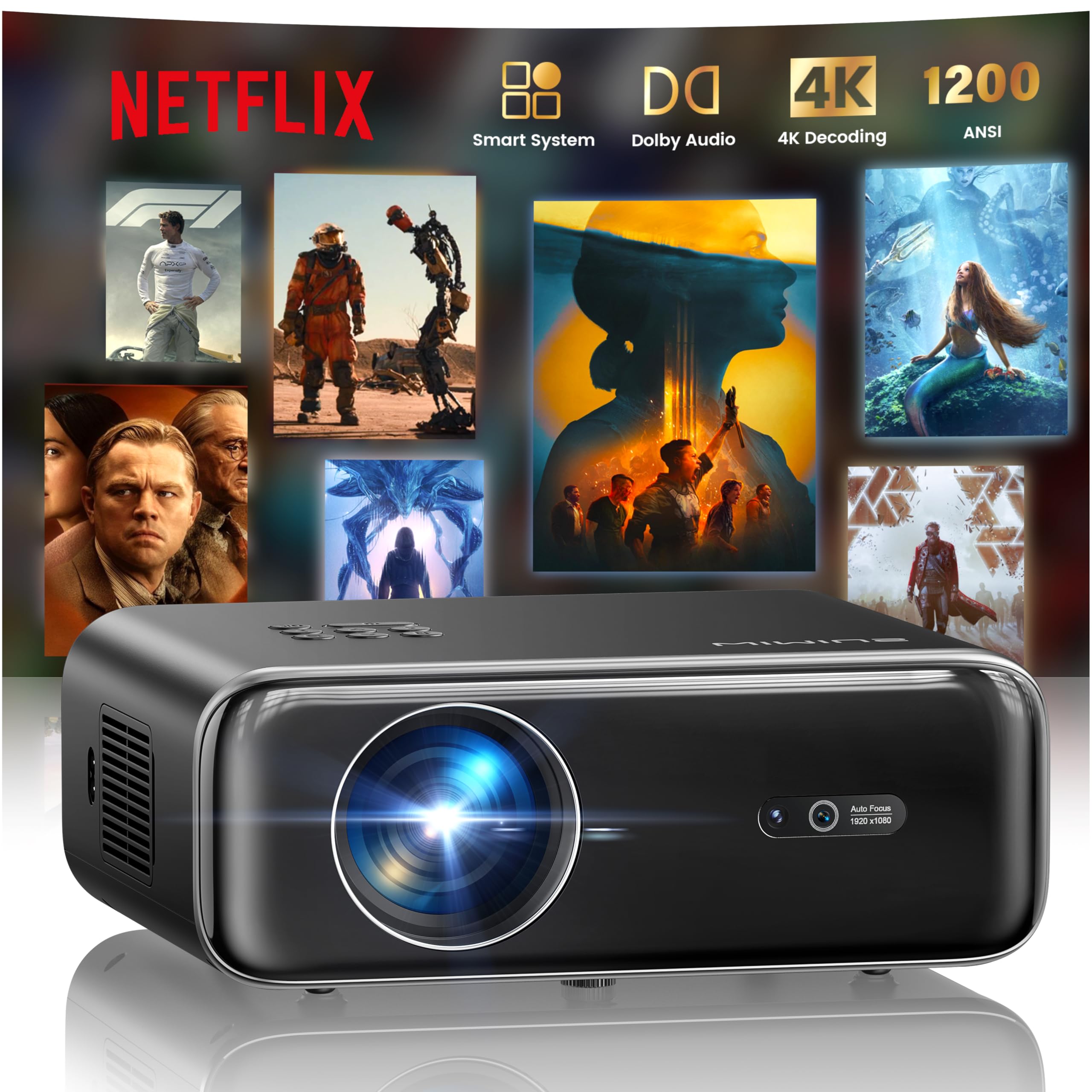
【Netflix Included/Dolby Audio】Smart 4K Projector,1200ANSI FHD 1080P Portable Projector,HDR10 Short Throw Auto Focus/Keystone WiFi6 Bluetooth 50% Zoom Home Cinema Projectors for Bedroom,Outdoor,Gifts

【Auto Focus & Keystone】Projector, 38000 Lumen WiFi 6 Bluetooth Full HD 1080P Portable Projector Supported 4K, 4D/4P Keystone 50% Zoom 300"Display Home Cinema Projectors for Smartphone/TV Stick/PPT/PS5
Our Recommendation
Product A is the definitive recommendation because it gives you the stronger real-world picture spec, Netflix built in, Dolby Audio, HDR10, and a lower price. It also feels more complete as a true plug-and-play home cinema projector, which matters far more than inflated brightness marketing. Product B has some useful flexibility features, but not enough to justify the extra £30 for most buyers.
Detailed Comparison
Display
Product A wins on real-world picture quality for most buyers. It’s rated at 1200 ANSI lumens, which is far more meaningful than the very high “38000 lumen” marketing claim on Product B, because ANSI lumens are the standard measure that better reflects actual brightness. Both are Full HD 1080P projectors with 4K support, but Product A also adds HDR10, which should help with contrast and highlight detail in films and streaming content. For a living room, bedroom, or evening outdoor setup, Product A looks like the safer bet for a more consistent cinematic image.
Product B’s main display advantage is scale and positioning flexibility. It advertises a 300-inch display and 4D/4P keystone correction, which sounds useful if you need to line up the image in awkward spaces. That said, bigger claimed size does not automatically mean better image quality, especially if brightness and contrast are not as clearly specified as Product A’s 1200 ANSI figure. Winner: Product A.
Performance
Product A again has the edge for everyday use. Short throw, auto focus, auto keystone, WiFi 6, Bluetooth, Netflix included, and Dolby Audio make it feel like a more complete home cinema package straight out of the box. If you want to sit down and start watching quickly, fewer add-ons and fewer workarounds matter more than flashy spec-sheet numbers. The fact that it is positioned as a smart projector also means less reliance on external streaming sticks and fewer compatibility headaches.
Product B is still well equipped, with auto focus, keystone correction, WiFi 6, Bluetooth, and support for TV sticks, smartphones, PPT, and PS5. It sounds slightly more flexible for mixed use, especially if you want to connect a laptop or console often. However, the lack of Netflix built in means you may need extra hardware for streaming, and that reduces the simplicity advantage. Winner: Product A.
Build quality and design
This is close, because both are from the same brand and both are clearly aimed at portable home cinema use. Product A has the more polished feature set for a premium-feeling living room experience: short throw, auto focus, auto keystone, and Dolby Audio suggest a projector designed to be a ready-to-use entertainment box. The “Bedroom, Outdoor, Gifts” positioning also hints at broader consumer appeal and easier all-round use.
Product B’s design advantage is practical rather than luxurious. The 4D/4P keystone and 50% zoom are attractive if your room layout is awkward or you need to place the projector off-centre. That said, build quality is harder to judge from the listing alone, and neither product has a clear advantage in materials or long-term durability from the data provided. Winner: tie, with a slight lean to Product A for the more complete package.
Battery life
Neither product appears to have a built-in battery, so this category is effectively a non-factor. Both are best treated as mains-powered portable projectors rather than true battery projectors. For outdoor movie nights, you’ll likely need access to power, an extension lead, or a suitable battery station. Winner: tie.
Price and value for money
Product A wins on value. It costs £189.99, which is £30 less than Product B’s £219.99, yet it includes Netflix and Dolby Audio plus the more clearly stated 1200 ANSI brightness rating and HDR10. That makes it the better buy for most people because you’re paying less for a more complete entertainment experience.
Product B only makes sense if you specifically need its extra placement flexibility or prefer its broader device-support messaging. But when two projectors are this similar in rating and brand reputation, the cheaper one with the more useful out-of-box features is usually the smarter purchase. Winner: Product A.
Game library/features
Neither is a gaming device in the sense of offering a built-in game library, so the real question is gaming compatibility and convenience. Product B is slightly better on paper here because it explicitly mentions PS5 support and broader compatibility with smartphone, TV stick, and PPT use. If your projector is going to double as a casual gaming and presentation display, that wider input-oriented positioning is handy.
However, for most buyers, Product A still feels like the better entertainment hub because Netflix built in means less time juggling devices and more time actually watching or playing. Dolby Audio also helps movie nights and console sessions feel more immersive. Winner: Product B for connectivity use cases, but Product A for overall entertainment convenience.
Overall user experience
This is where Product A pulls ahead decisively. It combines the most believable brightness spec, HDR10, Netflix built in, Dolby Audio, short throw, auto focus, auto keystone, WiFi 6, Bluetooth, and a lower price. That combination makes it the projector most likely to deliver a smooth, low-fuss experience in a UK bedroom, lounge, or garden setup.
Product B is still appealing if you want more manual flexibility and a projector that sounds adaptable for lots of different sources. But the headline “38000 lumen” claim is less trustworthy than Product A’s 1200 ANSI figure, and the extra £30 is hard to justify when Product A already offers the better all-in-one feature set. Overall summary: Product A is the better buy for almost everyone, while Product B is only worth paying extra for if its 4D/4P keystone and input flexibility are your top priorities.
Buy the 【Netflix Included/Dolby Audio】Smart if...
Buy Product A if you want the easiest, most cinematic setup for Netflix, films, and casual family viewing. It’s also the better pick if you care about believable brightness, HDR10, and getting the most features for the least money. For bedroom use, outdoor movie nights, or a gift, it’s the safer and smarter choice.
Buy the 【Auto Focus & if...
Buy Product B if you need the extra keystone flexibility for a tricky room layout or you regularly connect different devices like a PS5, laptop, or TV stick. It may suit users who prioritise placement options over built-in streaming convenience. Choose it only if those added setup controls matter more to you than Netflix built in and the lower price.
Curated by Screen Scene on All The Top Picks
As an Amazon Associate we earn from qualifying purchases.