Which EV Charger Actually Makes Sense for Your Driveway?
If you’re deciding between a fixed 7.4kW wallbox and a portable 3-pin charger, you’re really choosing between speed, convenience, and flexibility. Product A, the Masterplug Smart EV Home Wall Charger, is built for proper home charging with Wi-Fi, solar integration, and Mode 3 installation. Product B, the EVJUICION portable charger, is aimed at drivers who want a cheaper, plug-and-go solution they can use at home or take with them. The right answer depends on whether you want a long-term charging setup or a budget-friendly backup charger.
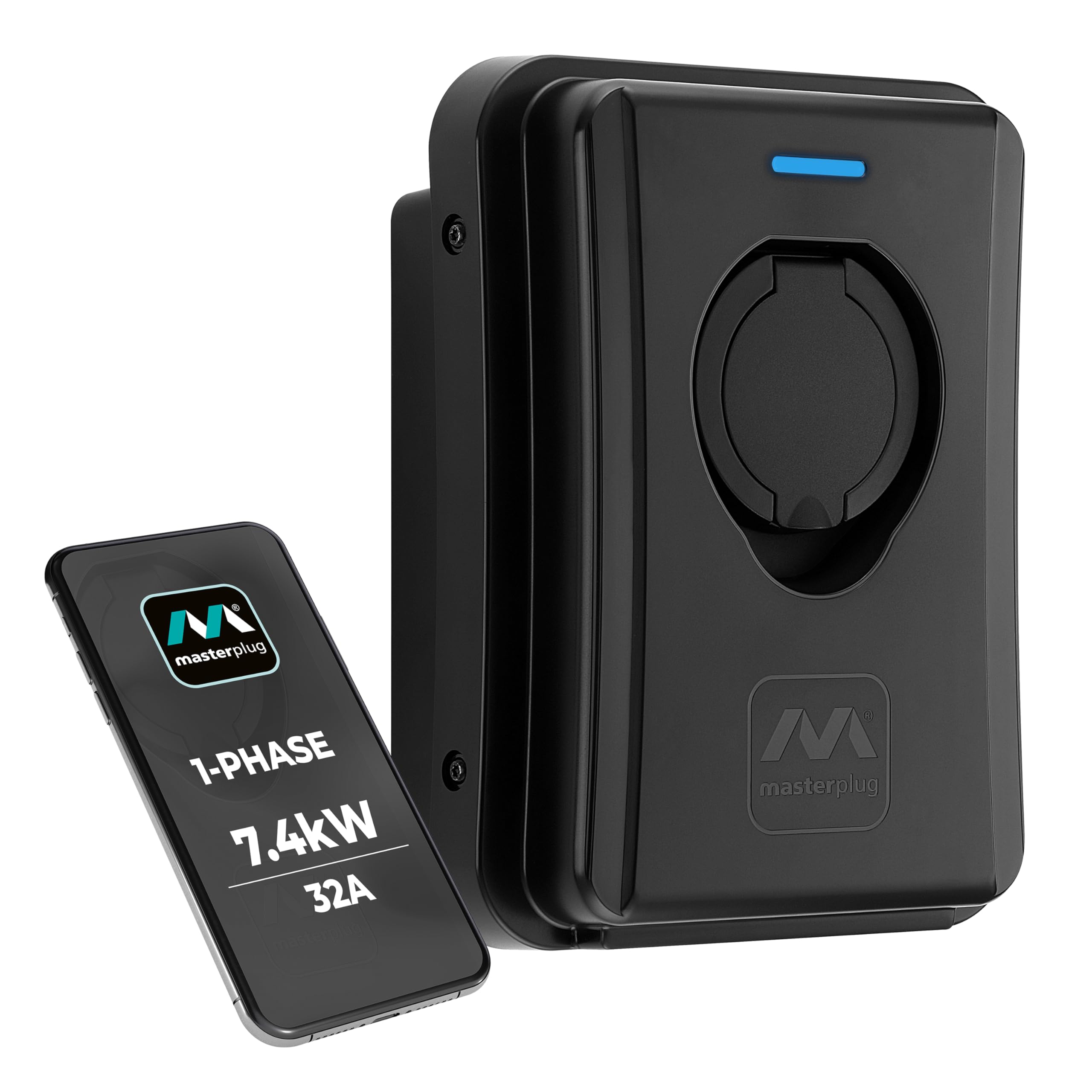
Masterplug Smart EV Home Wall Charger for Type 2 Electric and Plug-In Hybrid Vehicles, Socket Only, Mode 3, Auto-Lock, Solar Charging, Single Phase, Wi-Fi, Black, IP55, 7.4kW, 32A, EVCM3SS7B-MP
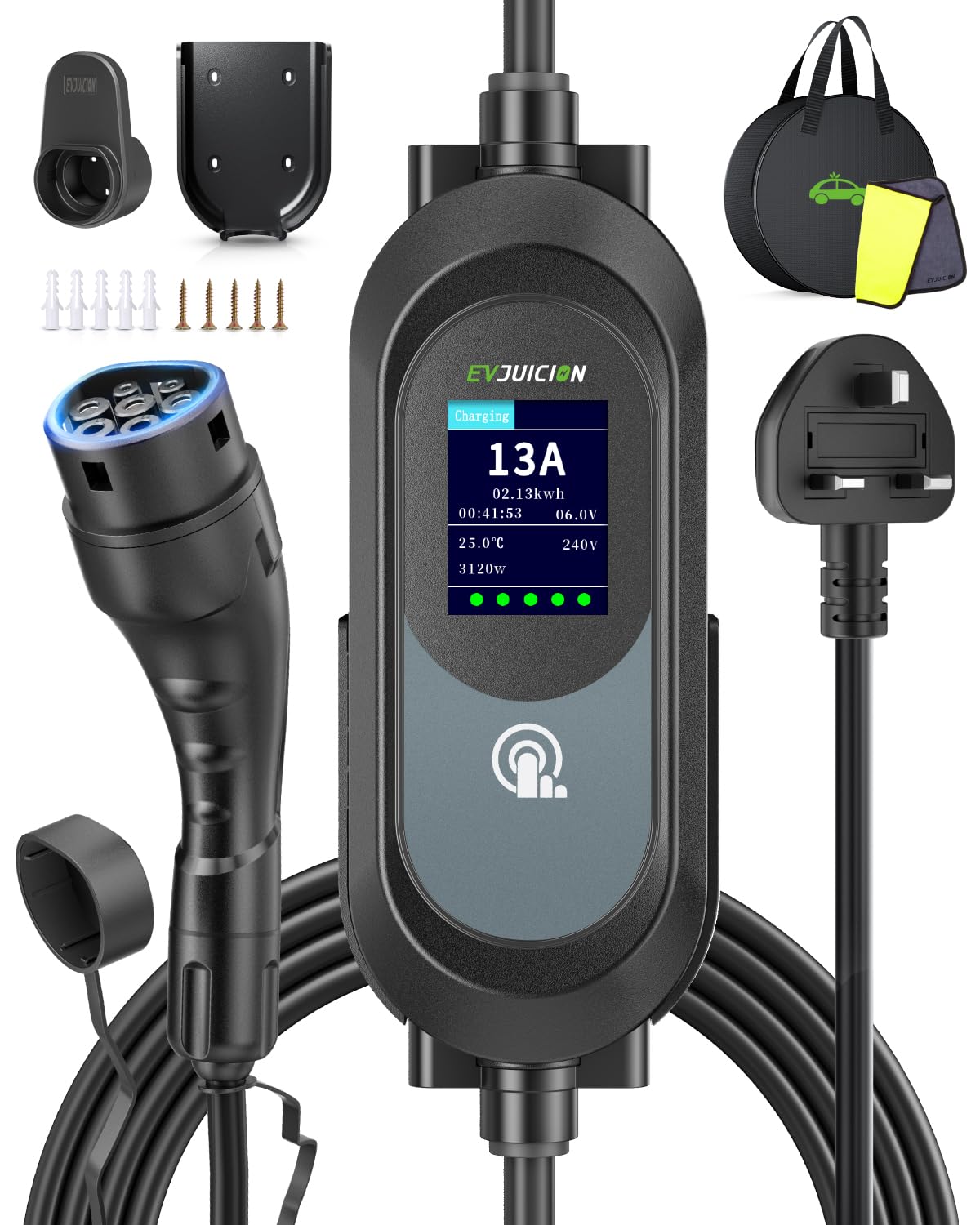
EVJUICION EV Charger 3 Pin Plug, 6M 3.1kW 6-13A 3 Pin EV Charger, Portable Electric Car Charger for up to 12H Delayed Start Charging with 2.4″ LED Screen, IP67 for EVs & PHEV
Our Recommendation
Product A is the definitive recommendation for most buyers because it offers true home-charging performance at 7.4kW, plus Wi-Fi and solar charging support. That makes it far more useful for daily EV ownership, especially in the UK where overnight charging and solar self-consumption can materially improve running costs. Product B is good value, but its 3.1kW 3-pin design is too slow to be the best primary charger for most households.
Detailed Comparison
Display
Product A does not advertise a built-in display, so on-screen feedback is likely limited or handled through app/Wi-Fi controls. Product B includes a 2.4-inch LED screen, which gives you immediate visibility of charging status, current, and timing information. For people who want to see what the charger is doing at a glance, Product B wins this category. The screen is a practical advantage, especially for portable use where you may not always be near the car or app.
Performance
Product A is the clear performance winner. It delivers up to 7.4kW at 32A on single phase, which is the standard fast home-charging rate for many UK properties with a dedicated wallbox. Product B tops out at 3.1kW and 6–13A via a 3-pin plug, which is much slower and closer to a trickle-style overnight charge. In real terms, Product A can replenish roughly twice the energy per hour, making it far better for bigger batteries, higher daily mileage, or households with more than one EV/PHEV to manage. If you want to recover 20–30 miles of range quickly after work, Product A is the one that does the job properly.
Build Quality and Design
Product A has the stronger installation-grade design: IP55 weather resistance, auto-lock, socket-only Mode 3 operation, and support for solar charging. That combination suggests a more permanent, robust unit meant to live outside on a wall and handle regular daily use. Product B is IP67, which is excellent for dust and water protection, and its portable form factor is useful if you travel or need a charger you can store in the boot. However, the 3-pin plug design is inherently less elegant and less suitable for high-frequency use than a dedicated wallbox. Overall, Product A wins on design for long-term home ownership, while Product B wins on portability and ruggedness.
Battery Life
Neither product has a battery, so this category is best interpreted as charging impact and how effectively each supports the vehicle battery over time. Product A wins because faster, more efficient AC charging is generally more convenient and better suited to maintaining a healthy daily charging routine. It also supports solar charging, which is a major plus for UK homeowners with PV: you can soak up daytime surplus generation instead of exporting it for a modest SEG rate. Product B is still perfectly usable for overnight top-ups, but at 3.1kW it will take much longer, which matters if you arrive home low on charge or want to take advantage of cheap off-peak electricity before morning.
Price and Value for Money
Product B is dramatically cheaper at £84.90 versus £276.59 for Product A, a difference of £191.69. On pure upfront cost, Product B wins easily, and for drivers who only need occasional charging or a portable spare, it is strong value. But Product A offers far more capability for the money: 7.4kW charging, Wi-Fi, solar compatibility, auto-lock, and a proper wall-mounted installation. In the UK, where electricity can be around 24–30p/kWh depending on tariff, the real savings come from how efficiently and conveniently you can charge at home, not from the charger price alone. If you’ll use it every week, Product A’s extra spend is easier to justify.
Features and User Experience
Product A has the richer feature set: Wi-Fi connectivity, solar charging support, Mode 3 operation, and auto-lock. That makes it better for people who want to schedule charging around off-peak tariffs, integrate with solar, and use a more seamless daily routine. Product B’s strengths are simplicity and portability: it is plug-in, has a display, supports delayed start up to 12 hours, and works as a straightforward emergency or travel charger. For user experience, Product A is better for a permanent home setup and smarter energy management. Product B is better if you value flexibility and want something you can use anywhere there is a suitable socket.
Overall user experience
For a typical UK homeowner with a driveway and regular EV use, Product A is the superior ownership experience. Faster charging matters in winter when solar generation is weak and evenings are dark, and a fixed wallbox is simply more convenient than repeatedly plugging into a 3-pin socket. Product B is attractive as a low-cost backup, for occasional use, or for drivers with very low daily mileage who don’t need speed. But if this is your main charger, the slower 3.1kW output will become frustrating over time.
Overall summary: Product A is the better all-round buy because it combines much faster charging, smarter features, and better long-term home installation value. Product B only beats it on price, portability, and the presence of a display. If you want the best main charger for a UK home, choose Product A. If you want a cheap portable charger for occasional use, choose Product B.
Buy the Masterplug Smart EV if...
Buy Product A if you want a permanent, wall-mounted charger for daily use and you care about charging speed. It is the better choice if you have a driveway, want to use off-peak tariffs, or plan to integrate solar PV to reduce your electricity bill. It is also the smarter pick if you expect to keep the car for years and want a proper long-term setup.
Buy the EVJUICION EV Charger if...
Buy Product B if you need the lowest upfront cost and want a portable charger you can keep in the boot. It makes sense if you only do modest mileage, charge overnight, or need a backup charger for trips and emergencies. It is also the better fit if you do not want the expense or commitment of installing a dedicated wallbox yet.
Curated by The Electric Home on All The Top Picks
As an Amazon Associate we earn from qualifying purchases.