Garrett Ace 300 or ACE 400i: which detector actually earns your money?
If you’re choosing between the Garrett Ace 300 and Garrett ACE 400i, you’re really deciding how much performance you need for UK parkland, pasture, and ploughed fields. Both are proven VLF detectors from the same brand, both have excellent user ratings, and both are aimed at beginners moving up to a serious first machine. The ACE 400i costs more, but it also brings more depth, better target separation, and a more serious feature set for experienced users. Here’s the straight answer on which one makes more sense for your style of detecting.
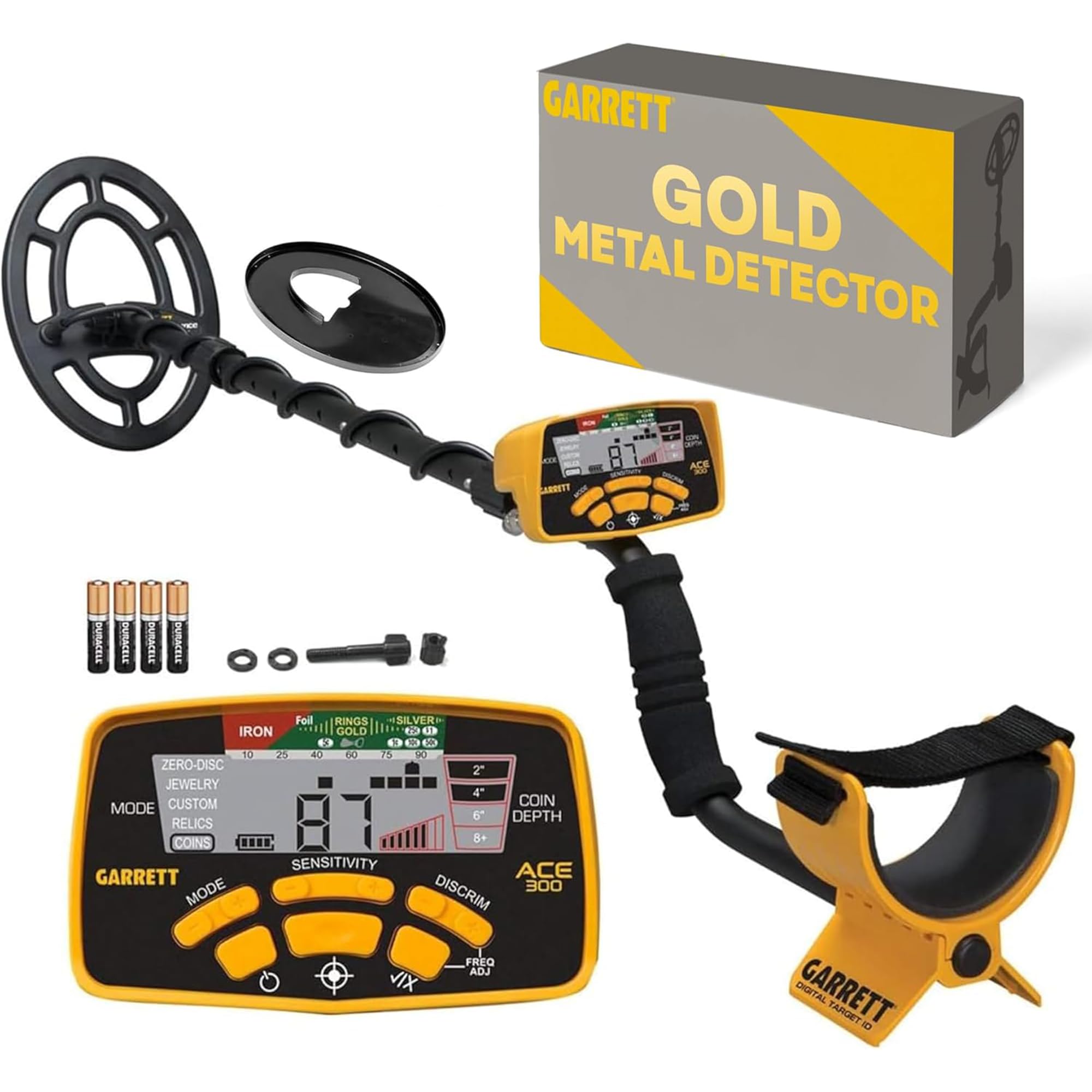

Our Recommendation
The Garrett ACE 400i is the better buy for most people because it offers stronger real-world performance, better target separation, and a more useful feature set. Its 10 kHz operation, DD coil, iron audio, and improved discrimination make it more capable on UK fields and in trashy ground. The Ace 300 is cheaper and simpler, but the 400i is the detector you are less likely to outgrow.
Detailed Comparison
Display
The ACE 400i wins here. Both machines use Garrett’s easy-to-read LCD interface, but the 400i gives you the more informative setup with a more advanced target ID scale, iron audio, and a better overall feel for interpreting signals quickly in the field. For newcomers, the Ace 300 screen is perfectly usable and straightforward, but the 400i is the better display for anyone who wants more confidence deciding whether to dig. Winner: ACE 400i.
Performance
This is the biggest difference and the main reason to spend extra. The Ace 300 runs at 8 kHz, which is a solid all-round frequency for coins, relics, and general detecting. The ACE 400i runs at 10 kHz, giving it a little more sensitivity to smaller and lower-conductivity targets such as hammered coins, thin silver, and small relics, while still remaining a versatile VLF machine. The 400i also has a stronger edge in target separation and recovery in trashy ground, helped by its iron audio and included DD coil. In UK fields where targets are often masked by iron and mineralisation, that extra performance matters. Winner: ACE 400i.
Both detectors use manual ground balance rather than automatic ground tracking, so you need to set them properly for the site. That means both reward a bit of learning, but the 400i handles difficult ground more confidently. Discrimination is also more useful on the 400i thanks to its more advanced audio and notch options, which helps reject junk without blanking out desirable finds. The Ace 300 is still capable, but it is the simpler, more basic machine. Winner: ACE 400i.
Build quality and design
This is closer than the performance gap. Both are lightweight, straightforward to assemble, and built in a familiar Garrett style that has a good reputation for reliability. The Ace 300 is slightly lighter and simpler, which some beginners appreciate because there is less to learn and less to fiddle with. The ACE 400i feels like the more complete detector, though, with a better accessory package and a more refined search setup out of the box. Both are comfortable for long sessions, but the 400i’s included DD coil gives it a more purposeful field-ready design. Winner: ACE 400i.
Battery life
The Ace 300 wins on simplicity, not necessarily on raw runtime. Both detectors run on AA batteries, which is a big plus in the UK because replacements are cheap and easy to carry in your pouch. Battery life is strong on both, typically delivering many hours of detecting, and neither machine is a power-hungry multi-frequency unit. In practical terms, you’ll get a full day’s hunt from either if you start with fresh cells. Because the Ace 300 is slightly less feature-heavy, it has the edge for sheer lean efficiency. Winner: Ace 300.
Price and value for money
The Ace 300 is the value pick. At £285.94, it is £94 cheaper than the ACE 400i, and both share the same 4.6/5 rating from a large number of reviews, which tells you the Ace 300 is already a well-liked, proven detector. If you are new to the hobby, detect mostly local parks or fields, and want a dependable machine without stretching the budget, the Ace 300 gives you a lot for the money. That said, the 400i’s extra cost is justified if you regularly hunt older sites or want better target separation and more usable audio feedback. Winner: Ace 300 for value, ACE 400i for performance-per-pound.
Game library/features
The ACE 400i wins decisively. In detector terms, this is the feature set: the 400i includes iron audio, adjustable sensitivity, notch discrimination, pinpoint mode, and a better overall target ID presentation. It also ships with a DD coil, typically a 8.5 x 11 inch DD design, which is better than a concentric coil in mineralised or trashy ground because it slices through the soil more cleanly and improves separation. The Ace 300 is more basic, usually paired with a concentric coil, and while that can be fine in cleaner ground, it is less capable in the kind of conditions many UK detectorists actually face. Winner: ACE 400i.
Overall user experience
For a newcomer who wants the easiest route into detecting, the Ace 300 is less intimidating and cheaper to own. It is the simpler machine, and simplicity has real value when you are learning tones, target IDs, and sweep speed. But if you want a detector you are less likely to outgrow, the ACE 400i is the better long-term buy. Its 10 kHz operating frequency, DD coil, iron audio, and stronger discrimination options make it more capable on real-world sites, especially ploughed fields and mixed-trash areas. Winner: ACE 400i.
Overall summary: the Ace 300 is the better budget buy, but the ACE 400i is the better detector. If you want the machine that gives you more confidence, more usable information, and better performance on UK ground, the 400i is the one to choose. If you want to save £94 and still get a reliable, highly rated Garrett, the Ace 300 remains a very sensible first step.
Buy the Garrett Ace 300 if...
Buy the Ace 300 if you want the lowest-cost route into a proper Garrett detector and mainly detect easy sites like parks, sports fields, or cleaner pasture. It is also the better choice if you want a simple, lightweight machine with AA battery convenience and you do not need advanced iron handling. If budget is tight, it is still a very solid choice.
Buy the Garrett ACE 400i if...
Buy the ACE 400i if you regularly detect ploughed fields, older permissions, or trashy sites where target separation matters. It is also the better option if you want a detector with more depth, better audio information, and a DD coil straight out of the box. For most UK detectorists, it is the more future-proof machine.
Curated by Deep Signal on All The Top Picks
As an Amazon Associate we earn from qualifying purchases.