Finbike U4 vs EB3: which budget e-bike suits your commute best?
If you’re choosing between these two Finbike e-bikes, you’re really deciding between portability and practicality. The U4 is a compact 16-inch folding bike aimed at mixed commuting and storage convenience, while the EB3 is a larger 26-inch hardtail-style e-bike that looks better suited to everyday riding and rougher roads. Both use a 36V 10.4Ah battery and claim up to 60KM range, but the riding experience, handling, and usefulness are quite different. For UK buyers, the right pick depends less on headline range and more on where you ride, how much space you have, and whether you want a bike that feels stable at normal commuting speeds.

Finbike U4 Electric Bike, 16inch Folding Electric Bicycle with 10.4Ah Removable Battery, 60KM Max Range, 3 Riding Modes, Front Suspension, Foldable E-bike for Adults/Teens
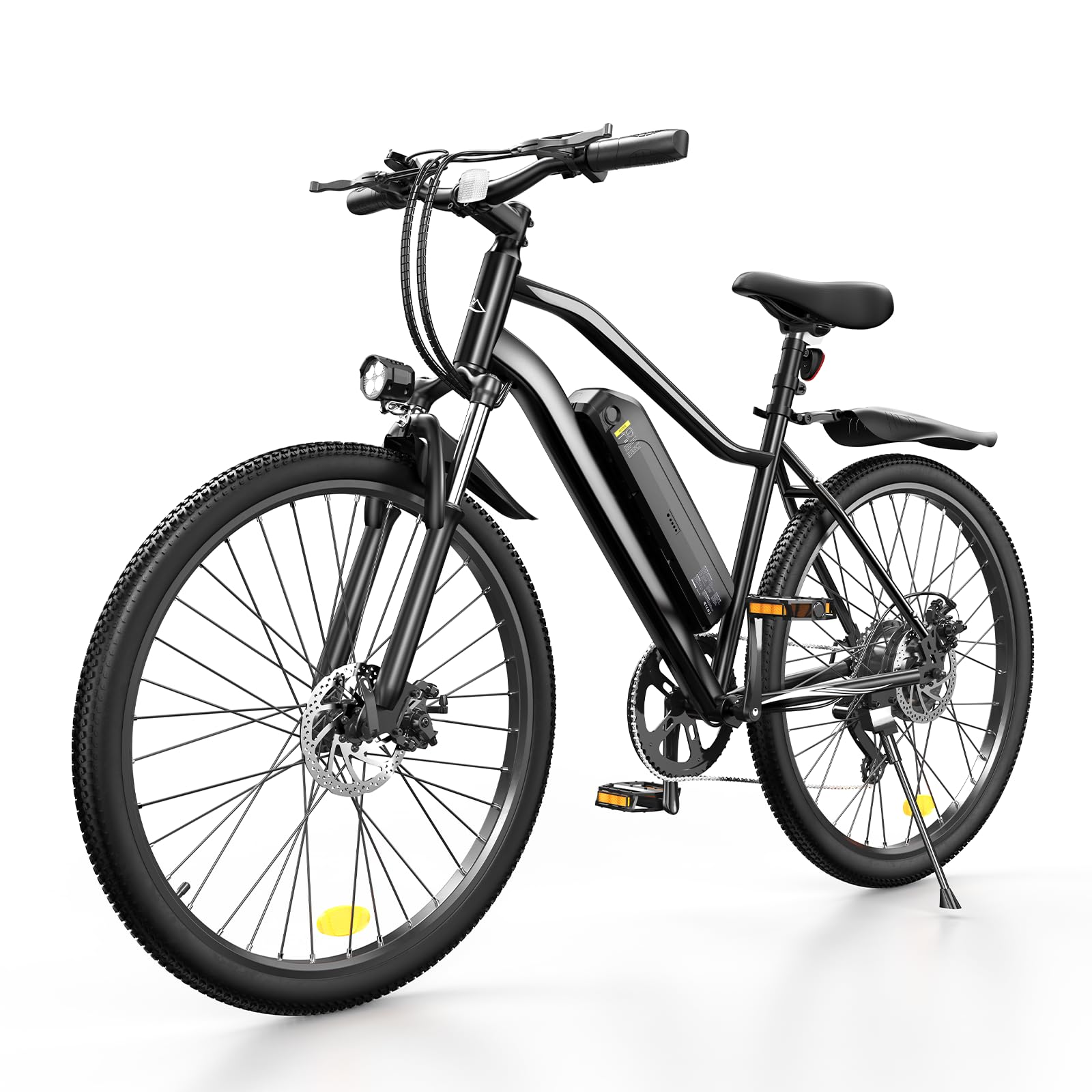
Finbike EB3 Electric Bike Adults, 60KM Max Range E-bike, 3H Fast Charging, 26inch Electric Mountain Bike with 36V 10.4Ah Battery, Front Fork Suspension, 7-Speed Derailleur, 150KG Capacity Ebike
Our Recommendation
The Finbike EB3 is the better buy for most people because it gives you a more practical full-size riding experience for less money. Its 26-inch wheels, 7-speed derailleur, 150KG capacity, and 3-hour fast charging make it more useful for commuting, hills, and everyday riding than the smaller folding U4. The U4 only wins if you specifically need a compact folding bike for storage or transport.
Detailed Comparison
Display
Neither listing gives detailed display specifications, so this is an area where we have to judge by the overall product positioning rather than a clearly stated screen spec. Because the EB3 is marketed as a more conventional adult electric mountain bike, it is more likely to offer a straightforward, easy-to-read cockpit for speed, battery, and assist level, while the U4’s folding format tends to prioritise compactness over a larger display area. However, without confirmed details such as screen size, backlighting, or USB functionality, this category is essentially a draw. Winner: tie.
Performance
On paper, both bikes are close: each uses a 36V 10.4Ah battery and both claim a 60KM maximum range. The big difference is the riding platform. The U4’s 16-inch wheels and folding frame make it more nimble at low speeds and easier to manoeuvre in tight spaces, but small wheels are less stable over potholes, speed humps, and longer commutes. The EB3’s 26-inch wheels should give a more planted ride, better rollover on broken tarmac, and generally more confidence for adult riders. It also has a 7-speed derailleur, which matters more than many people think: on UK hills, having proper gearing helps reduce battery strain and makes the bike more usable when the motor assistance is lower or the battery is running down. Winner: EB3.
Build quality and design
This is where the two bikes diverge most clearly. The U4 is a folding electric bike, so its main strength is convenience. If you need to carry the bike into a flat, store it in a hallway, or load it into a car boot, the folding design is a real advantage. Front suspension helps soften the ride, but the overall package is still very much a compact city bike. The EB3, by contrast, is a 26-inch electric mountain bike style machine with a higher claimed 150KG capacity, which suggests a sturdier frame and a more robust overall build. For day-to-day commuting, that extra stability and load rating are important. If you care about a bike that feels more substantial and less compromised, the EB3 wins. If you care about space-saving design and portability, the U4 has the edge. Overall winner: EB3.
Battery life
Both bikes use the same nominal battery size: 36V 10.4Ah, which is around 374Wh. In real-world UK use, that typically means the claimed 60KM range is plausible only in ideal conditions: light rider, flat terrain, low assist, no wind, and moderate speeds. For mixed commuting, expect less than the headline figure. The EB3 has a major practical advantage because it advertises 3-hour fast charging, which is a meaningful convenience if you commute daily and want the bike ready again quickly. The U4 has a removable battery, which is excellent for apartment living or office charging, but there is no fast-charge claim here. So while the energy capacity is effectively the same, the EB3 wins for charging convenience and the U4 wins for battery removal convenience. On balance, winner: EB3.
Price and value for money
The U4 costs £499.99, while the EB3 is £484.47, making the EB3 cheaper by £15.52. That is not a huge difference, but it matters when the EB3 also brings a larger wheel size, 7-speed gearing, a higher 150KG capacity, and fast charging. The U4 justifies its price mainly through its folding format and removable battery, which are valuable if portability is your priority. For pure value, the EB3 offers more bike for slightly less money, especially for riders who want a more conventional and capable commuter. Winner: EB3.
Game library/features
Neither of these is a gaming product, so the equivalent here is feature set. The U4’s key features are the folding frame, 3 riding modes, removable battery, and front suspension. The EB3 counters with 3H fast charging, 7-speed derailleur, 26-inch wheels, front fork suspension, and 150KG capacity. In practical terms, the EB3’s feature set is more useful for real-world riding because gearing and wheel size affect comfort and usability every day, not just when you fold the bike away. The U4’s folding mechanism is a legitimate feature, but it is only a winner if you truly need compact storage. Winner: EB3.
Overall user experience
For UK riders, the EB3 is the better all-round e-bike. It should feel more stable, more comfortable over rough roads, and more suitable for adult commuting, especially if you face hills or longer journeys. The U4 is the more specialised choice: lighter on storage demands, easier to tuck away, and better for people who need a folding bike rather than a full-size commuter. Neither listing gives enough detail to assess braking system, IP rating, motor wattage, or legal classification precisely, so buyers should still confirm EAPC compliance if they want a road-legal pedal-assist bike in the UK. But based on the specs provided, the EB3 is the stronger everyday choice and the better value. Overall summary: choose the EB3 unless folding portability is your top priority; if it is, the U4 makes sense, but it is the more niche option.
Buy the Finbike U4 Electric if...
Buy the U4 if you need a bike that folds for flat living, train storage, or car boot transport. It also makes more sense if you want the easiest-to-store option and value the removable battery for charging indoors. Choose it if portability matters more than ride stability and hill performance.
Buy the Finbike EB3 Electric if...
Buy the EB3 if you want the better all-round commuter and a bike that feels more stable on UK roads. It is the better pick for longer rides, rougher surfaces, and riders who want proper gearing plus faster charging. If you want the best value and the least compromise, this is the one to get.
Curated by Volt Rider on All The Top Picks
As an Amazon Associate we earn from qualifying purchases.