EcoFlow River 2 Pro or Anker SOLIX C2000 Gen 2: which is smarter?
If you’re choosing between a compact, fast-charging portable power station and a much larger home-backup style unit, these two sit in very different brackets. The EcoFlow RIVER 2 Pro is aimed at lighter camping, short outages, and budget-conscious buyers, while the Anker SOLIX C2000 Gen 2 is built for serious backup power, higher loads, and longer runtimes. For UK buyers, the real question is not just price, but how much usable energy you need when grid power is expensive, winter solar is weak, and outages are inconvenient. Here’s the definitive head-to-head.

ECOFLOW Portable Power Station RIVER 2 Pro, 768Wh LiFePO4 Battery, 70 Min Fast Charging, 4X800W (X-Boost 1600W) AC Outlets, Solar Generator for Outdoor Camping/RVs/Home Use
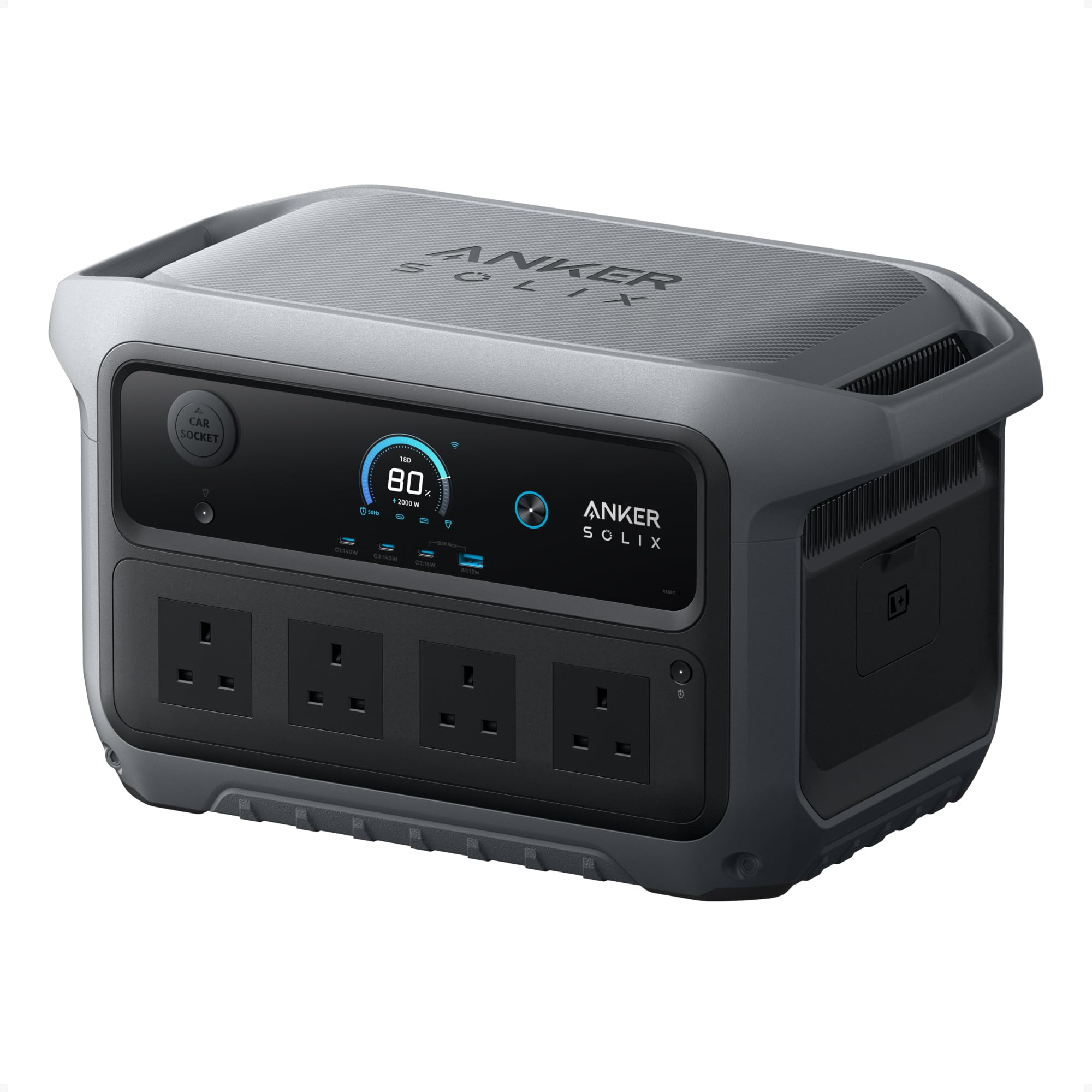
Anker SOLIX C2000 Gen 2 Portable Power Station, 2,400W (Peak 4,000W) Solar Generator, 2,048Wh LiFePO4 Battery, Full Charge in 58 Min, for Home Backup, Camping, RVing & Power Outages
Our Recommendation
The Anker SOLIX C2000 Gen 2 is the clear winner because it offers far more usable energy, much higher output, and better suitability for real home backup. Its 2,048Wh battery and 2,400W output make it vastly more versatile than the EcoFlow’s 768Wh and 800W setup. Although it costs £400 more, that premium buys a much more capable machine that is better matched to outages, RV use, and power-hungry appliances.
Detailed Comparison
Display
Neither product is sold primarily on display quality in the way a TV or monitor would be. What matters here is the quality of the status screen, app visibility, and how easily you can read input/output, battery percentage, and charging estimates. In this category, Anker wins slightly because the SOLIX line generally focuses on clearer control, more substantial home-backup monitoring, and a more premium user interface experience. EcoFlow is still perfectly functional and easy to use, but the RIVER 2 Pro is the more basic unit in this comparison. Winner: Anker SOLIX C2000 Gen 2.
Performance
This is the biggest gap in the comparison. The EcoFlow RIVER 2 Pro has a 768Wh LiFePO4 battery and 800W AC output, with X-Boost up to 1600W for some higher-draw appliances. That makes it suitable for laptops, routers, lights, TVs, charging tools, and some small kitchen devices, but it is still a compact power station. The Anker SOLIX C2000 Gen 2 is in a different league with 2,048Wh capacity and 2,400W output, peaking at 4,000W. That means it can handle far more demanding loads, including many kettles, microwaves, coffee machines, power tools, and multiple appliances at once, depending on their surge characteristics. For home backup, RV use, or anything resembling whole-house resilience, Anker is the clear winner. Winner: Anker SOLIX C2000 Gen 2.
Build quality and design
EcoFlow has a strong reputation for compact, practical design, and the RIVER 2 Pro is easier to carry, store, and move around the house or campsite. At £499, it is the more accessible unit physically and financially. Anker’s C2000 Gen 2 is heavier and more substantial, but that is the trade-off for its much larger battery and higher inverter rating. If portability means lifting it into a car boot, taking it to a tent, or moving it between rooms, EcoFlow feels more convenient. If design means robustness and a more capable enclosure for serious backup use, Anker takes it. For pure portability, EcoFlow wins; for overall build confidence in a high-capacity unit, Anker wins. Winner: tie, with EcoFlow for portability and Anker for heavy-duty design.
Battery life
Battery life here should be judged in usable watt-hours, not marketing claims. The EcoFlow’s 768Wh battery is enough for a modest amount of runtime: for example, a 60W laptop could run for many hours, but a 500W appliance will drain it quickly. The Anker’s 2,048Wh battery gives roughly 2.7 times the stored energy, which translates into dramatically longer runtimes for appliances, lights, networking gear, and emergency essentials. In UK winter, when solar generation is often poor and the grid is more expensive, that extra capacity matters a lot because it reduces the need to recharge frequently. Winner: Anker SOLIX C2000 Gen 2.
Price and value for money
EcoFlow is £499, while Anker is £899, a £400 difference. On pure upfront cost, EcoFlow wins clearly, and for many buyers it is the better value if they only need light-duty backup or occasional camping power. But value depends on use case. The Anker costs more because it gives you nearly triple the battery capacity and far higher output, so the cost per watt-hour is actually more competitive than it first appears. If you only need to keep devices charged and run low-power gear, EcoFlow is the smarter spend. If you want one unit that can genuinely cover outages, higher-power appliances, and longer autonomy, Anker offers better value despite the higher sticker price. Winner: tie, depending on need.
Game library/features
Neither of these is a gaming device, so there is no game library to compare. In practical feature terms, the comparison is about charging speed, output flexibility, and home-backup readiness. EcoFlow’s 70-minute fast charging is excellent for a smaller unit and makes it easy to top up before a weekend away or a forecast storm. Anker’s full charge in 58 minutes is even more impressive given its much larger 2,048Wh battery, and that speed is a major advantage for backup readiness. Both use LiFePO4 chemistry, which is the right choice for longevity and safety. On features relevant to power users, Anker wins because it combines faster full charging with far greater capacity and output. Winner: Anker SOLIX C2000 Gen 2.
Overall user experience
EcoFlow is the simpler, lighter, lower-cost option that feels ideal for casual camping, van life on a budget, and keeping essentials running during short interruptions. It is easier to justify if you do not want to spend close to £900 and do not need to power big loads. Anker feels more like a serious resilience product: it is better for people who want to run a wider range of appliances, bridge longer outages, or build a more credible home-backup setup. In the UK, where electricity prices remain high and winter solar can be disappointing, the ability to store and deliver more energy is often more useful than saving £400 upfront. If your priority is convenience and affordability, EcoFlow is excellent. If your priority is capability and independence, Anker is the stronger product.
Overall summary: the EcoFlow RIVER 2 Pro wins on portability and upfront price, but the Anker SOLIX C2000 Gen 2 wins on nearly every performance metric that matters for backup power. For most buyers comparing these two directly, the Anker is the better all-round purchase unless budget is tight or you only need light-duty portable power.
Buy the ECOFLOW Portable Power if...
Buy the EcoFlow RIVER 2 Pro if you want the cheapest way to get reliable LiFePO4 backup power for phones, laptops, routers, lights, and small appliances. It is also the better pick if portability matters most and you want something easy to carry for camping or occasional use. If you are trying to stay under £500, EcoFlow is the sensible choice.
Buy the Anker SOLIX C2000 if...
Buy the Anker SOLIX C2000 Gen 2 if you want a serious home-backup unit that can run higher-draw appliances and keep essentials going much longer. It is the better choice for UK households worried about outages, higher energy costs, or wanting meaningful energy independence. If you want one power station that can do far more than basic charging, Anker is worth the extra £400.
Curated by The Electric Home on All The Top Picks
As an Amazon Associate we earn from qualifying purchases.