Big-capacity EcoFlow or compact-value Anker: which power station wins?
If you’re choosing between these two, you’re really deciding between a high-capacity home-and-outdoor backup unit and a much smaller, cheaper grab-and-go power station. The EcoFlow RIVER 2 Pro is aimed at people who want serious runtime, faster charging, and proper AC output for appliances and laptops. The Anker SOLIX C200 DC is for buyers who want a lightweight, lower-cost LiFePO4 unit for phones, tablets, lights, and emergency top-ups. The right choice depends on whether you need real household versatility or just dependable portable power.
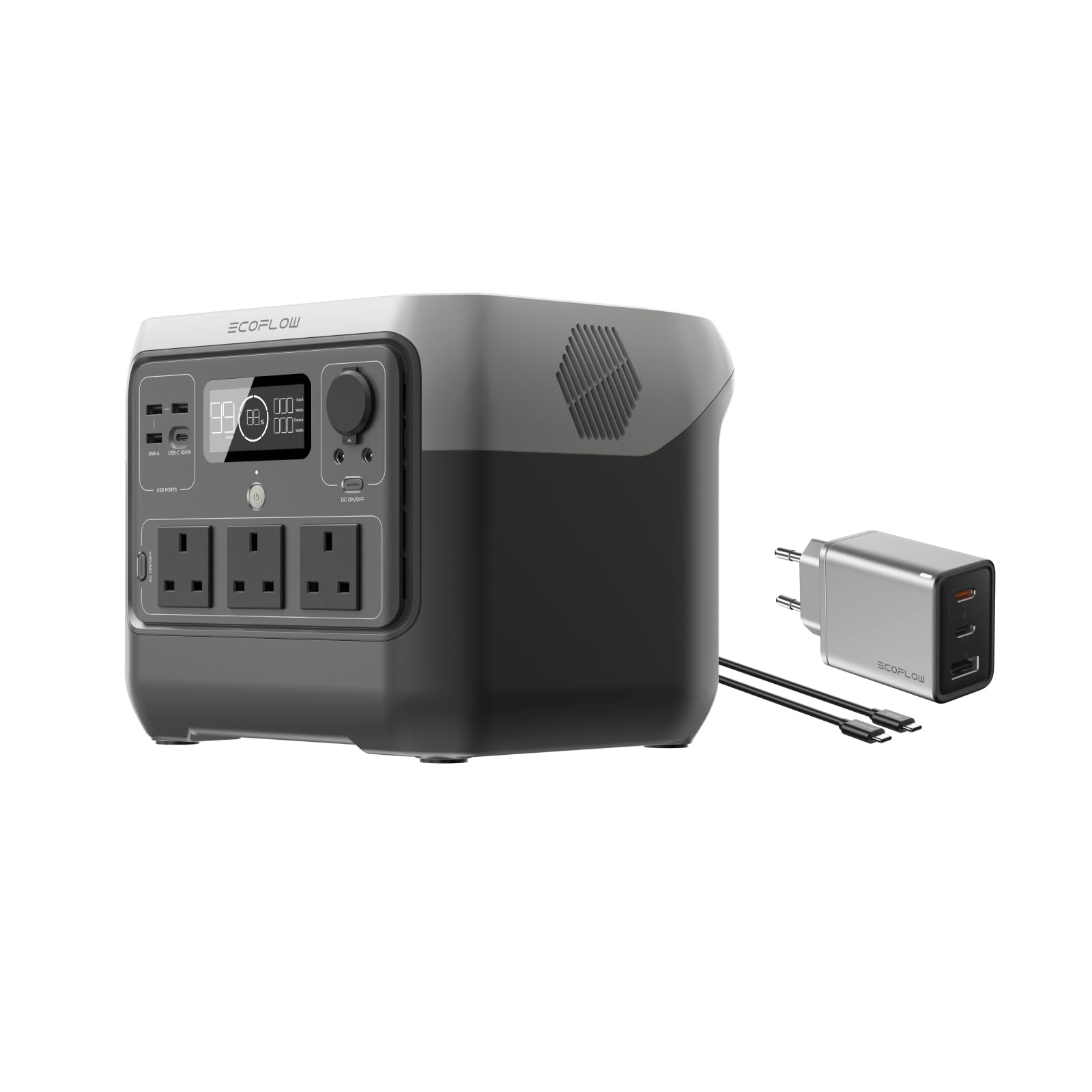
ECOFLOW Portable Power Station RIVER 2 Pro with 65W Charger, 768Wh LiFeP04 Battery, 70 Min Fast Charging, 3X800W AC Outlets, Solar Generator for Outdoor Camping/RVs/Home Use

Anker SOLIX C200 DC Power Bank Station and 60W Solar Panel, 192Wh Portable Power Station, LiFePO4 Battery, 200W Solar Generator, For Outdoor, Camping, Traveling, and Emergencies
Our Recommendation
The EcoFlow RIVER 2 Pro is the better buy because it offers vastly more battery capacity at 768Wh, far stronger AC output with 3 x 800W outlets, and much faster 70-minute charging. That makes it suitable for real-world backup, camping, and RV use, not just phone charging. The Anker SOLIX C200 is decent value, but its 192Wh capacity is too small for most buyers who are comparing full portable power stations. If you want one unit that can do substantially more, EcoFlow wins clearly.
Detailed Comparison
Display
Neither product is a standout on display quality in the way a laptop or phone would be, but the EcoFlow generally has the more useful user interface for real-world power management. With a larger-capacity station, clearer battery state readouts and stronger app-based monitoring matter more, especially if you’re tracking input/output during solar charging or running AC loads. The Anker is simpler and more compact, which is fine for basic use, but it’s not the better choice if you want richer visibility into power flow and battery status. Winner: Product A, because higher-capacity stations benefit more from better monitoring and control.
Performance
This is the biggest gap in the comparison. The EcoFlow RIVER 2 Pro offers 768Wh of LiFePO4 storage and 3 x 800W AC outlets, which makes it capable of running laptops, small kitchen appliances, routers, lights, and many camping or backup loads with far more headroom. Its 70-minute fast charging is a major practical advantage if you need to refill quickly from mains or a strong solar input. The Anker SOLIX C200 has 192Wh, so it is only one-quarter the stored energy, and it is much better suited to phones, tablets, cameras, LED lighting, and short emergency use rather than sustained appliance support. Even though both are rated 4.5/5, the EcoFlow’s raw output and capacity make it the stronger performer by a wide margin. Winner: Product A.
Build quality and design
Both brands are well-regarded, and both use LiFePO4 chemistry, which is the right call for longevity and safety compared with older NMC-based designs. The EcoFlow is the more substantial unit, and that usually means better thermal headroom, more ports, and a design built around higher output rather than minimalism. The Anker is more compact and easier to carry, which is a genuine design win if portability is your top priority. However, the EcoFlow’s design is more versatile for home use, RVs, and longer trips because it is built to handle heavier loads and more frequent charging cycles. Winner: Product A, for overall utility and more capable design.
Battery life
On paper, the EcoFlow wins decisively because 768Wh simply stores far more energy than 192Wh. In practical terms, that means more phone charges, more laptop runtime, and far more tolerance for running AC devices before needing a recharge. LiFePO4 chemistry is a plus for both, because it typically supports many more cycles than NMC and holds up better for regular use. If you’re planning to use the unit as a semi-regular backup source, the EcoFlow’s larger battery makes it much more suitable for repeat use and longer outages. The Anker still has the advantage of being easier to keep topped up because there’s less capacity to refill, but that doesn’t outweigh the much shorter runtime. Winner: Product A.
Price and value for money
This is where the Anker makes its case. At £199 versus £499, it is £300 cheaper, which is a huge saving in this category. If your needs are modest, the Anker offers strong value because you still get LiFePO4 chemistry, a reputable brand, and a portable solar-generator-style setup without spending close to £500. But value is not just about the sticker price; it’s about what you get per pound. The EcoFlow costs more, but you are paying for 4x the battery capacity, significantly more output, and much more useful versatility for home backup, camping, and RV-style use. For most people who actually need a power station rather than a power bank, the EcoFlow is the better long-term value. Winner: Product A for overall value; Product B for lowest upfront cost.
Game library/features
These are not gaming products, so there is no game library in the literal sense. If we translate this into feature set, the EcoFlow has the stronger set of power-station features: greater AC output, more usable capacity, faster recharge, and better suitability for solar or home backup workflows. The Anker’s feature set is narrower but still practical, especially for travel and emergencies where size and simplicity matter more than output. If you want one device that can do more jobs, the EcoFlow wins easily. Winner: Product A.
Overall user experience
For everyday convenience, the Anker is easier to live with if your use case is light and occasional. It is cheaper, smaller, and less intimidating for someone who just wants emergency charging and a compact solar-capable backup. But the EcoFlow delivers a much more complete user experience because it can actually replace a wall socket for many tasks, not just supplement one. That difference matters if you are camping for several days, need backup during outages, or want a station that can genuinely support household essentials. The EcoFlow also feels like the more future-proof purchase because you are far less likely to outgrow 768Wh than 192Wh. Winner: Product A.
Overall summary: the EcoFlow RIVER 2 Pro is the clear winner for anyone who wants a serious portable power station with real versatility, longer runtime, and much stronger AC capability. The Anker SOLIX C200 is a good budget-friendly LiFePO4 option, but its 192Wh capacity puts it in a different class entirely. If you need true utility, buy the EcoFlow. If you only need lightweight emergency charging and want to save £300, the Anker is the sensible compact pick.
Buy the ECOFLOW Portable Power if...
Buy Product A if you want to run laptops, routers, lights, small appliances, or multiple devices for longer periods. It is the better choice for camping trips, home backup, and anyone who wants a station they won’t outgrow quickly. The 768Wh LiFePO4 battery and 800W AC output make it much more versatile.
Buy the Anker SOLIX C200 if...
Buy Product B if your main need is lightweight emergency charging for phones, tablets, cameras, and low-power devices. It makes sense if portability and price matter more than runtime, and you want to spend as little as possible while still getting LiFePO4 chemistry. It is the better pick for short trips, day use, and basic backup.
Curated by The Solar Plug on All The Top Picks
As an Amazon Associate we earn from qualifying purchases.