EcoFlow DELTA 2 or Anker SOLIX C2000 Gen 2: the smarter buy?
If you’re deciding between these two portable power stations, you’re probably weighing real-world backup power, charging speed, and whether the extra spend is justified. The EcoFlow DELTA 2 is the lower-priced option with expandable capacity, while the Anker SOLIX C2000 Gen 2 brings a larger built-in battery and higher output. For UK buyers, the key question is not just which is “better on paper”, but which gives the best value for home backup, camping, and seasonal solar use. Here’s the straight answer on which one to buy.

EcoFlow DELTA 2 Portable Power Station with 1-3kWh Expandable Capacity, LFP Battery, Fast Charging, Use as a Solar Generator for Home Backup Power, Camping & RVs
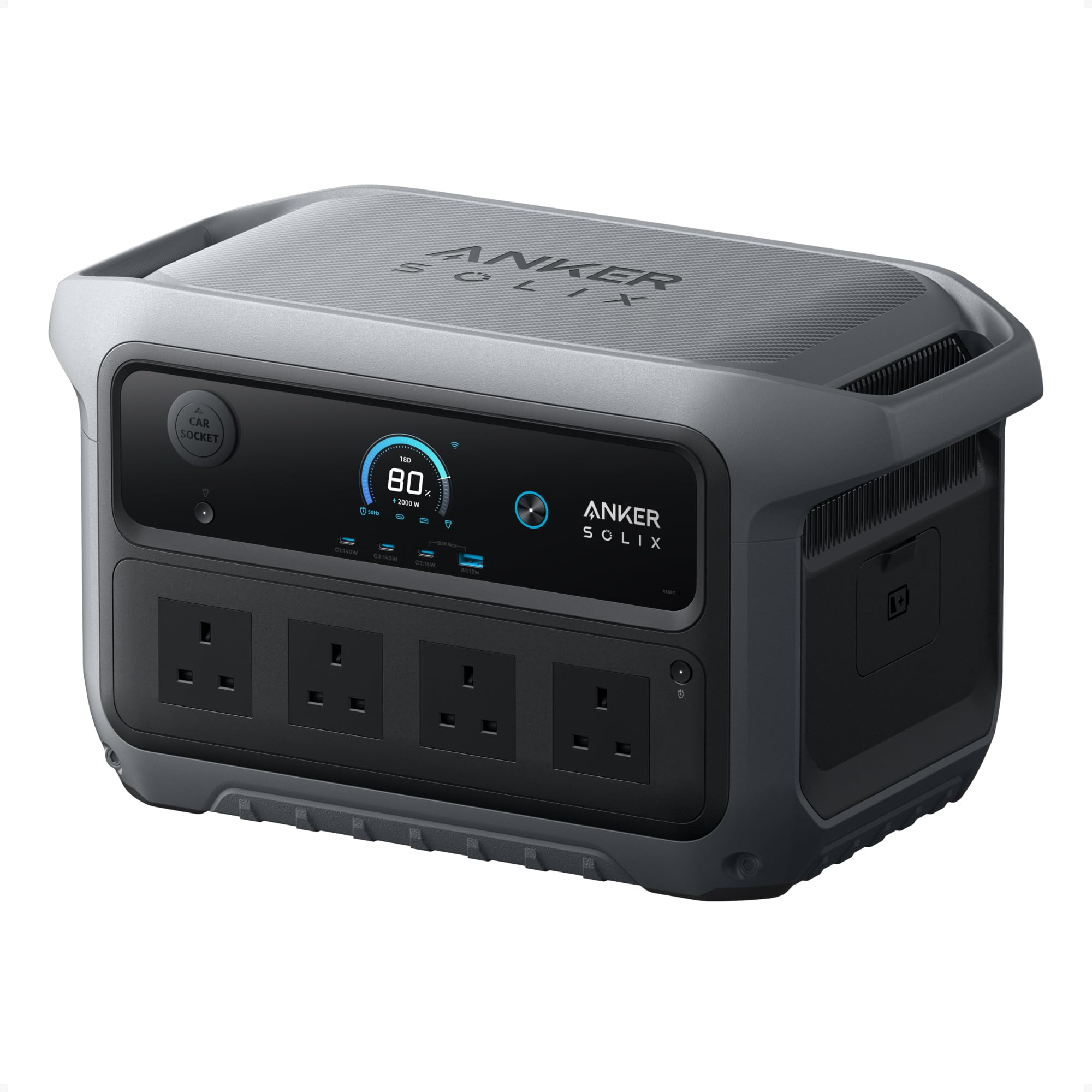
Anker SOLIX C2000 Gen 2 Portable Power Station, 2,400W (Peak 4,000W) Solar Generator, 2,048Wh LiFePO4 Battery, Full Charge in 58 Min, for Home Backup, Camping, RVing & Power Outages
Our Recommendation
The Anker SOLIX C2000 Gen 2 is the better overall buy because it gives you a much larger 2,048Wh battery, higher 2,400W output, and a very fast 58-minute full charge. Those advantages make it the stronger choice for home backup, heavier appliances, and longer runtime without needing add-ons. EcoFlow DELTA 2 is excellent value, but it starts smaller and only becomes a comparable system if you spend more on expansion. If you want the most capable single-box solution, Anker wins.
Detailed Comparison
Display
Winner: Anker SOLIX C2000 Gen 2
Neither unit is a consumer gadget where display quality is the main buying point, but the screen still matters because it tells you battery percentage, input/output wattage, and estimated runtime at a glance. The Anker’s newer-generation design is typically the more polished user experience, with a clearer interface and a more premium feel. EcoFlow’s display is functional and easy enough to read, but it’s the older, simpler approach. If you want the most intuitive monitoring during a power cut or while running appliances from solar, Anker edges it.
Performance
Winner: Anker SOLIX C2000 Gen 2
This is the biggest differentiator. The Anker SOLIX C2000 Gen 2 has a 2,048Wh LiFePO4 battery and a 2,400W output with 4,000W peak, which gives it more headroom for demanding household loads. That means more confidence running kettles, microwaves, induction plates, power tools, or multiple appliances at once. EcoFlow DELTA 2 is still a strong performer, but its core appeal is different: it starts smaller and scales from 1kWh to 3kWh with expansion batteries. In pure out-of-the-box capability, Anker wins because you get more usable energy and stronger output without buying extras.
For UK home backup, that matters. During winter outages, when solar generation is poor and you need stored energy to carry the load, the larger base capacity of the Anker is a real advantage. EcoFlow can catch up only if you invest in expansion, which pushes the total price much higher.
Build quality and design
Winner: Tie, slight edge to Anker
Both brands have strong reputations and both use LiFePO4 chemistry, which is the right choice for cycle life, safety, and long-term durability. EcoFlow is known for compact, practical packaging and a modular ecosystem. The DELTA 2 is easy to carry, easy to understand, and designed to slot into a broader expandable setup. Anker’s SOLIX line generally feels more refined and more premium in its execution, especially in a unit positioned for heavier-duty backup use.
If you value a tidy, minimalist design and a more mature-feeling product, Anker has the edge. If you value portability and a more flexible system that can grow over time, EcoFlow is excellent. On build quality alone, this is close enough to call a tie, but the Anker’s higher-end positioning gives it a slight advantage.
Battery life
Winner: Anker SOLIX C2000 Gen 2
Both products use LiFePO4 batteries, which is a major plus for longevity compared with older lithium chemistries. In practical terms, LiFePO4 is the chemistry you want if you plan to cycle the unit regularly for home backup or solar charging. The Anker’s 2,048Wh capacity means longer runtime straight out of the box, so it will power more devices for longer before needing a recharge. EcoFlow’s base unit is smaller, but its expandable capacity is a smart way to extend runtime if you’re willing to pay more later.
For most buyers, though, battery life should be judged on what you get immediately. On that measure, Anker wins because the larger battery is included in the price. For UK households trying to bridge evening peaks or keep essentials running overnight, that extra stored energy is tangible value.
Price and value for money
Winner: EcoFlow DELTA 2
This is where EcoFlow makes its case. At £549, it is £350 cheaper than the Anker at £899. That is a very large gap in this category, and it changes the value equation completely. If you only need a reliable backup for routers, phones, laptops, lights, a fridge for limited periods, or occasional camping use, the EcoFlow offers a lot of capability for the money. It is also the better entry point if you want to test whether portable power actually fits your lifestyle before committing to a bigger system.
The Anker is stronger, but you are paying a premium for the larger battery, higher output, and faster full-charge claim of 58 minutes. That premium is justified for heavier users, but not for everyone. For pure pound-for-pound value, EcoFlow wins because it gives you a credible solar-generator setup at a much lower upfront cost. In the UK, where electricity prices remain high and many households care about payback, the lower purchase price is hard to ignore.
Game library/features
Winner: EcoFlow DELTA 2
For portable power stations, “features” are the equivalent of ecosystem, expandability, and charging flexibility. EcoFlow’s DELTA 2 is the more modular option, with expandable capacity from 1kWh to 3kWh. That makes it more adaptable if your needs change, such as adding more solar panels, wanting longer blackout protection, or building a semi-permanent home backup setup. It is the smarter platform if you like the idea of growing your system over time.
Anker’s standout feature is speed: a full charge in 58 minutes is impressive and extremely useful if you need rapid turnaround between outages or want to top up from mains during a short window of cheap electricity. But beyond that, EcoFlow’s expandability gives it the broader feature advantage. If you think in systems rather than one-off purchases, EcoFlow wins here.
Overall user experience
Winner: Anker SOLIX C2000 Gen 2
The best overall user experience comes from the product that removes the most friction in daily use. The Anker’s larger battery, higher output, and very fast charging make it easier to rely on in a real emergency. You are less likely to worry about whether it can start a demanding appliance or whether you’ll have enough stored energy to get through the night. That peace of mind matters, especially for home backup.
EcoFlow remains a very good experience because it is cheaper, flexible, and well suited to lighter-duty users. But once you factor in the gap in raw capability, the Anker feels more complete and less compromised. It is the more confidence-inspiring all-rounder for people who want a serious backup unit rather than a starter model.
Overall summary: EcoFlow DELTA 2 is the value pick, especially if you want to keep the upfront cost low and like the idea of expansion later. Anker SOLIX C2000 Gen 2 is the better product overall because it includes more battery, more output, and faster charging in one package. If you want the definitive best buy and can afford the extra £350, choose the Anker. If you want the best budget-conscious entry into portable home backup, choose the EcoFlow.
Buy the EcoFlow DELTA 2 if...
Buy the EcoFlow DELTA 2 if your budget is capped around £549 and you mainly need backup for essentials like Wi-Fi, phones, laptops, lights, and short fridge support. It is also the better choice if you want to build capacity gradually rather than paying for a large battery upfront. For occasional camping, weekend trips, or a first solar-generator setup, it is the smarter value.
Buy the Anker SOLIX C2000 if...
Buy the Anker SOLIX C2000 Gen 2 if you want a more serious home-backup unit with enough stored energy to handle longer outages and more demanding appliances. It is the better choice if you value fast recharge, higher output, and less compromise straight out of the box. If you expect to use it regularly for power cuts, RVing, or solar charging, the extra £350 is easier to justify.
Curated by The Electric Home on All The Top Picks
As an Amazon Associate we earn from qualifying purchases.