Which EcoAir DD1 Should You Buy for Damp, Mould and Laundry?
If you’re choosing between these two EcoAir DD1 desiccant dehumidifiers, you’re really deciding how much convenience is worth paying for. Both models target the same core job: fast moisture removal in UK homes, especially useful for cold-weather damp, condensation, mould-prone rooms, and drying laundry indoors. They also share the same 7.5 L/day extraction rating, 34dBA quoted noise level, and compact 6kg footprint, so the difference comes down to controls, features, and value. For most buyers, this is a straightforward comparison between simplicity and extra automation.

EcoAir DD1 Simple Blue MK3 Desiccant Dehumidifier | Rotary Dial | 7.5 L/Day | Quiet 34dBA | Anti Bacterial Filter | Laundry | 6Kg
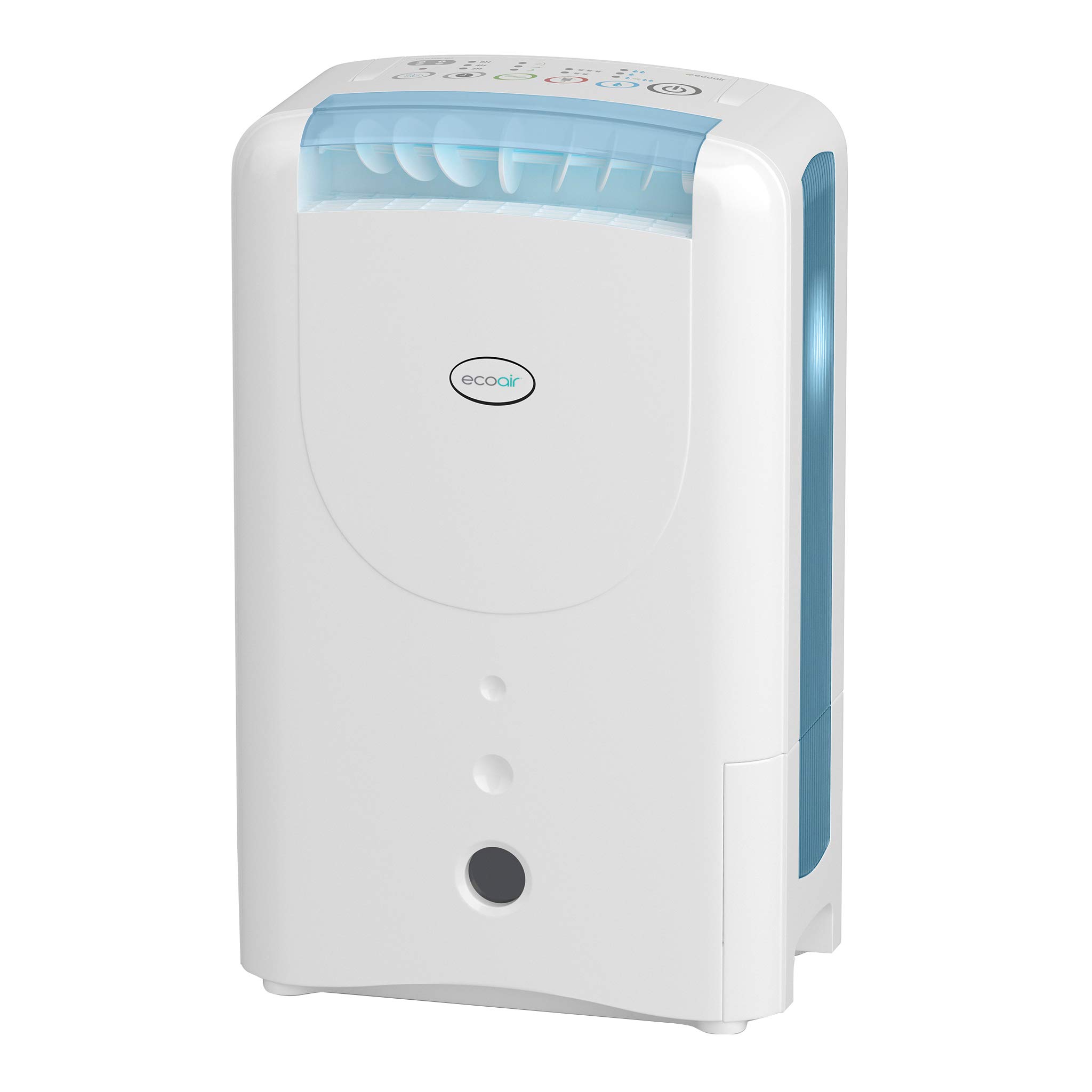
EcoAir DD1 Classic MK6 Blue Desiccant Dehumidifier | Electronic Control | 7.5L/Day | Quiet 34dBA | Ioniser | Silver Filter | Laundry | Timer | 6Kg | Economy Mode | Home Garage Basement Boat
Our Recommendation
Product A is the better buy for most people because it matches Product B on the core specs that matter most: 7.5 L/day extraction, 34dBA quoted noise, and the same 6kg portable design. It is also £27 cheaper, which is a meaningful saving for a dehumidifier whose main job is already covered by the base model. Choose Product B only if you specifically want the timer, economy mode, and electronic controls enough to justify the extra cost.
Detailed Comparison
Display / Controls
Product B wins here. The DD1 Classic MK6 uses electronic controls, which generally make it easier to set a target mode, use the timer, and switch into economy operation without guessing. Product A’s rotary dial is simpler and arguably more foolproof, but it offers less precision and fewer convenience features. If you want set-and-forget control in a utility room, bedroom, or garage, Product B is the more capable and modern option.
Performance
This is effectively a tie on raw drying power. Both models are rated at 7.5 L/day and both are desiccant units, which makes them especially useful in the UK during colder months when compressor dehumidifiers can struggle to perform efficiently. That means either machine should cope well with condensation, damp windows, drying washing, and colder spaces like basements, garages, boats, or unheated rooms. In practical terms, the deciding factor is not extraction rate but how you want to use the machine day to day. Product B edges ahead slightly because its economy mode and timer can help you run it more intelligently, but on pure moisture removal they are equal.
Build Quality and Design
This is a tie. Both are from EcoAir, both weigh 6kg, and both appear designed as portable household dehumidifiers rather than bulky whole-home units. The shared 34dBA claim suggests a similar acoustic profile, and the product families look closely related in size and intended use. Product A’s anti-bacterial filter is a sensible inclusion for general household hygiene, while Product B’s silver filter is marketed as a more premium filtration feature. In real-world use, neither has a decisive build advantage from the specs provided; the main design difference is usability rather than construction.
Features and Functionality
Product B wins clearly. It adds electronic control, a timer, economy mode, ioniser, and silver filter. That makes it better suited to people who want more automation, more flexible scheduling, and a little extra air-treatment functionality beyond basic moisture removal. The timer is particularly useful if you want the unit to run overnight or during laundry sessions without manual intervention. Product A keeps things much simpler with its rotary dial and anti-bacterial filter, which is fine if you only want a straightforward dehumidifier and prefer fewer settings to think about.
Price and Value for Money
Product A wins on value. At £179.99, it is £27 cheaper than Product B, yet it delivers the same headline extraction rate, the same quoted noise level, and the same 6kg weight. For buyers who mainly want effective damp control and laundry drying, that is a strong argument. Product B’s extra features are useful, but they are not essential for everyone, and the premium is meaningful in a category where the core job is already covered by the cheaper model. If budget matters, Product A gives you the better pounds-per-performance ratio.
User Experience
This depends on how hands-on you want to be, but Product B wins overall. The electronic controls, timer, and economy mode make it easier to tailor the dehumidifier to real UK household routines: drying clothes in winter, reducing condensation in a bedroom, or tackling damp in a cellar or garage without leaving it running unnecessarily. Product A is more basic but also more approachable; the rotary dial is ideal for someone who wants minimal setup and no learning curve. However, once you factor in convenience over months of use, Product B feels more polished and versatile.
Overall summary
These two EcoAir DD1 models are very close on core dehumidifying performance, so the decision comes down to features versus price. If you want the best value and a simple, reliable machine for damp, laundry, and colder rooms, Product A is the smarter buy. If you want the more complete package with timer, economy mode, and electronic controls, Product B is the better premium choice. For most people, Product A is the best overall purchase because it does the essential job for less money; Product B is worth paying extra only if you know you’ll use the added convenience features regularly.
Buy the EcoAir DD1 Simple if...
Buy Product A if you want the lowest price for the same core drying performance and prefer a simple rotary control with fewer settings to manage. It is the better choice for straightforward use in a bedroom, utility room, or laundry space where you mainly want reliable moisture removal without paying for extras. It also makes sense if you are buying a second unit for a damp-prone area and want to keep costs down.
Buy the EcoAir DD1 Classic if...
Buy Product B if you want more control and convenience, especially if you plan to use the timer, economy mode, or run it automatically around laundry cycles. It is the better pick for users who want a more polished experience in a garage, basement, boat, or colder room where scheduling and efficiency matter. If you value extra features over saving £27, this is the more versatile model.
Curated by Clean Air Home on All The Top Picks
As an Amazon Associate we earn from qualifying purchases.