EcoAir DD1 Classic MK6 or Simple MK3: which dehumidifier is better?
If you’re choosing between these two EcoAir DD1 desiccant dehumidifiers, you’re really deciding how much convenience you want for a very similar core drying performance. Both models are rated at 7.5L/day and 34dBA, so this is less about raw capacity and more about controls, features, and value. For UK homes dealing with winter condensation, damp bedrooms, mould-prone bathrooms, or laundry drying in small flats and garages, the right choice comes down to how you’ll actually use it day to day. Here’s the straight answer on which one is worth your money.
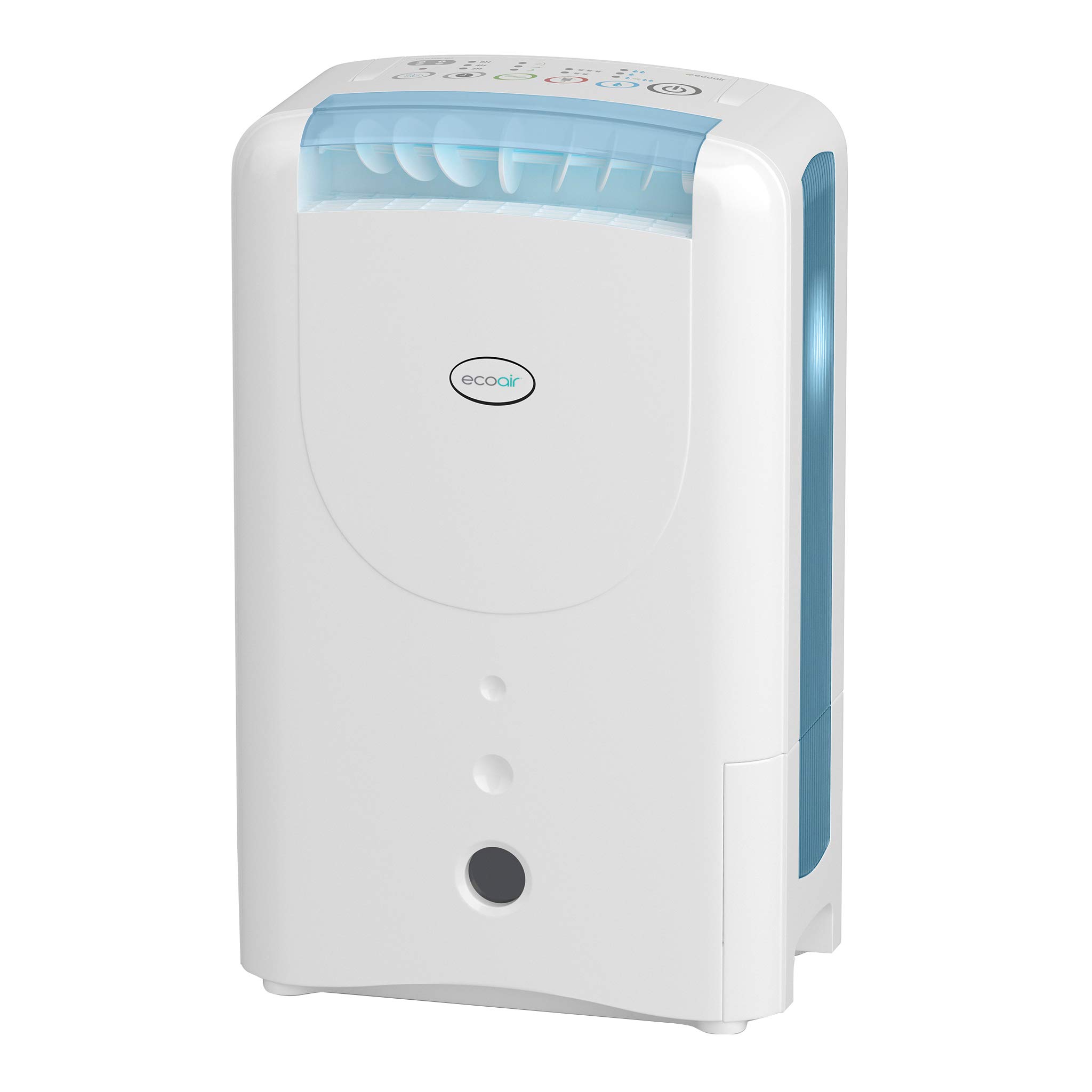
EcoAir DD1 Classic MK6 Blue Desiccant Dehumidifier | Electronic Control | 7.5L/Day | Quiet 34dBA | Ioniser | Silver Filter | Laundry | Timer | 6Kg | Economy Mode | Home Garage Basement Boat

EcoAir DD1 Simple Blue MK3 Desiccant Dehumidifier | Rotary Dial | 7.5 L/Day | Quiet 34dBA | Anti Bacterial Filter | Laundry | 6Kg
Our Recommendation
Product A is the better buy because it keeps the same 7.5L/day performance and 34dBA quiet operation while adding genuinely useful extras: electronic controls, timer, economy mode, ioniser, and a silver filter. In a UK home, those features make it easier to manage condensation, dry laundry, and run the unit more efficiently. Product B is cheaper, but the saving is only £29.01, which is not enough to offset the extra convenience and versatility of Product A.
Detailed Comparison
Display / controls
Product A wins here. The DD1 Classic MK6 uses electronic controls, which generally means clearer operation, more precise settings, and easier day-to-day use than a rotary dial. That matters if you want to set a target mode, use the timer, or switch between laundry and economy settings without guesswork. Product B’s rotary dial is simpler and perfectly functional, but it is more basic and less exact. If you want a dehumidifier that feels more modern and easier to live with, Product A is the better user interface.
Performance
This is effectively a tie on headline drying power. Both units are rated at 7.5L/day and both are quoted at 34dBA, so on paper they should perform very similarly in typical UK conditions. For desiccant dehumidifiers, that’s useful because they work better than compressor models in cooler rooms, making them a strong choice for unheated garages, basements, boats, utility rooms, and winter laundry drying. There’s no clear advantage in extraction rate, so the decision here is really about features rather than performance. If your priority is just removing moisture, either one should do the job about the same.
Build quality and design
Product A edges this category because its feature set suggests a more fully specified, premium version of the same platform. The silver filter, ioniser, timer, and economy mode make it feel more complete and more adaptable to different rooms and routines. Product B is simpler, with an anti-bacterial filter and rotary dial, which can appeal if you want fewer electronics and a more straightforward design. Both are listed at 6kg, so neither is a heavyweight, and both should be easy enough to move between rooms. In practice, Product A feels like the more refined machine, while Product B feels more stripped-back and utilitarian.
Noise levels
This is a tie. Both are listed at 34dBA, which is quiet enough for a bedroom or living area in many homes, especially compared with older dehumidifiers. In real-world terms, that makes either model suitable for overnight use or for running while you work from home, though the actual perceived noise will still depend on fan speed and room acoustics. Since the quoted noise rating is identical, neither has a clear advantage.
Battery life / running convenience
Neither product has a battery, so this category really translates to running convenience and automation. Product A wins because it includes a timer and economy mode, which make it easier to control operating hours and reduce unnecessary runtime. That’s useful in the UK, where many people want a dehumidifier to come on during off-peak hours, overnight, or only when a laundry load is drying. Product B can still be left to run, but its more basic control scheme gives you less flexibility. For hands-off convenience, Product A is better.
Price and value for money
Product B wins on value. At £199.99, it is £29.01 cheaper than Product A’s £229.00 asking price, while keeping the same 7.5L/day output, the same 34dBA noise rating, and the same 6kg weight. That is a meaningful saving if you simply want effective moisture removal and do not care about extra features. Product A asks you to pay more for electronic controls, timer, economy mode, ioniser, and silver filter. If those extras matter to you, the premium is reasonable; if not, Product B is the smarter purchase.
Game library / features
Since these are dehumidifiers rather than gaming products, the relevant comparison is feature set. Product A is the clear winner here because it offers the broader toolkit: electronic control, ioniser, silver filter, laundry mode, timer, and economy mode. That makes it more versatile for allergy-sensitive homes, mould-prone bathrooms, drying clothes indoors, and managing humidity in changing UK seasons. Product B keeps things simpler with a rotary dial and anti-bacterial filter, which may be enough for basic use, but it lacks the extra control and air-treatment features of Product A. If you want the more feature-rich machine, Product A is the obvious choice.
Overall user experience
Product A delivers the better overall experience for most buyers. It is the more polished, more flexible machine, and the extras are genuinely useful rather than gimmicky: timer control, economy mode, and the more advanced filter/ioniser setup all improve everyday usability. That said, Product B is the better value if you want a no-nonsense dehumidifier that does the core job well and costs less. Because both models share the same core drying rating, the final decision comes down to whether you want convenience and features or the lowest price.
Overall summary: buy Product A if you want the best all-round dehumidifier experience and are happy to pay a modest premium for better controls and features. Buy Product B if you want the same headline performance for less money and prefer a simpler, more basic machine.
Buy the EcoAir DD1 Classic if...
Buy Product A if you want the more polished, easier-to-use dehumidifier for bedrooms, laundry drying, or regular winter use in a damp UK home. It is the better choice if you value timer scheduling, economy mode, and the extra air-treatment features. It is also the safer pick if you are buying for a mould-prone bathroom, a flat with condensation, or a room where you want more control over running costs and operation.
Buy the EcoAir DD1 Simple if...
Buy Product B if your main goal is to save money and you do not need timers, economy mode, or the ioniser/silver filter extras. It is a sensible choice for straightforward moisture removal in a garage, spare room, or utility space. Choose it if you prefer simple controls and want the same headline drying power without paying for features you may never use.
Curated by Clean Air Home on All The Top Picks
As an Amazon Associate we earn from qualifying purchases.