Cheap 3kW plug-in charging or a proper 7.4kW wall box?
If you’re deciding between a budget portable 3-pin EV charger and a full home wall charger, this is really a choice between convenience and capability. Product A is the low-cost, plug-in option that can work straight from a UK socket, while Product B is a fixed 7.4kW smart wallbox built for faster, more regular home charging. For UK drivers, the right answer depends on whether you mainly need emergency topping-up, or you want to cut charging time and better use overnight tariffs and solar. Here’s the definitive breakdown.
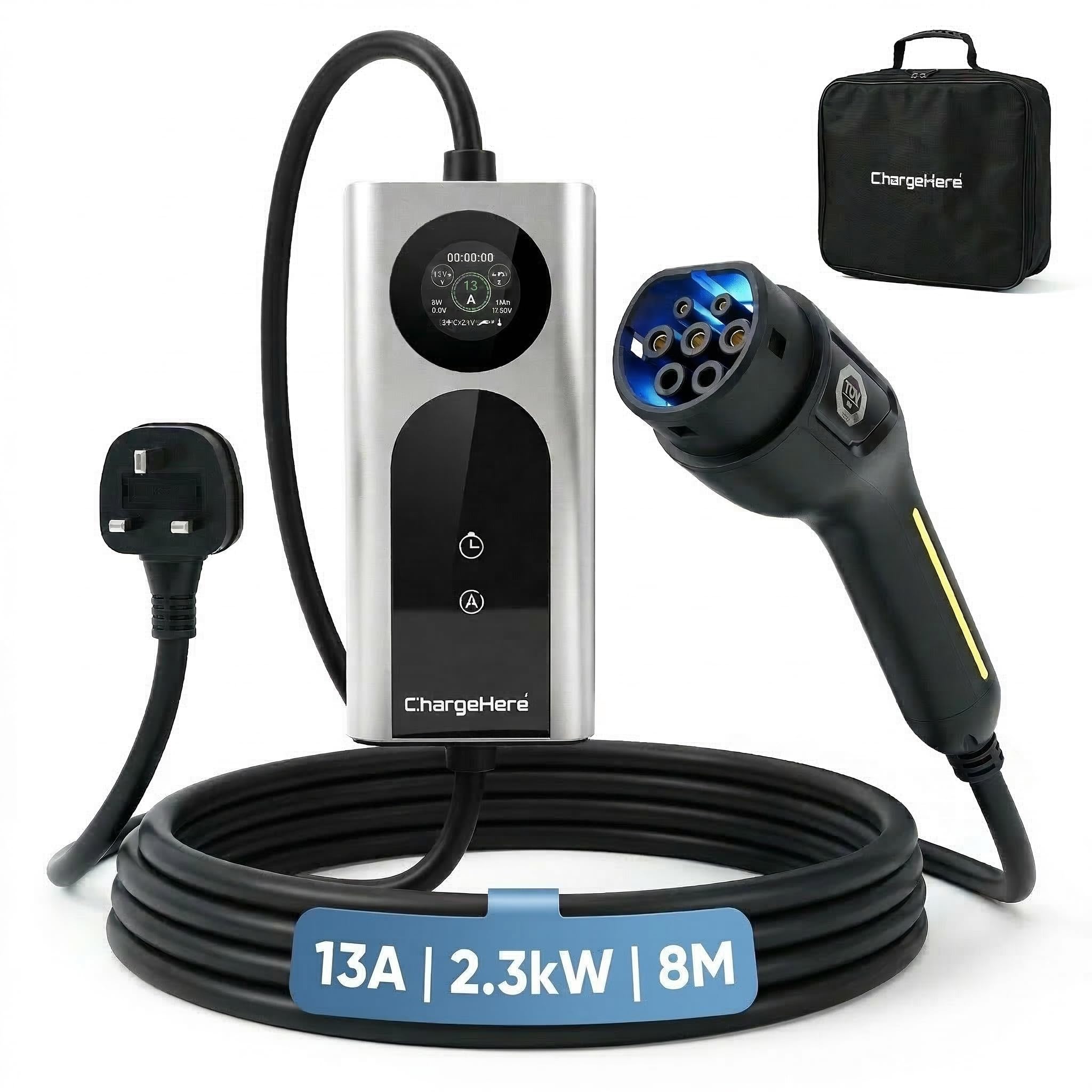
ChargeHere Portable EV Charger Type 2 to UK 3-Pin Plug, 3kW 13A Electric Vehicle Charging, Adjustable Current with Smart LCD Display & Delay Start, IP67 Waterproof, Compatible with Most car (8M)
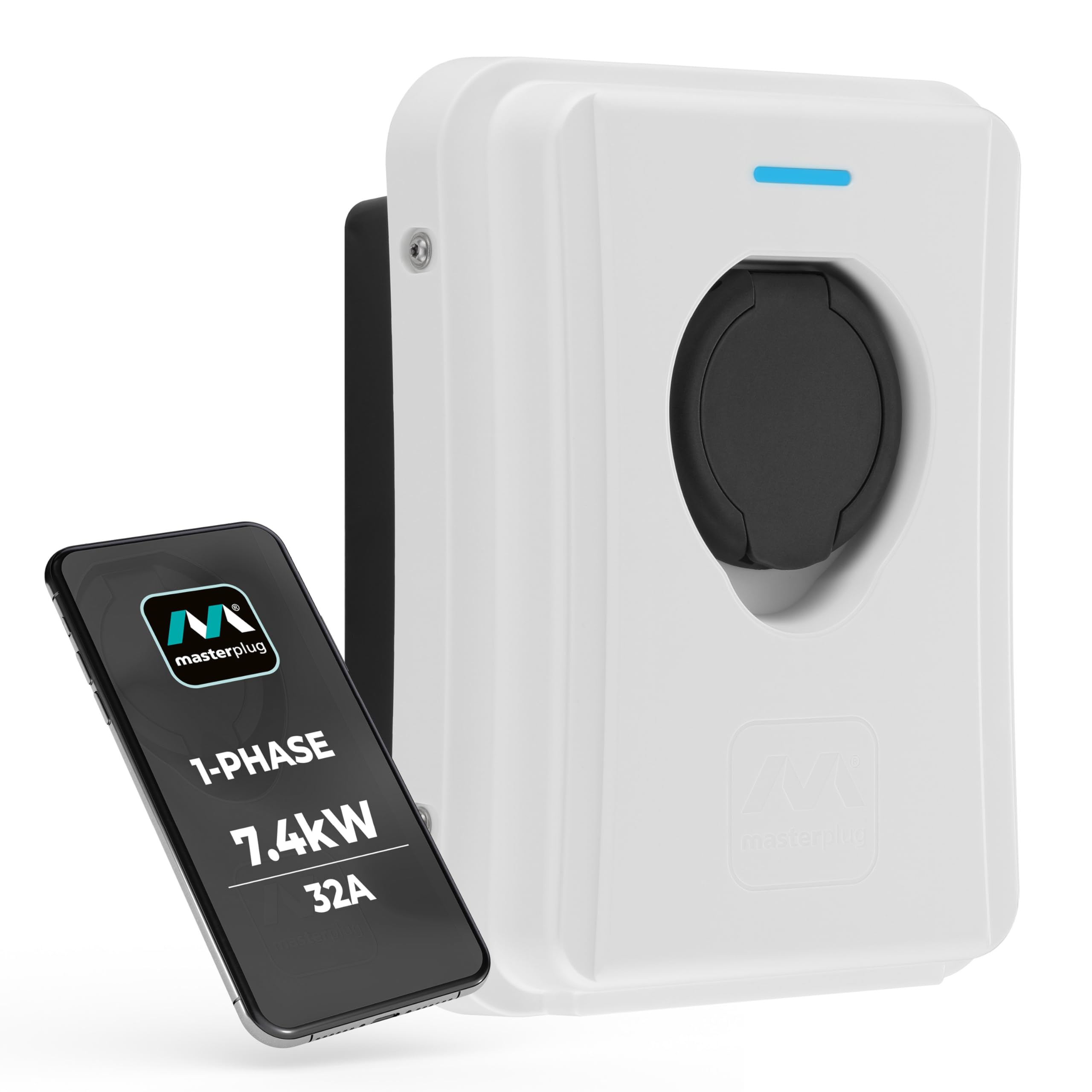
Masterplug Smart EV Home Wall Charger for Type 2 Electric and Plug-In Hybrid Vehicles, Socketed, Mode 3, Auto-Lock, Solar Charging, Single Phase, Wi-Fi, White, IP65, 7.4kW, 32A, EVCM3SS7W-MP
Our Recommendation
Product B is the stronger buy for most UK EV owners because 7.4kW charging is dramatically more practical than 3kW, especially for daily home use. Its Wi-Fi, solar charging support, auto-lock, and dedicated wallbox design make it a more complete and future-proof solution. Product A is good value, but it is mainly a budget, portable stopgap rather than a proper home charging upgrade.
Detailed Comparison
Display
Product A wins on user feedback simplicity, but Product B wins on actual functionality. The ChargeHere portable charger includes a smart LCD display and adjustable current, which is useful when you want clear status information at the cable level and easy control from the unit itself. The Masterplug wall charger does not advertise a comparable built-in display in the title, but it offers Wi-Fi smart control, which is more useful for scheduled charging, monitoring, and solar integration. Verdict: Product A wins for on-device display convenience; Product B wins for smarter overall control.
Performance
Product B is the clear winner here. A 3kW, 13A charger is slow by modern EV standards, typically adding around 10-12 miles of range per hour depending on the car. The Masterplug delivers 7.4kW at 32A, which is roughly double the speed of many basic home setups and can often add 20-30 miles of range per hour. For UK households with a daily commute or a plug-in hybrid that needs regular replenishment, the faster wallbox is far more practical. Product A only makes sense if you drive relatively little or are happy to leave the car plugged in for long periods.
Build quality and design
Product B wins for installation-grade design, while Product A wins for portability. The Masterplug is a socketed Mode 3 wall charger with auto-lock, IP65 weather resistance, and a fixed home-install format that is better suited to repeated daily use. It is designed as a permanent charging point, which usually means a cleaner cable management setup and a more robust user experience. Product A’s IP67 rating is impressive on paper and the 8m cable adds flexibility, but as a portable 3-pin charger it is inherently more dependent on the quality of the household socket and is less elegant for long-term daily use. Verdict: Product B for build and design; Product A for grab-and-go portability.
Battery life
Neither product has a battery, so this category is really about charging convenience and how well they fit your EV’s battery needs. Product B wins because faster charging reduces the time your car spends plugged in and makes it easier to keep the battery between roughly 20% and 80%, which is generally a sensible daily-use window for longevity. Product A can still be perfectly fine for overnight charging, but it may struggle if you have a larger battery EV or need to recover a lot of range quickly. In practical terms, the wallbox is the better match for bigger battery packs and higher-mileage drivers.
Price and value for money
Product A wins on outright affordability, but Product B wins on value for serious home charging. At £135.99, ChargeHere is £214 cheaper than the Masterplug, which is a huge gap. If you only need occasional charging, a backup charger, or a low-cost way to top up a plug-in hybrid, Product A offers strong entry-level value. But if you’re comparing cost per kW of charging power, the Masterplug’s 7.4kW output, smart Wi-Fi features, solar charging support, and dedicated home-wallbox design justify the higher price for many buyers. In the UK, where electricity prices are still high and off-peak tariffs can make home charging much cheaper than public charging, the ability to schedule charging around cheap overnight rates or solar surplus often pays back over time.
Game library/features
This category maps best to smart features and charging flexibility. Product B wins decisively. The Masterplug offers Wi-Fi, solar charging support, auto-lock, socketed Mode 3 operation, and single-phase 7.4kW charging, which makes it much more feature-rich and future-proof. That solar compatibility matters in the UK because daytime PV output can be useful in spring and summer, even if winter generation is limited. Product A’s adjustable current, delay start, and LCD are useful, but it is fundamentally a simpler portable charger with fewer advanced charging options.
Overall user experience
Product B wins overall for most EV owners who charge at home regularly. It is faster, smarter, more convenient, and better aligned with the way UK households actually use EV charging: overnight on cheaper tariffs, with occasional solar capture in brighter months. Product A is easier to buy and use immediately, and it avoids the upfront installation-style commitment of a wallbox, but the slower 3kW rate can become frustrating fast if you rely on it day-to-day. If you only need a budget backup or a portable solution for occasional use, Product A is excellent value. If you want a proper long-term home charging setup, Product B is the better buy.
Overall summary: Product A is the best low-cost portable charger, but Product B is the better EV charger for most people. The Masterplug wins on speed, smart features, solar integration, and long-term home usability, while the ChargeHere wins on price and portability. If you want the definitive recommendation: buy Product B unless your budget is tight or you specifically need a portable 3-pin charger.
Buy the ChargeHere Portable EV if...
Buy Product A if you need the cheapest possible way to charge at home, or you want a portable backup charger you can keep in the boot. It is also the better choice if you only do low miles, have a plug-in hybrid, or can leave the car charging overnight without worrying about speed. The 8m cable and 3-pin compatibility make it flexible for occasional use.
Buy the Masterplug Smart EV if...
Buy Product B if you want a proper home charging setup and you drive enough that 3kW would feel too slow. It is the better choice if you want to use overnight off-peak tariffs, make use of solar generation, or simply want the convenience of a fast, fixed wall charger. If you value long-term usability over the lowest upfront price, this is the one to get.
Curated by The Electric Home on All The Top Picks
As an Amazon Associate we earn from qualifying purchases.