Best budget 3-pin EV charger: premium polish or lower-cost value?
If you’re choosing between these two portable 3-pin EV chargers, you’re really deciding between paying more for a longer cable and a stronger review score, or saving over £50 on a very similar charging experience. Both are aimed at UK drivers who need occasional home charging from a standard 13A socket, especially for overnight top-ups or as a backup to a wallbox. This comparison focuses on the practical differences that matter most: charging performance, usability, safety, and value in a UK context where electricity is expensive and efficient charging habits matter. The short version: both will do the job, but one offers noticeably better value.
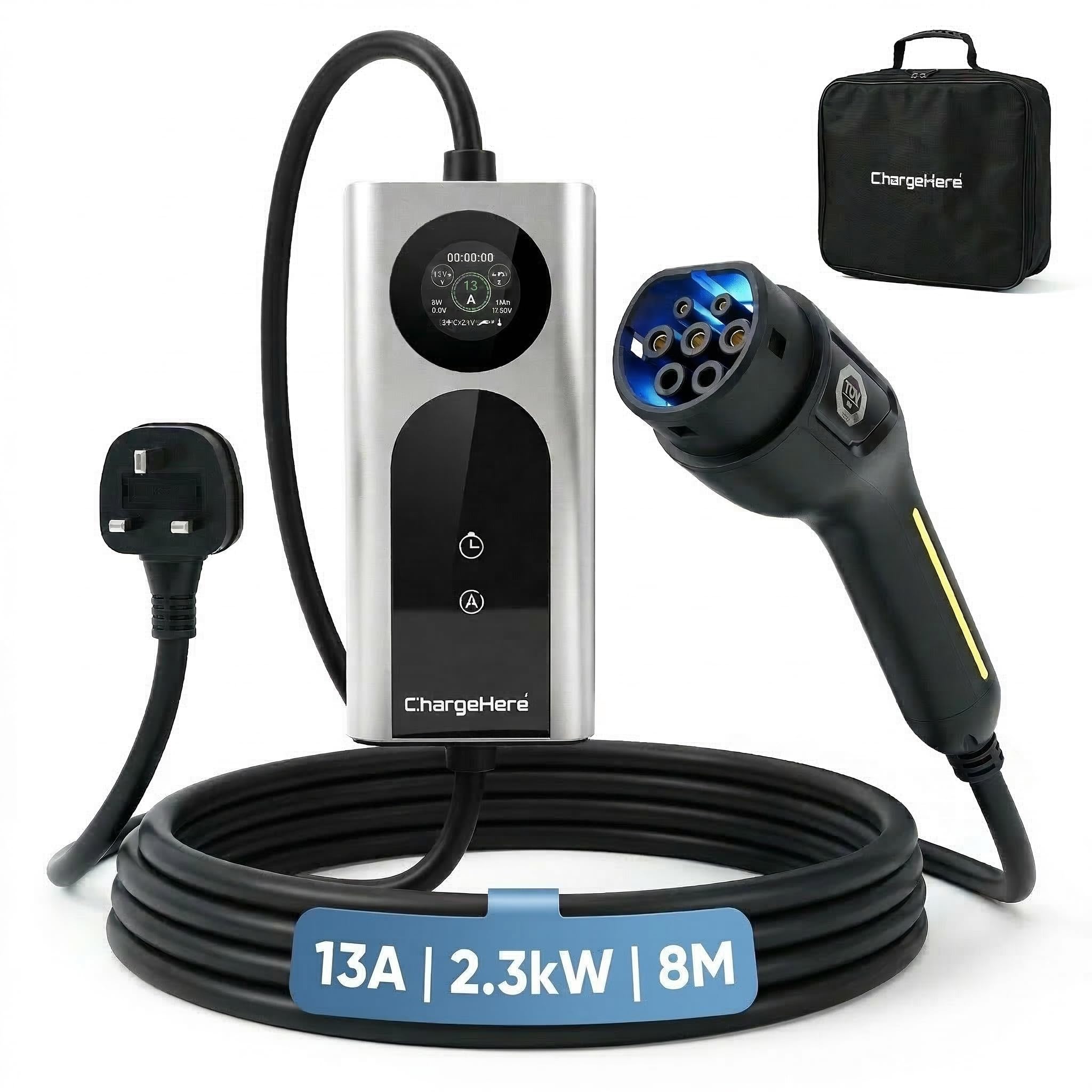
ChargeHere Portable EV Charger Type 2 to UK 3-Pin Plug, 3kW 13A Electric Vehicle Charging, Adjustable Current with Smart LCD Display & Delay Start, IP67 Waterproof, Compatible with Most car (8M)
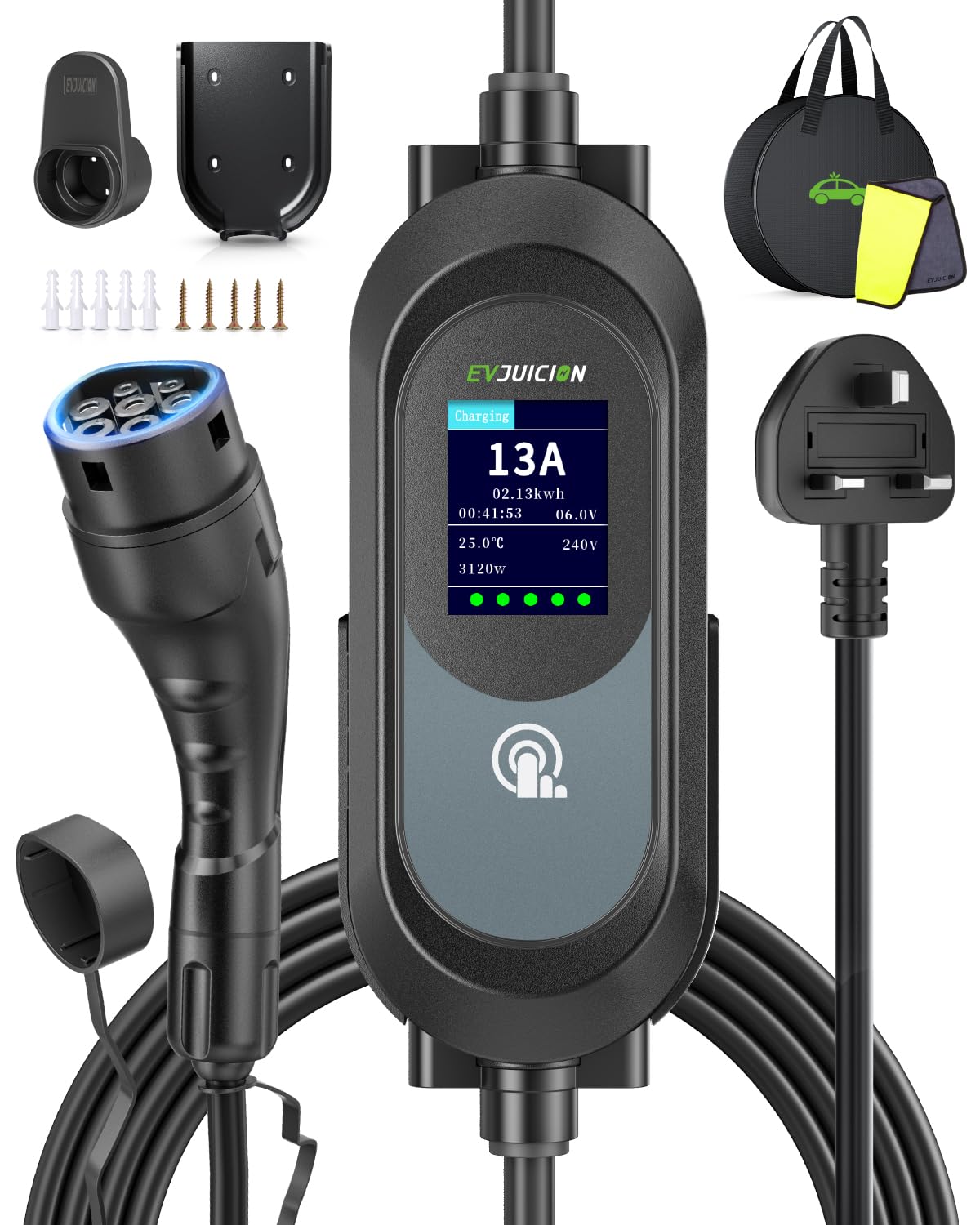
EVJUICION EV Charger 3 Pin Plug, 6M 3.1kW 6-13A 3 Pin EV Charger, Portable Electric Car Charger for up to 12H Delayed Start Charging with 2.4″ LED Screen, IP67 for EVs & PHEV
Our Recommendation
Product B is the better buy because it delivers the same core 3-pin charging function for far less money. At £84.90, it undercuts Product A by £51.09 while still offering adjustable current, delayed start, IP67 protection, and a solid 4.6/5 rating from 20 reviews. Product A only really wins on cable length and screen polish, which are not enough to justify the price gap for most UK drivers.
Detailed Comparison
Display
Product A wins on paper for display quality because it uses a smart LCD display, which usually means clearer charging status, current setting, and session information at a glance. Product B has a 2.4-inch LED screen, which is perfectly usable but generally less informative and less refined than a fuller LCD interface. For a portable EV charger, the screen matters because you want to quickly confirm amperage, charging progress, and any fault indicators before walking away. Winner: Product A, for the more informative and likely easier-to-read display.
Performance
Both chargers are designed for UK 3-pin socket charging, and both sit in the same practical class: slow charging from a domestic plug rather than rapid charging. Product A is rated at 3kW and 13A, while Product B is rated at 3.1kW and 6-13A. In real-world UK use, that difference is minimal; both are essentially overnight chargers for topping up a battery rather than recovering huge range quickly. Product B’s adjustable 6-13A range gives a little more flexibility if you want to reduce load on older wiring or charge more gently, while Product A’s 13A framing suggests a simpler, more straightforward setup. Winner: Product B, narrowly, because the wider current range offers more control and slightly more versatility.
Build quality and design
Product A has an 8m cable, which is a major practical advantage if your driveway layout is awkward, your socket is not close to the car, or you need to route the cable safely without stretching. It also carries an IP67 waterproof rating, as does Product B, so both should be suitable for typical British weather when used properly. Product B’s 6m cable is shorter, but still adequate for many users, and the lower price suggests a more stripped-back design. The key design difference is really convenience versus cost: Product A feels more premium and flexible, while Product B is more basic but still functional. Winner: Product A, because the longer 8m cable is a real-world usability upgrade.
Battery life
Neither product has a battery, so this category is best interpreted as charging endurance and suitability for long charging sessions. Both are built for extended overnight use, which is exactly how most UK drivers will use a 3-pin portable charger. Product B explicitly supports up to 12H delayed start charging, which is useful if you want to plug in before bed and take advantage of off-peak tariffs later in the night. Product A also includes delay start, but the listing gives less explicit detail here. For scheduled charging convenience, Product B has the edge. Winner: Product B, because the 12-hour delayed start feature is clearly stated and practical for cheap-rate electricity windows.
Price and value for money
This is where the decision becomes obvious. Product A costs £135.99, while Product B costs £84.90, a difference of £51.09. Both charge at roughly the same real-world speed from a 3-pin socket, both are IP67-rated, both have adjustable current, and both include a screen and delayed start. Unless you specifically need the longer cable or prefer the stronger review score, Product A’s extra cost is hard to justify. In UK terms, that £51.09 could cover a significant amount of overnight electricity, especially if you charge a plug-in hybrid or do modest EV top-ups. Winner: Product B, by a wide margin, for value.
Features and user experience
Product A’s strengths are its 8m cable, smart LCD display, and excellent 4.9/5 rating from 11 reviews. That suggests very strong user satisfaction, though the sample size is still relatively small. Product B counters with a 6-13A adjustable range, a 2.4-inch LED screen, 12-hour delayed start charging, a 6m cable, and a healthier 20-review base at 4.6/5. In everyday use, Product B looks like the more thoughtful budget choice: enough features to cover most owners’ needs without pushing the price up. Product A looks a little more premium and user-friendly, but not enough to erase the value gap. Winner: Product B, because it offers the better blend of features and cost.
Overall summary
If you want the best all-round purchase, Product B is the one to buy. It is much cheaper, still well reviewed, and offers the core features most UK EV and PHEV owners actually need: adjustable current, delayed start, IP67 protection, and portable 3-pin charging. Product A is the nicer-feeling option thanks to its longer cable and more premium display, but the extra £51.09 is difficult to defend when charging performance is broadly similar. For most buyers, Product B is the smarter buy; Product A only makes sense if the longer reach and slightly more polished interface are worth paying extra for.
Buy the ChargeHere Portable EV if...
Buy Product A if you specifically need the 8m cable for a difficult parking layout, longer reach to the socket, or safer cable routing without extension. It also makes sense if you prefer the reassurance of the higher 4.9/5 rating and want the more premium-feeling LCD interface.
Buy the EVJUICION EV Charger if...
Buy Product B if you want the best value and a charger that does the essentials well for overnight UK home charging. It is the better choice if you plan to charge on cheaper off-peak electricity, want adjustable 6-13A control, and don’t need the extra 2m of cable.
Curated by The Electric Home on All The Top Picks
As an Amazon Associate we earn from qualifying purchases.