Canon R8 kit showdown: same camera, very different value
These two listings look similar because both are built around the Canon EOS R8 and the RF 24-50mm lens, but they are not the same purchase. One is a straightforward kit at a much lower price, while the other costs far more despite appearing to include the same core camera and lens pairing. If you are choosing between them, the real question is whether Product B offers enough extra value to justify a very large price jump.

Canon EOS R8 Mirrorless Camera with RF 24-50mm f/4.5-6.3 IS STM Lens
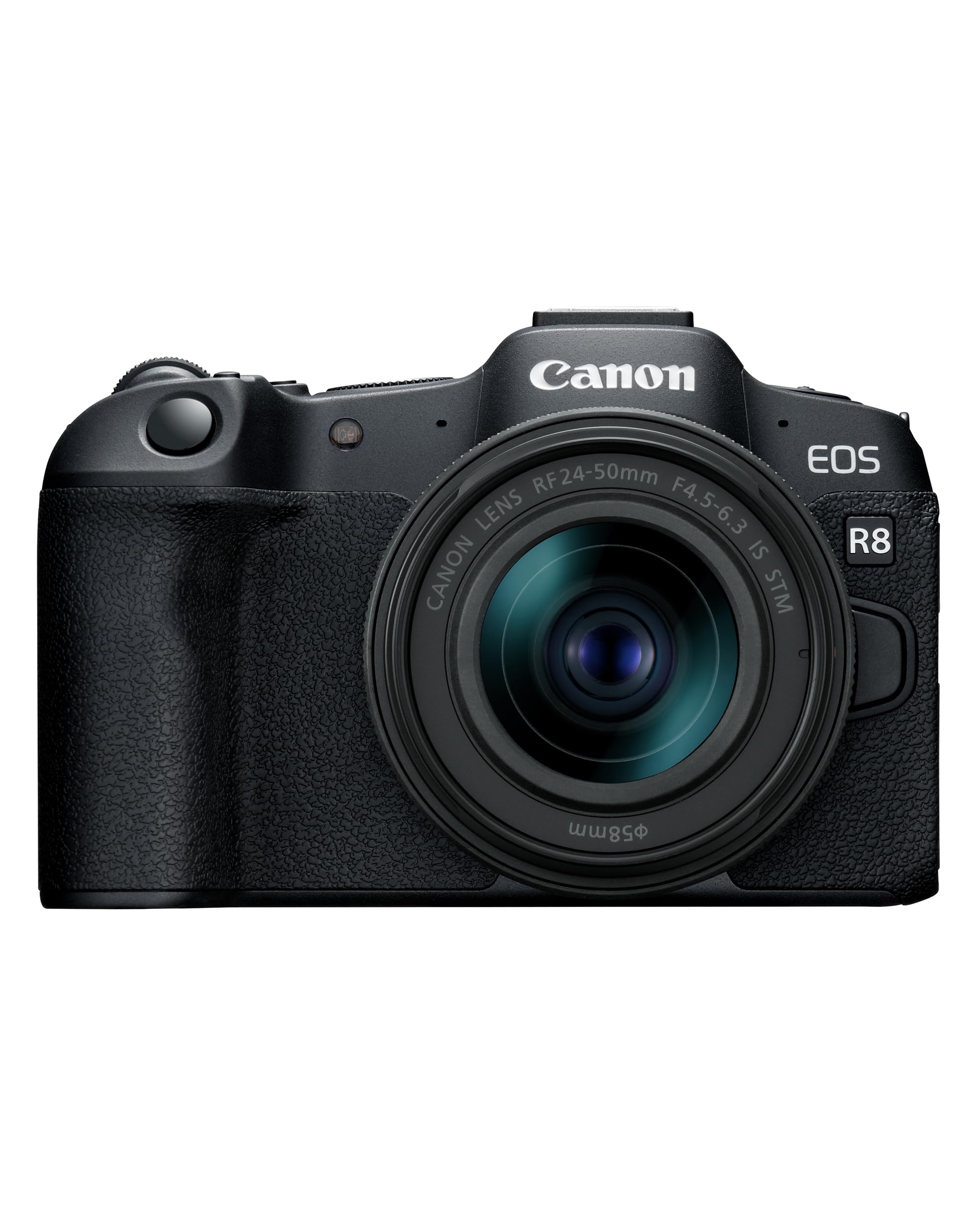
Canon EOS R8 + RF 24-50mm - Mirrorless Digital Camera - 24.2 MP Full-Frame CMOS Sensor - Dual Pixel CMOS AF II - UVC/UAC Compatible
Our Recommendation
Product A is the better buy because it appears to deliver the same Canon EOS R8 body and RF 24-50mm lens for £469.96 less. You still get the 24.2MP full-frame sensor, Dual Pixel CMOS AF II, compact RF mount system, and the same core shooting experience. Product B’s UVC/UAC compatibility is useful, but not worth that large premium on the information provided.
Detailed Comparison
Display
On the core camera itself, there is effectively no meaningful difference to compare: both are the Canon EOS R8, so you get the same rear LCD experience, same viewing interface, and the same usability for framing stills and video. The R8’s screen is a vari-angle touchscreen, which is one of the body’s strongest practical features for vlogging, low-angle street work, and shooting portraits from awkward angles. Because the camera hardware is the same, this category is a tie. Winner: tie.
Performance
Again, the underlying performance is identical because both listings centre on the EOS R8’s 24.2MP full-frame CMOS sensor and Canon’s Dual Pixel CMOS AF II system. That means you get Canon’s excellent subject detection, fast and confident autofocus, and strong tracking for people, animals, and vehicles. The R8 is a genuinely capable hybrid body: it shoots high-quality stills, has strong autofocus for moving subjects, and is also one of Canon’s most approachable full-frame video cameras. Product B’s listing mentions UVC/UAC compatibility, which is useful if you want to use the camera as a webcam without extra capture hardware, but that is a feature of the camera platform rather than a clear performance upgrade over Product A. Winner: tie, with a slight practical nod to Product B only if webcam use is a priority.
Build quality and design
The EOS R8 is a compact, lightweight full-frame camera with a simple control layout and a design aimed at portability rather than rugged pro use. Since both products are the same camera body, build quality is the same: no weather sealing to the level of Canon’s higher-end R-series models, but a very travel-friendly form factor that suits beginners and enthusiasts who do not want a bulky setup. The included RF 24-50mm f/4.5-6.3 IS STM lens is also the same type of lens in both packages: compact, stabilised, and convenient, but not especially bright. Product A is the better buy here only because you are paying far less for the same physical kit. Winner: Product A.
Battery life
Battery life is also the same on both, because the camera body is identical. The EOS R8 uses Canon’s LP-E17 battery, which is one of the compromises of this model: it is fine for casual shooting, but not ideal for long days of heavy stills or extended 4K recording. If you plan to shoot a lot, you will likely want a spare battery regardless of which kit you buy. Since neither package improves battery performance, this is a tie. Winner: tie.
Price and value for money
This is where the decision becomes very clear. Product A costs £1049.00, while Product B costs £1518.96, a difference of £469.96. Given that both listings appear to include the same EOS R8 body and RF 24-50mm lens, Product A offers dramatically better value for money. The R8 body itself is already a strong performer thanks to the 24.2MP full-frame sensor, Dual Pixel CMOS AF II, and UVC/UAC support on the platform; paying nearly £470 more for the second listing only makes sense if there is a hidden bundle advantage not shown in the title. Based on the information provided, Product A is the clear winner on value. Winner: Product A.
Game library/features
This category is really about feature set rather than games, since we are comparing cameras. Both options share the EOS R8’s feature set: full-frame stills, Canon RF lens mount compatibility, strong autofocus, and useful hybrid shooting tools. The RF mount gives access to Canon’s growing lens ecosystem, though you should note the included RF 24-50mm is more of a compact starter zoom than a premium optic. Product B’s UVC/UAC compatibility is useful for streaming, online teaching, and plug-and-play webcam use, but that is not enough to outweigh the much higher price when the rest of the package appears identical. Winner: tie overall, with a small feature nod to Product B for webcam users.
Overall user experience
For most buyers, Product A will deliver the better ownership experience because it gives you the same camera, the same lens, and the same real-world image quality for far less money. The EOS R8 is easy to live with: lightweight, quick to focus, strong in mixed lighting, and very capable for travel, family, portraits, and content creation. Product B only makes sense if the seller is bundling something not obvious from the title or if you specifically value the UVC/UAC webcam angle enough to ignore the price gap. As a pure purchase decision, Product A is the smarter and more satisfying buy for almost everyone.
Overall summary: both products are built around the same Canon EOS R8 and RF 24-50mm lens, so image quality, autofocus, handling, and battery life are effectively the same. Product A wins decisively on price and value, while Product B only offers a small practical edge for webcam-focused users. Unless Product B includes extra accessories not listed here, Product A is the definitive recommendation.
Buy the Canon EOS R8 if...
Buy Product A if you want the best-value route into Canon full-frame mirrorless and plan to use the camera for travel, family, portraits, or general hybrid shooting. It is also the better choice if you are building a lens budget, because saving nearly £470 leaves far more room for a faster RF lens or extra batteries. Choose Product A if you do not specifically need webcam-focused features and simply want the same EOS R8 performance at the lowest sensible price.
Buy the Canon EOS R8 if...
Buy Product B only if the retailer is including additional items not shown in the title, or if you know you need UVC/UAC webcam compatibility as a key workflow feature. It may also suit buyers who strongly prefer that exact package from that seller for warranty or support reasons. If you are buying for streaming, video calls, or plug-and-play computer use and the price is acceptable to you, Product B can make sense despite the premium.
Curated by Shutter & Lens on All The Top Picks
As an Amazon Associate we earn from qualifying purchases.