AC180 vs DELTA 2 Max Extra Battery: which power setup is smarter?
These two products solve very different problems, so the right choice depends on whether you want a ready-to-use portable power station or an add-on battery for an existing system. The BLUETTI AC180 is a complete 1152Wh LiFePO4 power station with built-in inverter, AC sockets, and fast charging, aimed at camping, backup power, and flexible off-grid use. The ECOFLOW Extra Battery for DELTA 2 Max is not a standalone power station at all; it is an expansion pack that only makes sense if you already own the DELTA 2 Max and want to double your storage. That makes this less of a direct like-for-like comparison and more of a question of standalone value versus system expansion.

BLUETTI Portable Power Station AC180, 1152Wh LiFePO4 Battery Backup w/ 2 1800W (2700W peak) AC Outlets, 0-80% in 45Min., Solar Generator for Camping, Off-grid, Power Outage
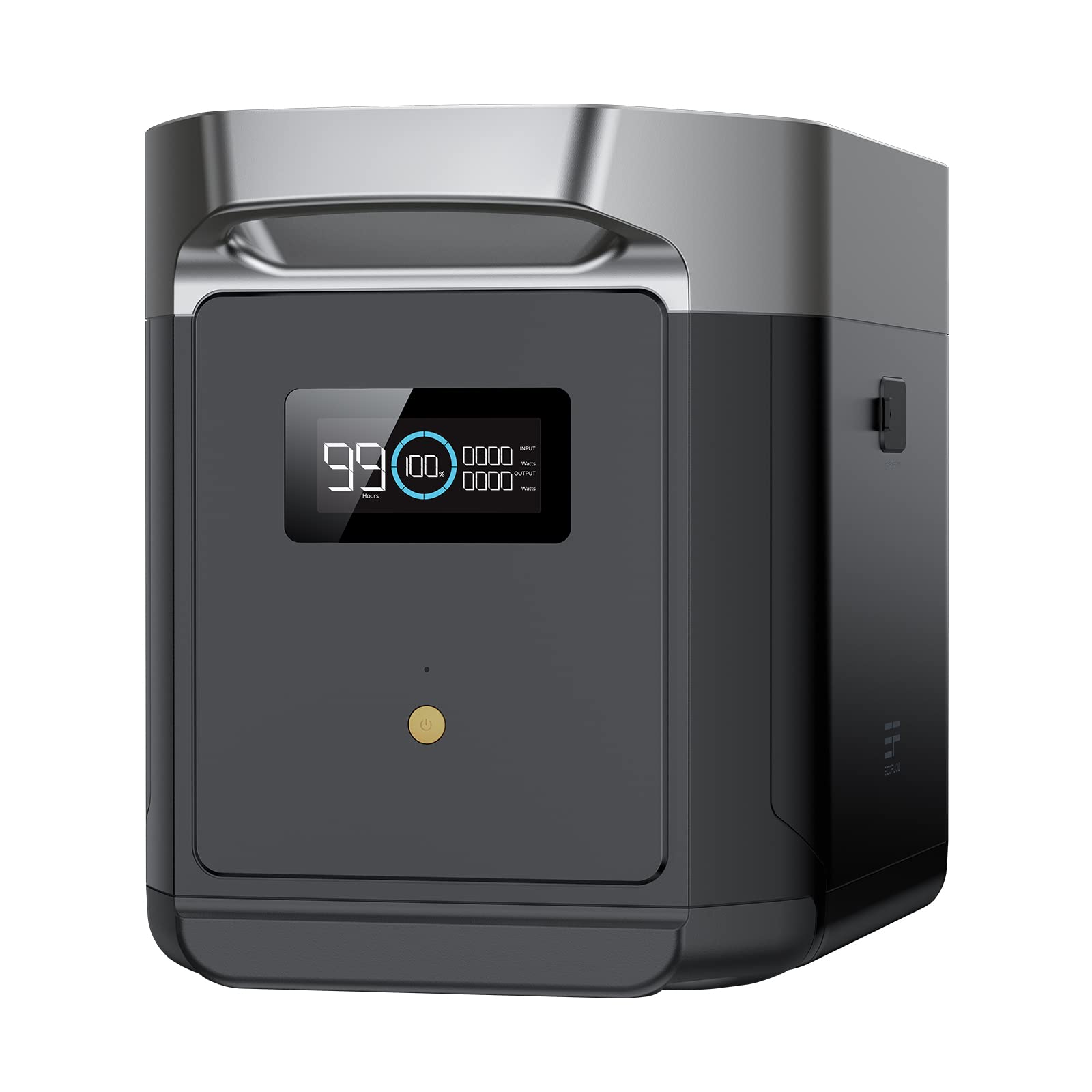
ECOFLOW Extra Battery for DELTA 2 Max Portable Power Station, 2048Wh Capacity, LifePO4 Battery For Home Backup, Energy Savings, Outdoors, RV, Camping
Our Recommendation
The BLUETTI AC180 is the better purchase because it is a complete 1152Wh LiFePO4 power station with 1800W output, fast charging, and immediate usability at £649. The EcoFlow product is only an expansion battery, so at £999 it cannot do anything useful on its own and only makes sense if you already own a DELTA 2 Max. For most buyers, especially renters and first-time backup power shoppers, the AC180 offers far better value and far less hassle.
Detailed Comparison
Display
Winner: BLUETTI AC180
The AC180 is the only product here that is a full portable power station, so it includes the display and controls you actually need for day-to-day use: battery percentage, input/output wattage, remaining runtime, and charging status. That matters because renters, flat-dwellers, and campers need quick visibility without digging into an app. The EcoFlow Extra Battery has no meaningful standalone display because it is just an expansion module; all the intelligence lives in the DELTA 2 Max unit it attaches to. If you want a self-contained system you can monitor at a glance, BLUETTI wins easily.
Performance
Winner: BLUETTI AC180
On paper, the AC180 delivers 1152Wh of LiFePO4 storage, two AC outlets, 1800W continuous output, and 2700W peak surge. That is enough for a wide range of UK household essentials: laptops, routers, TVs, lighting, small kitchen appliances, and many power tools, as long as you stay within the inverter limit. The headline feature is also its charging speed: BLUETTI claims 0-80% in 45 minutes, which is excellent if you need rapid top-ups between outages or before leaving for a trip. The ECOFLOW Extra Battery offers much more capacity at 2048Wh, but because it cannot output power on its own, its real-world performance depends entirely on the DELTA 2 Max host unit. If you already have that ecosystem, the extra capacity is valuable; if not, it is unusable by itself. For standalone performance, BLUETTI is the clear winner.
Build quality and design
Winner: Tie, with different strengths
BLUETTI’s AC180 is designed as a compact all-in-one box with integrated inverter, battery management, and output ports. That makes it more versatile and easier to place in a cupboard, under a desk, or in a car boot. The LiFePO4 chemistry is a major plus: it is safer, more stable, and typically rated for far more charge cycles than older NMC packs, which is exactly what you want for long-term backup use. ECOFLOW’s extra battery also uses LiFePO4, which is equally good from a chemistry perspective, and the modular design can be cleaner if you want a larger home backup stack. However, the EcoFlow unit is dependent on the main DELTA 2 Max, so its design is elegant only within that ecosystem. For standalone practicality, BLUETTI edges it; for modular integration, EcoFlow has the nicer system approach.
Battery life
Winner: ECOFLOW Extra Battery
This is the clearest spec win for EcoFlow. The extra battery provides 2048Wh of capacity, which is nearly double the AC180’s 1152Wh. In practical terms, that means longer runtime for fridges, CPAP machines, Wi-Fi routers, lights, or a TV during a power cut, assuming the DELTA 2 Max inverter can handle the load. Capacity is the biggest driver of battery life, and 2048Wh simply gives you more stored energy than 1152Wh. That said, battery life only matters if the product can actually be used; because this is an expansion battery rather than a standalone unit, the value is conditional on ownership of the base station. If you already have the DELTA 2 Max, EcoFlow wins on runtime. If you do not, the point is moot.
Price and value for money
Winner: BLUETTI AC180
At £649, the AC180 is £350 cheaper than the EcoFlow extra battery at £999, and it is a complete power station rather than a dependent add-on. That is a huge value difference. With BLUETTI, you get the battery, inverter, AC outlets, charging electronics, and portability in one purchase. With EcoFlow, you are paying more for storage alone, and you still need the DELTA 2 Max main unit to make it functional. For UK buyers who want backup power without spending a fortune or committing to a larger ecosystem, the AC180 is far better value. The only time EcoFlow justifies its price is when you are intentionally scaling an existing DELTA 2 Max setup and specifically need the extra 2048Wh.
Game library/features
Winner: BLUETTI AC180
Translated into power-station terms, this category is really about features, outputs, and usability. The AC180 has the more complete feature set because it is a full device: AC outlets, fast charging, LiFePO4 chemistry, and enough inverter power for real appliances. It is the one you can take camping, keep in a flat, or use as emergency backup without buying anything else. The EcoFlow extra battery adds no ports, no inverter, no direct usability, and no independent features; its only feature is extra capacity. If you want a product that does more than sit there waiting to be connected, BLUETTI wins decisively.
Overall user experience
Winner: BLUETTI AC180
For most people, the best user experience is the simplest one: buy it, charge it, and use it. That is exactly what the AC180 offers. It is a self-contained portable power station with enough output for real-world UK use, fast recharge times, and a sensible price. It suits renters and flat-dwellers because it does not require installation, landlord approval, or an electrician. The EcoFlow extra battery is only a good experience if you already live inside the DELTA 2 Max ecosystem and want to extend runtime without changing your setup. Otherwise, it adds cost and complexity without delivering standalone utility.
Overall summary: the BLUETTI AC180 is the better buy for almost everyone because it is a complete, lower-cost, more versatile power solution. The EcoFlow Extra Battery only wins on raw capacity, and that advantage matters only if you already own a DELTA 2 Max. If you need one product that works straight out of the box for outages, camping, or flexible home backup, BLUETTI is the definitive choice.
Buy the BLUETTI Portable Power if...
Buy Product A if you want a standalone portable power station you can use immediately for camping, outages, or occasional home backup. It is also the better pick if you want the lowest cost per usable feature and do not already own an EcoFlow DELTA 2 Max. This is the smarter choice for most UK flats and rental homes.
Buy the ECOFLOW Extra Battery if...
Buy Product B only if you already own a DELTA 2 Max and specifically need to double your stored energy for longer outages or higher overnight autonomy. It makes sense for users who are committed to EcoFlow’s modular system and are happy paying extra for expansion rather than a separate device. If you do not already have the base unit, do not buy this on its own.
Curated by The Solar Plug on All The Top Picks
As an Amazon Associate we earn from qualifying purchases.