Budget brute force or smart cinema: which projector actually wins?
If you’re choosing between these two projectors, you’re really deciding between raw spec-heavy value and a more polished smart-TV-style experience. Product A from WiMiUS looks like the classic budget all-rounder: big claimed brightness, full auto focus and keystone, and a lower price. Product B from Aurzen is the more premium-feeling option, with Google TV built in, 20W speakers, and a simpler out-of-the-box setup. For UK buyers wanting a living-room or garden movie machine, the right pick depends on whether you value convenience or maximum features per pound.

【Auto Focus & Keystone】Projector, 38000 Lumen WiFi 6 Bluetooth Full HD 1080P Portable Projector Supported 4K, 4D/4P Keystone 50% Zoom 300"Display Home Cinema Projectors for Smartphone/TV Stick/PPT/PS5
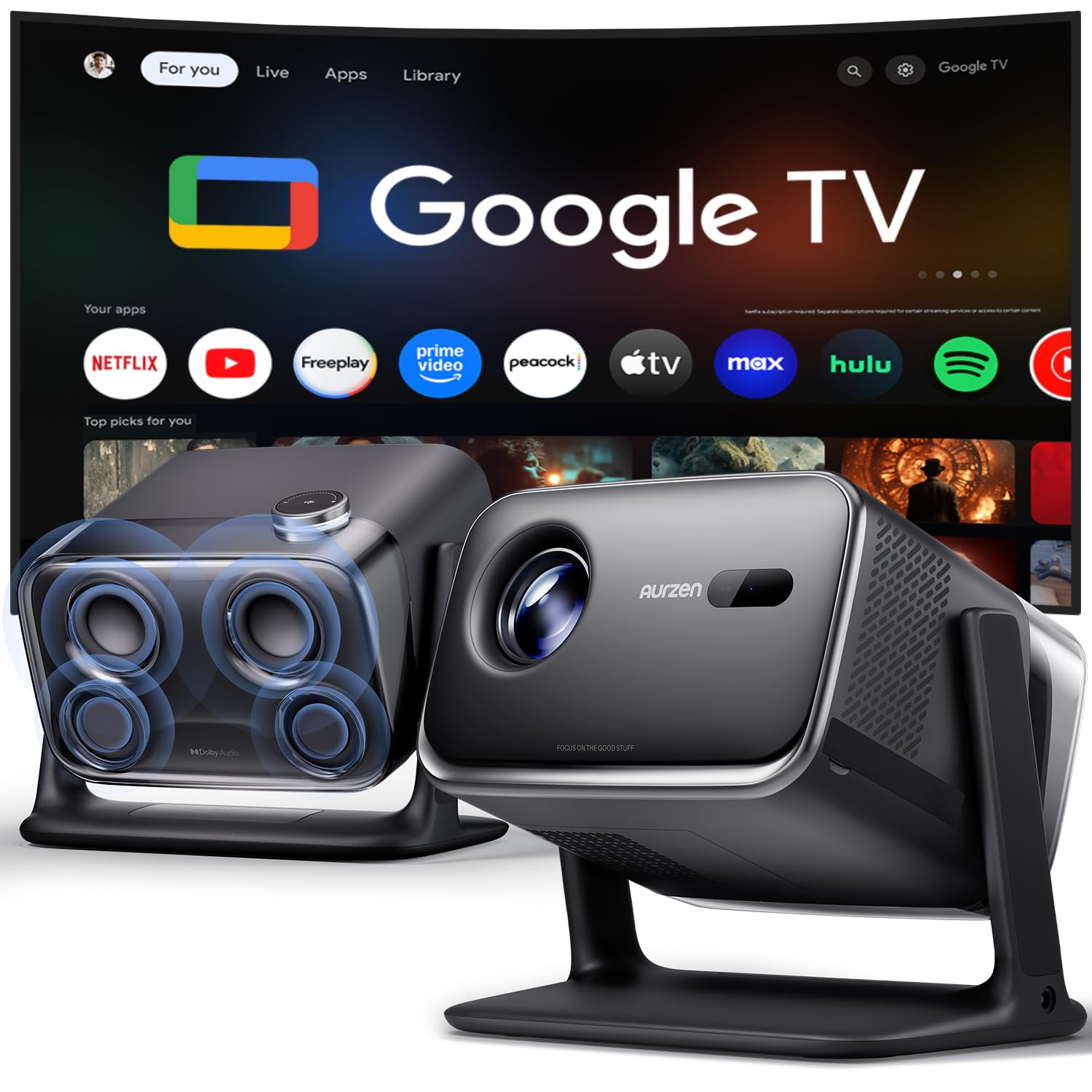
Aurzen BOOM mini Google TV Smart Projector with WiFi and Bluetooth, 4K Supported Outdoor & Home Movie Projector with 20W Speakers DoIby Audio, Real-Time Focus & Keystone, 500 ANSI Lumens, Black
Our Recommendation
Aurzen BOOM mini is the better buy for most shoppers because it delivers a more complete cinema experience with Google TV built in, real-time focus and keystone, and 20W speakers with Dolby Audio. It is only £17.49 more than the WiMiUS, so the extra convenience is easy to justify. While Product A looks stronger on paper for brightness and value, Product B is the one you’re more likely to enjoy every time you switch it on.
Detailed Comparison
Display
Product A claims 38,000 lumens, Full HD 1080p, support for 4K input, 4D/4P keystone, 50% zoom, and a 300-inch display size. Product B is rated at 500 ANSI lumens, also supports 4K input, and includes real-time focus and keystone correction. On paper, Product A appears far brighter and more flexible for placement, but its headline lumen figure is almost certainly a marketing-style peak claim rather than a direct ANSI comparison. Product B’s 500 ANSI lumens is the more trustworthy brightness metric, and it should give a more predictable image in dark rooms. Winner: Product B for display credibility and more reliable image performance, though Product A may look punchier in spec sheets.
Performance
For movie nights, streaming, and casual gaming, both are designed to handle the basics well, but they serve different users. Product A offers WiFi 6, Bluetooth, auto focus, auto keystone, and broad compatibility with smartphone, TV stick, PPT, and PS5. That makes it a strong plug-and-play option if you want lots of adjustment tools and low-latency convenience for mixed use. Product B adds Google TV, which is a major real-world advantage: apps are built in, the interface is familiar, and you do not need to hang everything off a dongle. Its 20W speakers with Dolby Audio also make it more complete straight out of the box. Winner: Product B, because the smart platform and stronger audio create a smoother everyday experience.
Build quality and design
Product A looks like the more conventional portable projector: compact, feature-packed, and aimed at buyers who want maximum specs for minimum spend. Product B feels more like a finished home-cinema product, with a black design, integrated smart features, and a more premium positioning. The difference here is not just cosmetics; it affects how the projector fits into your home. Product A is the better choice if you want a flexible, utilitarian unit to move between bedroom, lounge, and garden. Product B is the better choice if you want something that feels more like a permanent entertainment device rather than a gadget you keep reconfiguring. Winner: Product B for design polish, though Product A is likely the more straightforward portable buy.
Battery life
Neither product listing highlights built-in battery life, which strongly suggests these are mains-powered projectors rather than true cordless models. That means battery life is not a deciding factor here, and you should plan on using either projector near a power source or with suitable outdoor power arrangements. If you were hoping for a genuinely portable, battery-operated cinema solution, neither is the ideal fit. Winner: tie, because no meaningful battery advantage is stated for either model.
Price and value for money
Product A costs £219.99, while Product B is £237.48, a difference of £17.49 in favour of Product A. That makes WiMiUS the cheaper option, and it also carries the stronger review score at 4.7/5 from 2,343 reviews versus Aurzen’s 4.4/5 from 654 reviews. If you judge value purely by features per pound, Product A is extremely compelling: auto focus, keystone correction, WiFi 6, Bluetooth, 1080p, and 4K support at the lowest price. But value is not just about headline specs; it is also about how much extra equipment and effort you need to get a great picture and sound. Product B costs a little more, but Google TV and 20W speakers reduce the need for external boxes and speaker upgrades. Winner: Product A on pure price-to-spec value, Product B on convenience value.
Game library/features
Neither product is a gaming console, so “game library” here really means gaming and smart features. Product A is explicitly listed for PS5 use, which is reassuring for console players, and its auto geometry tools may make it handy for quick setup in a games room. Product B does not emphasise console compatibility as heavily, but Google TV gives it a much richer built-in app ecosystem for streaming and entertainment. If your priority is console gaming plus flexible connectivity, Product A has the edge. If your priority is a self-contained entertainment hub with easy access to apps, Product B wins. Winner: tie overall, with Product A better for console-first buyers and Product B better for smart TV-style use.
Overall user experience
This is where the decision becomes clear. Product A is the better bargain hunter’s projector: cheaper, heavily specified, and backed by a very strong review count and rating. It should suit buyers who do not mind relying on external streaming devices and who want maximum adjustment features for the money. Product B is the more refined, family-friendly choice: built-in Google TV, real-time focus and keystone, and 20W speakers mean less faffing and more watching. If you want the projector that feels easiest to live with, Product B has the edge. If you want the most aggressive value package, Product A is hard to beat. Overall summary: Product A wins on price and raw spec value, but Product B wins the head-to-head for most people because it is the more complete, polished, and convenient projector experience.
Buy the 【Auto Focus & if...
Buy Product A if your priority is spending as little as possible while still getting a feature-packed projector for movies, PS5, and casual streaming. It is also the better choice if you already use a Fire TV Stick, Chromecast, or similar device and do not need built-in smart apps. The stronger rating and larger review base also make it attractive if you want the safer crowd-pleaser.
Buy the Aurzen BOOM mini if...
Buy Product B if you want the easiest, most living-room-ready setup with fewer extras required. It is ideal if you want built-in Google TV, better onboard sound, and a more polished out-of-box experience for family movie nights. If you value convenience and a smarter interface over squeezing every pound out of the spec sheet, this is the one to choose.
Curated by Screen Scene on All The Top Picks
As an Amazon Associate we earn from qualifying purchases.