Big-capacity backup or ultra-budget basic power: which is smarter?
These two products sit at opposite ends of the portable power market. The Anker SOLIX C1000 Gen 2 is a serious home-backup and high-demand camping unit with a 1,024Wh LiFePO4 battery and 2,000W output, while the Powkey is a tiny 99Wh emergency pack aimed at phones, lights, and light travel use. If you want to run appliances, charge fast, and have something that can genuinely handle UK power cuts, the choice is very different from buying a cheap power bank with a mains socket. This comparison cuts through the marketing and shows which one actually fits your needs.
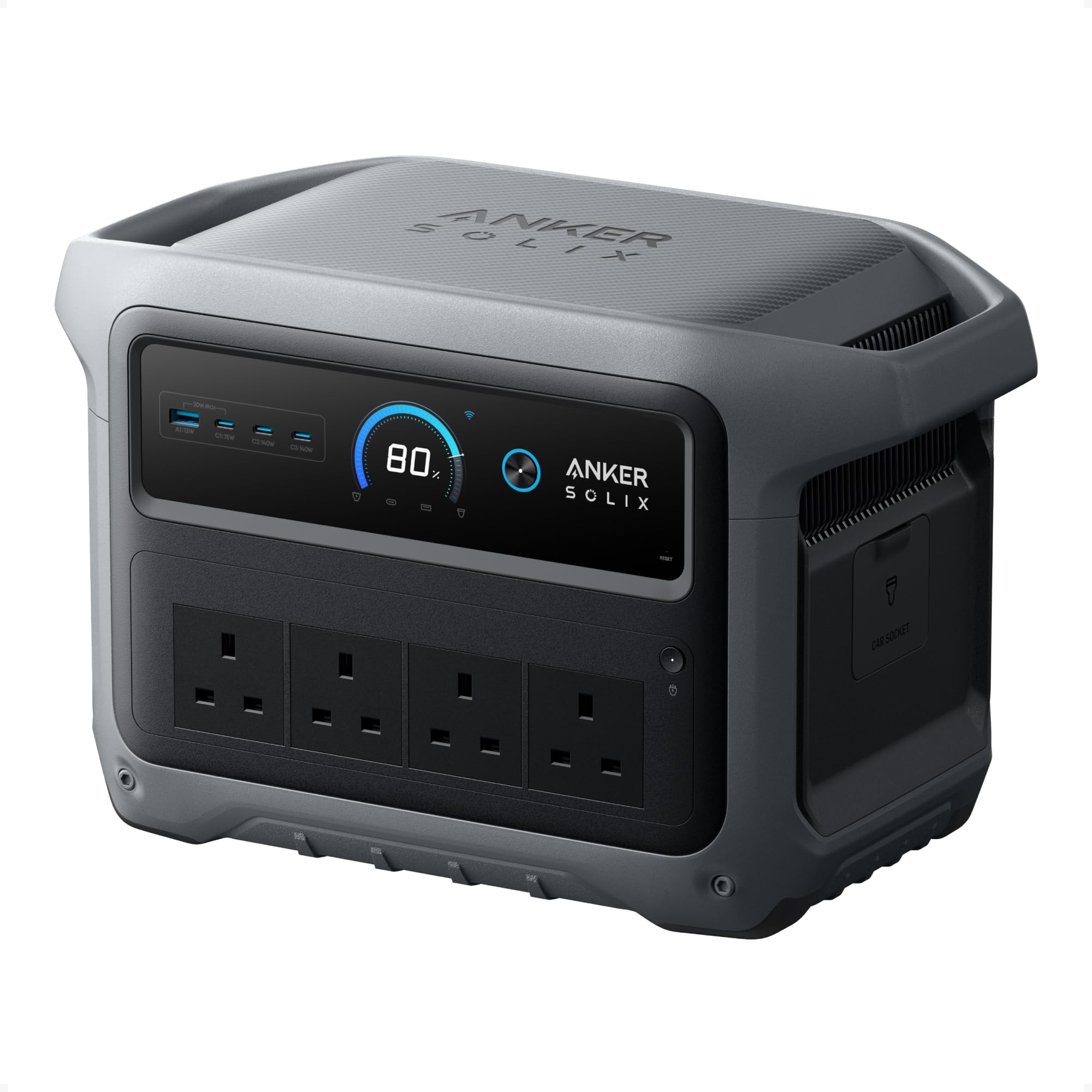
Anker SOLIX C1000 Gen 2 Portable Power Station, 2,000W (Peak 3,000W) Solar Generator, Full Charge in 49 Min, 1,024Wh LiFePO4 Battery for Home Backup, Power Outages, and Camping

Powkey 100W Portable Power Station 99Wh/ 27000mAh Camping Power Pack,Solar generator with AC/DC/USB/Type C Outlet for Outdoors Camping Travel Fishing Emergency Power Supply Backup Orange
Our Recommendation
The Anker SOLIX C1000 Gen 2 is the decisive recommendation because it offers vastly more usable capacity, far higher output, and a much longer-term battery chemistry in LiFePO4. At 1,024Wh and 2,000W continuous, it can actually replace a small backup system for outages, camping, or flat living, while the Powkey is basically a 99Wh emergency charger. If you want one product that genuinely changes what you can power, Anker is the right buy.
Detailed Comparison
Display
Neither product is about flashy screens, but the quality of the display and monitoring still matters. The Anker SOLIX C1000 Gen 2 typically offers a much more informative power station interface, with clearer readouts for input/output, battery percentage, and charging status, plus app-based monitoring on many Anker SOLIX models. That makes it far easier to manage loads during a blackout or while camping. The Powkey is usually far more basic: enough to tell you the battery level and maybe the active output, but not the kind of polished control you get from a premium unit. Winner: Anker, because better monitoring is genuinely useful when every watt matters.
Performance
This is the biggest gap in the entire comparison. The Anker delivers 2,000W continuous output and 3,000W peak, which means it can handle kettles, laptop chargers, routers, CPAP machines, small kitchen appliances, and many other real-world UK household loads. Its 1,024Wh LiFePO4 battery is also in a completely different league for usable energy and longevity. The Powkey’s 100W output and 99Wh capacity are tiny by comparison; it is essentially a large power bank with a socket, suitable for phones, tablets, cameras, LED lights, and maybe a low-power fan or router, but not appliances. Winner: Anker by a landslide.
Build quality and design
Anker generally wins on engineering, thermal management, and long-term durability. A LiFePO4 battery chemistry is a major advantage because it typically offers far more charge cycles and better safety than many older NMC-based budget units. For renters and flat-dwellers, that matters because you want something dependable, not disposable. The Powkey’s appeal is simplicity and portability: it is light, compact, and easy to throw in a bag, but the lower-cost construction usually means less robust cooling, less refined interfaces, and lower confidence under sustained load. Winner: Anker, because it is built like a proper power station rather than an emergency gadget.
Battery life
On battery life, the products are not comparable in practical terms. The Anker’s 1,024Wh capacity can run a 60W laptop for many hours, keep a broadband router alive through a long outage, or top up multiple devices several times over. It also benefits from LiFePO4 chemistry, which is typically rated for far more cycles than cheaper alternatives, so the long-term ownership value is much better. The Powkey’s 99Wh capacity is useful for short bursts and aviation-friendly travel limits, but it will be drained quickly by anything beyond phone charging. Winner: Anker, because capacity and cycle life both matter.
Price and value for money
The Powkey is dramatically cheaper at £80.98 versus £599 for the Anker, so if your only goal is to spend as little as possible, it wins on sticker price. But value is about what you get for the money. The Powkey gives you emergency-level backup for small devices and almost nothing more. The Anker is expensive, but its cost per watt-hour is far more defensible, and its output ceiling makes it a versatile backup system rather than a novelty. For anyone who actually needs household resilience, the Anker is better value despite the higher upfront cost. Winner: Anker for overall value; Powkey only wins on absolute price.
Game library/features
Neither product has a game library, so in a literal sense this category does not apply. If we translate this into features and ecosystem, the Anker again pulls ahead: higher inverter output limits, faster charging, likely app integration, and more practical use cases for home backup, camping, and work-from-home continuity. The Powkey’s feature set is much more limited, usually focused on basic AC/DC/USB/Type C outputs without the advanced controls or performance headroom. Winner: Anker, because features should increase usefulness, not just add ports.
Overall user experience
The Anker SOLIX C1000 Gen 2 is the product you buy when you want a real portable power station. It can meaningfully support a small flat during outages, handle demanding devices, and recharge quickly, which is a huge advantage if you need repeated use. The Powkey is the product you buy when you want a cheap, compact backup for phones and lights and you understand its limits. For UK renters, flat-dwellers, and campers who want one device that can do serious work, the Anker is far more satisfying and future-proof. The Powkey is easier to justify if you only need occasional emergency charging and never expect to power mains appliances. Overall summary: the Anker is the clear winner for almost everyone except the most budget-constrained buyers with very light power needs.
Buy the Anker SOLIX C1000 if...
Buy Product A if you want to run more than phones and tablets: think laptops, routers, CPAP machines, small kitchen appliances, or a proper backup for UK power cuts. It is also the better choice if you care about long battery life, fast recharge times, and a system that will still be useful years from now.
Buy the Powkey 100W Portable if...
Buy Product B if your budget is tight and you only need a lightweight emergency pack for charging phones, earbuds, cameras, or a small lamp. It also makes sense if you want something compact for travel and you do not need to power mains appliances at all.
Curated by The Solar Plug on All The Top Picks
As an Amazon Associate we earn from qualifying purchases.