Big-power backup or budget emergency pack: which one actually fits you?
These two products sit in very different lanes, even though both are marketed as portable power for home backup and outdoor use. The Anker SOLIX C1000 Gen 2 is a serious lithium battery power station built to run high-demand appliances, while the MARBERO is a compact, low-cost emergency power pack for phones, lights, and small electronics. If you want to know which one is genuinely useful in a UK flat, on a campsite, or during a blackout, the answer depends on how much power you actually need. This comparison cuts through the marketing and focuses on real-world capability, safety, and value.
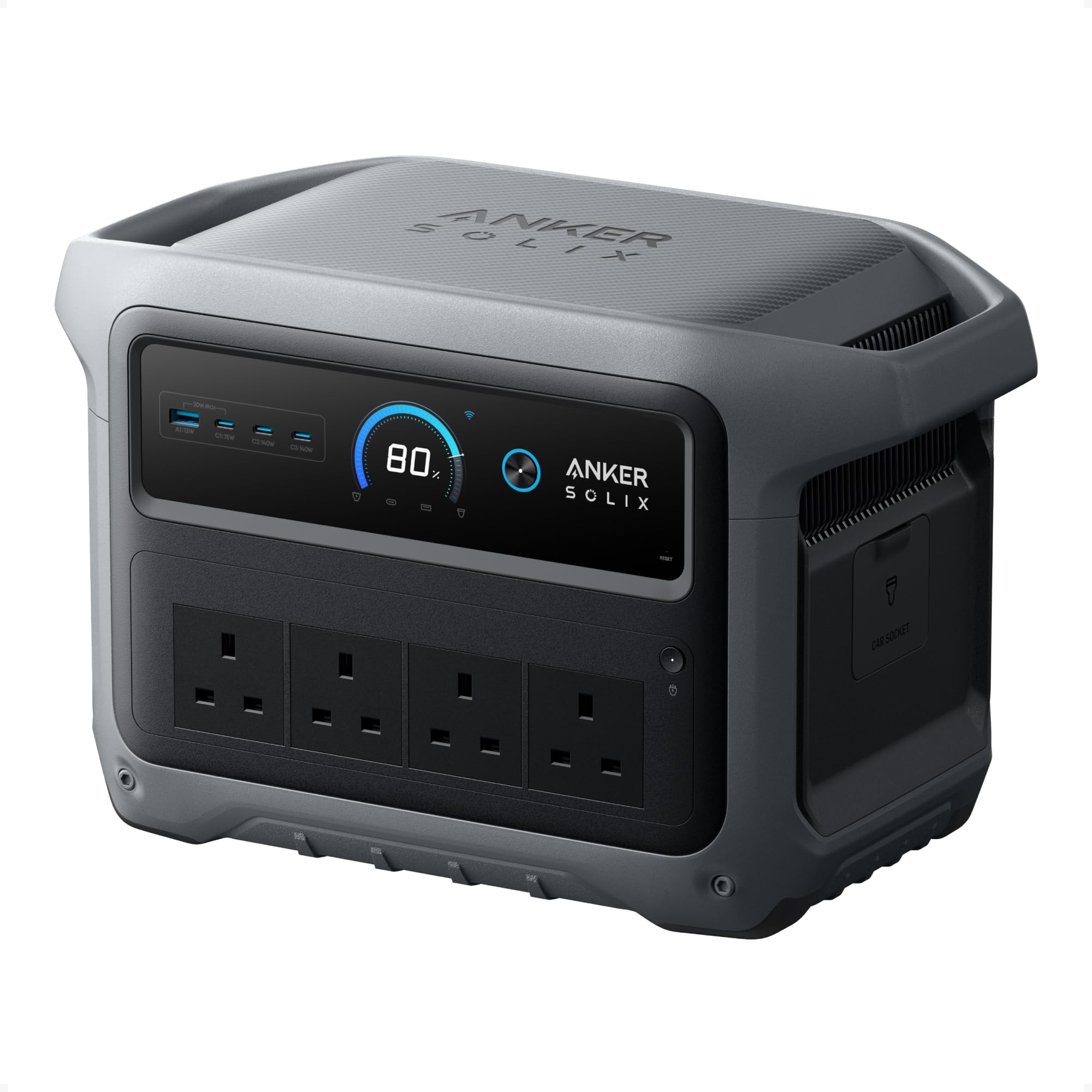
Anker SOLIX C1000 Gen 2 Portable Power Station, 2,000W (Peak 3,000W) Solar Generator, Full Charge in 49 Min, 1,024Wh LiFePO4 Battery for Home Backup, Power Outages, and Camping
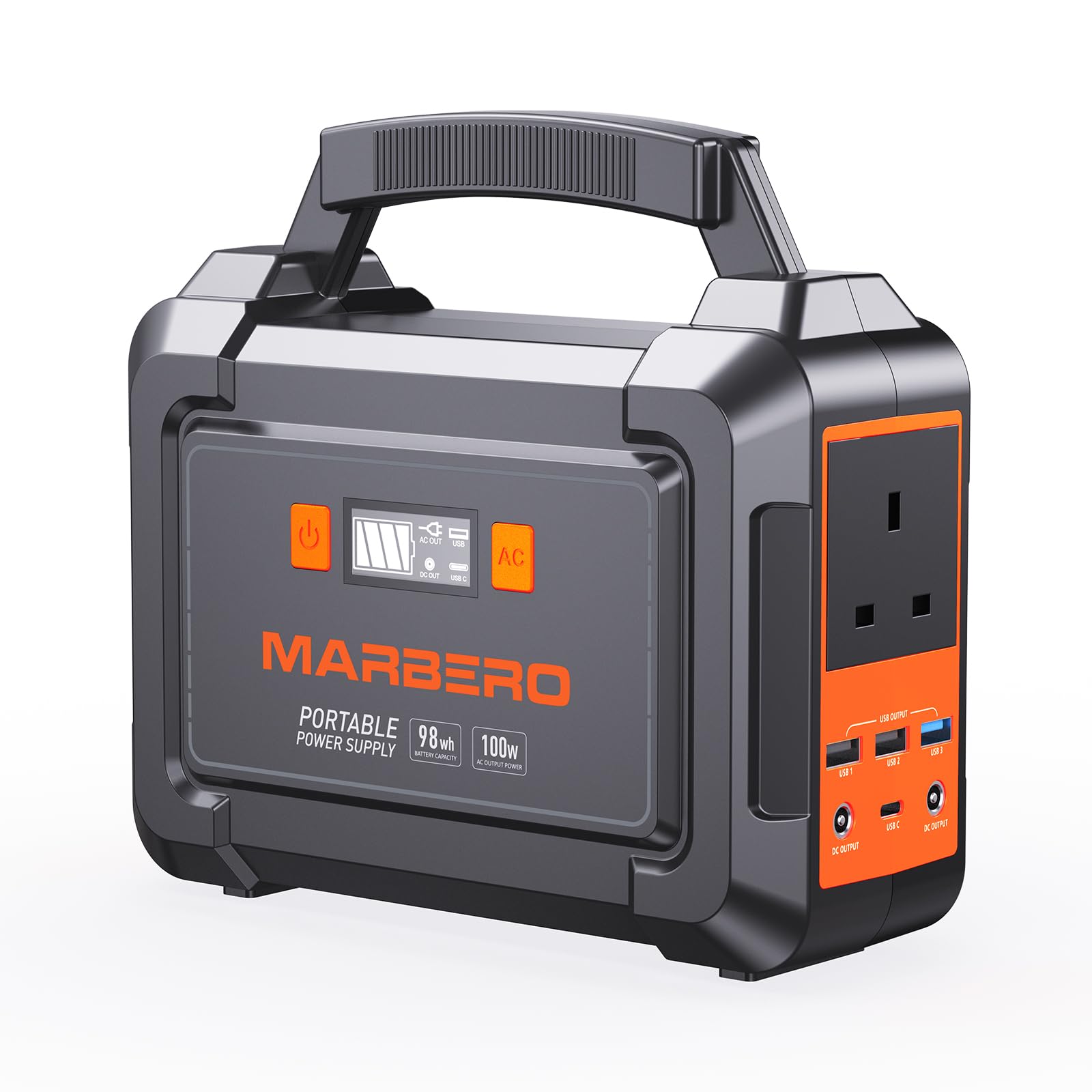
MARBERO Portable Power Station 26,400mAh Large Battery Pack 100W(150W Peak) Power Bank with Plug Socket 220V 98Wh Generator LED Light for Outdoor Adventure RV Trip Home Blackout Emergency
Our Recommendation
The Anker SOLIX C1000 Gen 2 is the clear winner because it offers vastly more usable power: 1,024Wh capacity, 2,000W output, and 3,000W surge versus the MARBERO’s 98Wh and 100W output. It also uses LiFePO4 chemistry, which is better for long-term cycle life and safety than a budget emergency pack. For home backup, blackouts, and serious camping, the Anker is in a different league. The MARBERO is only compelling if you need the cheapest possible portable charger for light-duty use.
Detailed Comparison
Display
Neither product is a display-focused device, so this category is really about usability and monitoring. The Anker SOLIX C1000 Gen 2 typically offers a far more polished user experience: premium power stations in this class usually include a clearer screen, better app monitoring, and more detailed readouts for input, output, and battery health. That matters when you are managing solar charging, estimating runtime, or trying to avoid overloading a socket in a flat. The MARBERO is much more basic, usually with a simpler LED-style status display and fewer data points. Winner: Anker. It gives you better visibility over what the unit is doing, which is important when you are relying on it during outages or using it with solar.
Performance
This is the biggest separation. The Anker SOLIX C1000 Gen 2 has a 1,024Wh LiFePO4 battery, 2,000W continuous output, and 3,000W peak surge, which puts it in a completely different performance class. That means it can handle demanding loads such as kettles, microwaves, small heaters for short bursts, power tools, and multiple appliances at once. The advertised full charge in 49 minutes is also a major advantage if you need fast turnaround between outages or want to top up quickly from mains or a strong solar input. The MARBERO, by contrast, is rated at 98Wh with 100W output and 150W peak. That is fine for charging phones, tablets, routers, LED lights, cameras, and maybe a small laptop, but it is nowhere near enough for proper home backup. Winner: Anker by a landslide. If you need to power real household loads, the MARBERO simply cannot compete.
Build quality and design
Anker is the stronger choice here as well. The SOLIX line is known for more robust construction, better thermal management, and a design intended for repeated heavy use. LiFePO4 chemistry is a major plus because it generally offers longer cycle life and better thermal stability than the more budget-oriented cells often found in cheap portable stations. That makes it a more sensible long-term investment for renters who want a dependable plug-and-play backup solution without messing around with fixed installation. The MARBERO is lightweight and portable, which is useful, but it is clearly designed as an entry-level emergency battery rather than a high-duty appliance. Its 98Wh capacity also reflects that it is sized to stay airline-friendly and ultra-portable, not to deliver serious resilience. Winner: Anker. It feels more like proper equipment and less like a convenience gadget.
Battery life
Battery life needs to be judged in two ways: how long the battery lasts over its lifetime, and how long it lasts per charge. On both counts, the Anker wins. LiFePO4 batteries are typically rated for far more charge cycles than the smaller lithium packs used in cheap power banks, so the Anker should hold up much better over years of use. Per charge, 1,024Wh is over ten times the energy storage of the MARBERO’s 98Wh pack. In practical terms, that means the Anker can keep a broadband router, lights, a laptop, and perhaps a small fridge running for meaningful periods, while the MARBERO is mainly there to bridge short outages or keep essentials topped up. Winner: Anker. The extra capacity and longer-lived chemistry make it far more suitable for real backup.
Price and value for money
This is the only category where MARBERO has a clear advantage on sticker price. At £93.49, it is dramatically cheaper than the Anker at £599.00, with a difference of £505.51. If your needs are modest, the MARBERO offers a lot of convenience for the money: it is a low-risk buy for occasional camping, emergency phone charging, or keeping a lamp and router alive briefly. But value is not just about buying the cheapest unit; it is about buying enough power for the job. The Anker costs much more because it delivers vastly more capacity, far higher output, better chemistry, and faster charging. If you need those things, it is better value despite the higher upfront cost. Winner: tie, depending on use case. MARBERO wins on affordability; Anker wins on value per watt-hour and usefulness.
Game library/features
For portable power stations, this really translates to features rather than a literal game library. The Anker is the clear feature winner because it is built for more advanced use: high-output AC sockets, likely better app support, solar compatibility, and more sophisticated battery management. Those features matter if you want to use it as a home backup unit, as part of a balcony solar or portable solar setup, or as a reliable camping power hub. The MARBERO’s feature set is much simpler, usually centred on basic AC and DC output plus an LED light for emergencies. That makes it handy, but not versatile. Winner: Anker. It offers the sort of functionality that justifies buying a power station rather than a glorified power bank.
Overall user experience
If you want a device that disappears into the background and just works when the mains fails, the Anker is the better experience. It is faster to recharge, capable of running far more devices, and better suited to repeated use. For UK renters and flat-dwellers, that means it can genuinely act as a backup for Wi-Fi, lighting, laptop charging, and even some kitchen appliances without needing an electrician or landlord permission. The MARBERO is easier to justify if you only need a small, portable emergency pack for travel, festival use, or keeping essentials alive for an hour or two. It is simple, cheap, and compact, but it will not replace mains power in any meaningful way. Winner: Anker. It delivers a far more complete and confidence-inspiring ownership experience.
Overall summary: the Anker SOLIX C1000 Gen 2 is the decisive winner for anyone who wants real backup power, serious camping capability, or a future-proof portable energy solution. The MARBERO is only the better choice if your budget is tight and your needs are limited to small electronics and short-duration emergency use. If you want genuine utility rather than a basic battery pack, buy the Anker. If you just want the cheapest possible way to keep phones and lights going, buy the MARBERO.
Buy the Anker SOLIX C1000 if...
Buy the Anker SOLIX C1000 Gen 2 if you want to run real appliances, not just charge gadgets. It is the better choice for flat-dwellers who want backup for Wi-Fi, lights, laptops, or short bursts from higher-draw devices during outages. It also makes sense if you value faster charging, LiFePO4 longevity, and a more capable solar-ready setup.
Buy the MARBERO Portable Power if...
Buy the MARBERO if your needs are limited to phones, tablets, LED lights, cameras, and occasional laptop charging. It is the right pick if you want the lowest upfront cost and a lightweight unit for travel, festivals, or emergency use. For a small budget and very modest power needs, it is a practical buy.
Curated by The Solar Plug on All The Top Picks
As an Amazon Associate we earn from qualifying purchases.