Budget-first or stage-ready? Alesis Recital Pro vs Roland FP-30X
If you’re choosing between these two 88-note digital pianos, you’re really deciding between value and refinement. The Alesis Recital Pro is the aggressive budget pick: weighted hammer-action keys, built-in speakers, and a very low £299 asking price. The Roland FP-30X costs £250 more, but it brings a more convincing piano feel, stronger onboard sound, Bluetooth, and a reputation for better long-term satisfaction. Here’s which one makes sense for practice, recording, and serious playing.
Alesis Recital Pro - Digital Piano Keyboard with 88 Weighted Hammer Action Keys, 12 Premium Voices and Built-In Speakers
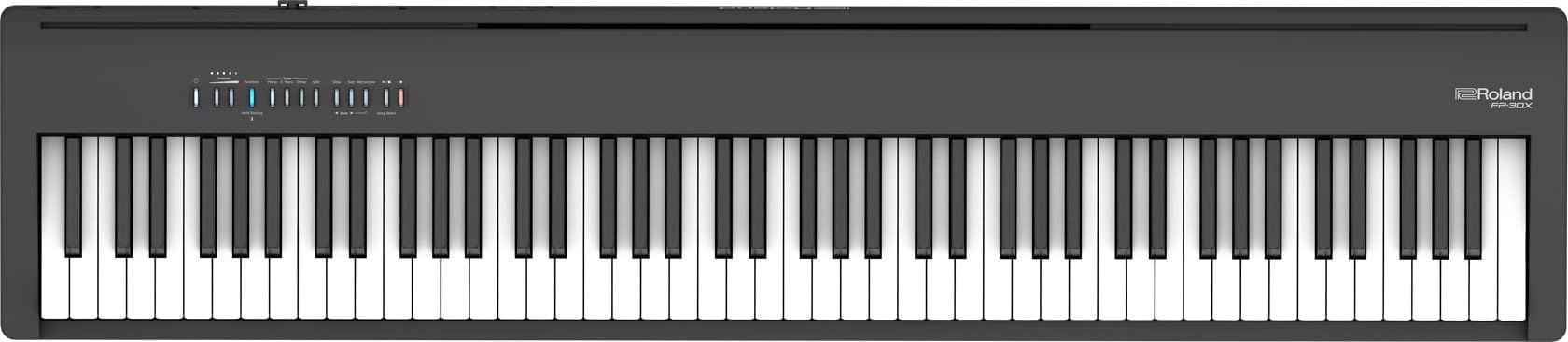
Roland FP-30X | Slim & Stylish 88-Note Digital Piano | Rich Tone & Authentic Ivory-Feel | Built-In Powerful Amplifier & Stereo Speakers | Onboard Sounds | Bluetooth & MIDI Connectivity | Black
Our Recommendation
The Roland FP-30X is the better buy for most serious players because its key action, sound quality, and connectivity are a clear step up. Its 88-note ivory-feel keyboard, stronger built-in speakers, Bluetooth and MIDI support, and more polished overall build make it more rewarding for practice and recording. The Alesis Recital Pro is cheaper, but the Roland is the instrument you’re less likely to outgrow.
Detailed Comparison
Display
Neither of these instruments is really about a display/screen in the traditional sense, so there’s no meaningful advantage here in terms of a large interface or visual feedback. Both are focused on hands-on playing rather than menu diving. If you want a piano that puts sound and touch ahead of screens, this is a wash. Winner: tie.
Performance
This is where the Roland FP-30X pulls ahead. Both instruments offer 88 keys and hammer-style action, but Roland’s action is generally regarded as more refined, with a more convincing graded response and better control for dynamics and repetition. The FP-30X also has a stronger sound engine and more expressive onboard tones, which matters when you’re practising classical pieces, accompanying singers, or recording MIDI parts. Alesis gives you 12 premium voices, which is perfectly usable for home practice, but it is more limited in expressive depth. Winner: Roland FP-30X.
Build quality and design
The Alesis Recital Pro is simple, functional, and good value, but it is clearly built to hit a price point. The FP-30X feels more premium, with a slimmer cabinet, better overall fit and finish, and a more polished stage-piano design that suits a living room, rehearsal space, or gig setup. Roland also has the edge in key feel thanks to its authentic ivory-feel surface, which helps with grip during longer sessions. If you want an instrument that feels like a serious long-term buy rather than an entry-level compromise, Roland wins. Winner: Roland FP-30X.
Battery life
Neither of these is a battery-powered instrument, so battery life is not a practical differentiator. Both are designed to be used from mains power in the home, studio, or on stage with amplification. If portability without a power outlet is important, you’d need a different product category altogether. Winner: tie.
Price and value for money
This is the Alesis Recital Pro’s biggest advantage. At £299, it is £250 cheaper than the Roland FP-30X, and it still gives you 88 weighted hammer-action keys, built-in speakers, and enough voices for everyday playing. It also has a very strong review count at 4.6/5 from 4,039 reviews, which suggests a lot of buyers have found it good enough for practice and beginner-to-intermediate use. The Roland is pricier at £549, but you are paying for a better key action, better sound, Bluetooth and MIDI connectivity, and a more credible instrument overall. If budget is tight, Alesis wins on raw value; if you can stretch, Roland offers better value per pound in quality terms. Winner: Alesis Recital Pro for budget value, Roland FP-30X for premium value.
Game library/features
For digital pianos, the equivalent of a “game library” is the onboard feature set, and this is another Roland win. The FP-30X gives you onboard sounds, Bluetooth and MIDI connectivity, making it easier to connect to learning apps, DAWs, and external gear without extra cables. That makes it more versatile for modern practice and home recording. The Alesis Recital Pro keeps things more basic with 12 voices and built-in speakers, which is fine if you mainly want straightforward piano practice, but it lacks the same connectivity depth. Winner: Roland FP-30X.
Overall user experience
For everyday playing, the Roland FP-30X feels more inspiring. The better key action, more authentic ivory-feel surface, stronger amplifier and stereo speakers, and Bluetooth/MIDI support all add up to a more satisfying instrument to live with. It is the one you’re more likely to keep for years because it supports progression from beginner practice into more serious playing, recording, and performance. The Alesis Recital Pro is easier to justify if you want the cheapest route into a weighted 88-key setup, especially for a student, secondary practice piano, or a home where price matters most. But the Roland is the more complete musical tool. Winner: Roland FP-30X.
Overall summary: the Alesis Recital Pro is the smart budget buy, but the Roland FP-30X is the better digital piano. If your priority is getting weighted 88-key action for as little money as possible, Alesis does the job well. If you care about touch, tone, connectivity, and an instrument that feels closer to a real acoustic piano, Roland is the one to choose.
Buy the Alesis Recital Pro if...
Buy the Alesis Recital Pro if your budget is capped around £300 and you mainly want an 88-key weighted hammer-action piano for home practice. It’s also a sensible choice if you want a simple, no-fuss instrument with built-in speakers and don’t need Bluetooth or a more premium key action.
Buy the Roland FP-30X | if...
Buy the Roland FP-30X if you want a more authentic piano feel, better onboard sound, and modern connectivity for apps, recording, or MIDI work. It’s the stronger choice for players who plan to practise seriously, perform, or keep the instrument for the long term.
Curated by Keys & Strings on All The Top Picks
As an Amazon Associate we earn from qualifying purchases.