Airthings Wave Plus vs Corentium Home 2: which radon monitor is smarter?
If you’re choosing between these two Airthings monitors, you’re really deciding whether you want a fuller indoor air quality hub or a simpler, more portable radon-first device. That matters in UK homes, where radon risk can vary by postcode, winter ventilation can push up CO2, and damp-related mould is a real concern in older properties and flats. Both products are well reviewed, but they serve different priorities. This comparison cuts through the overlap so you can buy the one that fits your home and your health goals.

Airthings Wave Plus - Radon and Air Quality Monitor with CO2, VOC, Air Pressure, Humidity and Temperature Detector - 2910
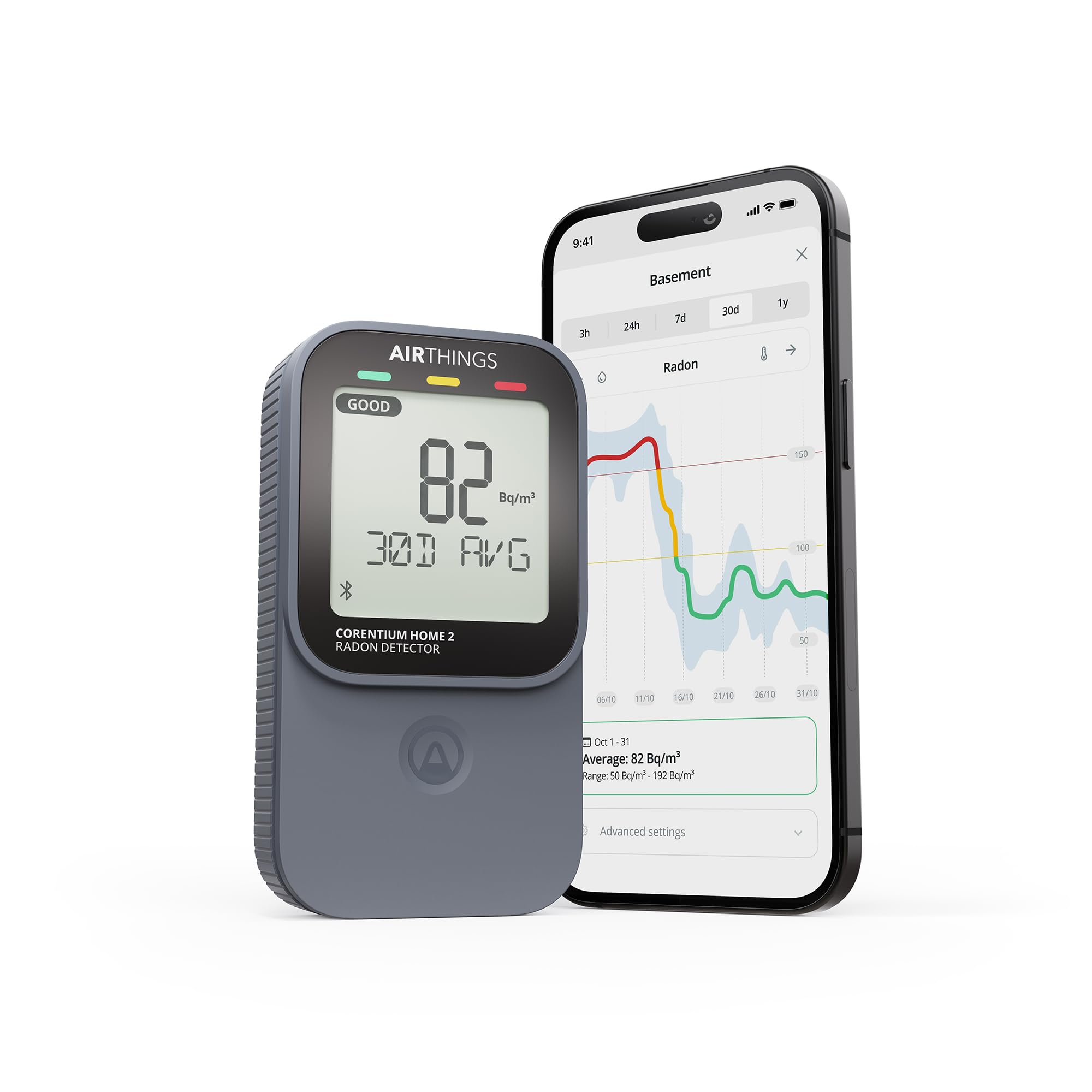
Airthings Corentium Home 2 – Portable Digital Radon Detector (Bluetooth, Temperature & Humidity) • LCD Display – 2×AA Batteries, Up to 3 Years Battery Life • Dark Grey - 325
Our Recommendation
The Airthings Wave Plus is the definitive buy for most people because it does far more than radon monitoring: it also tracks CO2, VOCs, humidity, temperature, and air pressure. In UK homes, that extra data is genuinely useful for spotting poor ventilation, condensation risk, and mould-prone conditions. It costs only £17.09 more than the Corentium Home 2, yet gives you a much fuller picture of indoor air quality. If you want the most capable monitor rather than the simplest one, Product A is the better choice.
Detailed Comparison
Display
Product B wins here. The Corentium Home 2 has an LCD display built in, so you can check radon, temperature, and humidity directly on the device without opening an app. That makes it more practical if you want a quick glance in a hallway, bedroom, or rental property. Product A, the Wave Plus, is more app-led and is designed as a smart monitor rather than a screen-first device. If immediate on-device visibility matters, B is the better pick.
Performance
Product A wins on breadth of monitoring, while B wins on focus. The Wave Plus measures radon, CO2, VOCs, air pressure, humidity, and temperature, so it gives a much wider picture of indoor air quality. That is especially useful in UK homes where winter CO2 can build up in sealed rooms, VOCs can spike after decorating or cleaning, and humidity can help you spot mould risk before it becomes visible. Corentium Home 2 is more specialised: it focuses on radon plus temperature and humidity, which is excellent if radon is your main concern but less informative if you want a broader health check. For overall air intelligence, A is the stronger performer.
Build quality and design
This is close, but Product B has the edge for simplicity and portability. The Corentium Home 2 is compact, battery-powered, and designed to be moved around the home, which is useful if you want to test different rooms or take readings in a second property. The Wave Plus is also a neat, modern unit, but it is more of a fixed smart-home device and feels less like a grab-and-go detector. If you want something you can easily place on a shelf, move between rooms, or use temporarily in a rental, B is the more flexible design. If you want a more feature-rich permanent monitor, A feels more substantial.
Battery life
Product B wins decisively. Airthings states up to 3 years of battery life for the Corentium Home 2 on 2×AA batteries, which is excellent for a radon monitor you may want to leave running continuously. The Wave Plus typically needs more frequent attention because it is doing more work, especially with always-on smart monitoring and the extra sensors for CO2 and VOCs. For low-maintenance ownership, B is the clear winner. In practical terms, that means fewer battery swaps and less hassle over time.
Price and value for money
Product B is cheaper by £17.09, so it wins on upfront value. At £147.53 versus £164.62, the Corentium Home 2 is the lower-cost option while still delivering strong radon monitoring plus temperature and humidity tracking. Product A costs a bit more, but you are paying for the extra sensor suite and broader indoor air quality insight. If you only need radon data and a basic environmental readout, B is better value. If you want a more complete home air picture, A justifies the extra spend. For most buyers comparing pure value, B takes the point.
Features and ecosystem
Product A wins comfortably. The Wave Plus is the more capable device because it tracks CO2 and VOCs in addition to radon, humidity, temperature, and air pressure. That makes it far more useful for diagnosing stuffy bedrooms, checking ventilation after a cold UK night, or spotting conditions that can contribute to condensation and mould. The Corentium Home 2 is more limited by design, but that can be a strength if you want straightforward radon monitoring without extra data to interpret. For features and day-to-day usefulness, A is the better overall package.
Overall user experience
Product A is the better choice for most people who want a single monitor to understand indoor air quality in a meaningful way. It gives more context, more insight, and more reasons to act, especially in homes where ventilation, damp, and stale air are concerns. Product B is the better choice for people who want a dedicated radon detector that is simple, portable, and low maintenance. Both are rated 4.3/5, but the Wave Plus has far more reviews (3172 versus 1353), which suggests broader real-world validation. If you want the best all-round home air monitor, A is the winner; if you want the best straightforward radon device, B is the smarter buy.
Overall summary: Airthings Wave Plus is the better all-rounder and the stronger long-term choice for UK homes that need more than radon monitoring. Airthings Corentium Home 2 is the better value for buyers who want a portable, battery-efficient, radon-first detector with a built-in display. Choose A for insight and breadth; choose B for simplicity and lower cost.
Buy the Airthings Wave Plus if...
Buy the Wave Plus if you want one device to monitor radon plus the air quality issues that actually affect UK homes day to day, especially stale bedrooms, winter CO2 build-up, and damp-prone rooms. It is the better fit if you want app-based insights and a broader health-focused view rather than a single-purpose detector. It is also the stronger choice if you are comparing a main family-home monitor rather than a portable test unit. The extra sensors make it more useful for long-term ownership.
Buy the Airthings Corentium Home if...
Buy the Corentium Home 2 if your main goal is radon monitoring and you want the simplest, most portable option with an LCD screen. It is ideal for moving between rooms, checking a rental, or leaving in place for years with minimal battery changes. It is also the better pick if you do not need CO2 or VOC data and want to save £17.09. For a straightforward radon-first setup, it is the more focused and lower-maintenance buy.
Curated by Clean Air Home on All The Top Picks
As an Amazon Associate we earn from qualifying purchases.