Enclosure or Dryer Box? The 3D Printing Upgrade Most Makers Need
These two products solve very different 3D printing problems, so the right choice depends on what is actually holding your prints back. Product A is an enclosure for keeping a printer warmer, quieter, and protected from dust and draughts, while Product B is a filament dryer and storage box for preventing moisture-related print issues. If you’re deciding between them, you’re really choosing between improving the print environment and improving the filament itself. That makes this a surprisingly important buy for anyone trying to get cleaner, more reliable prints.
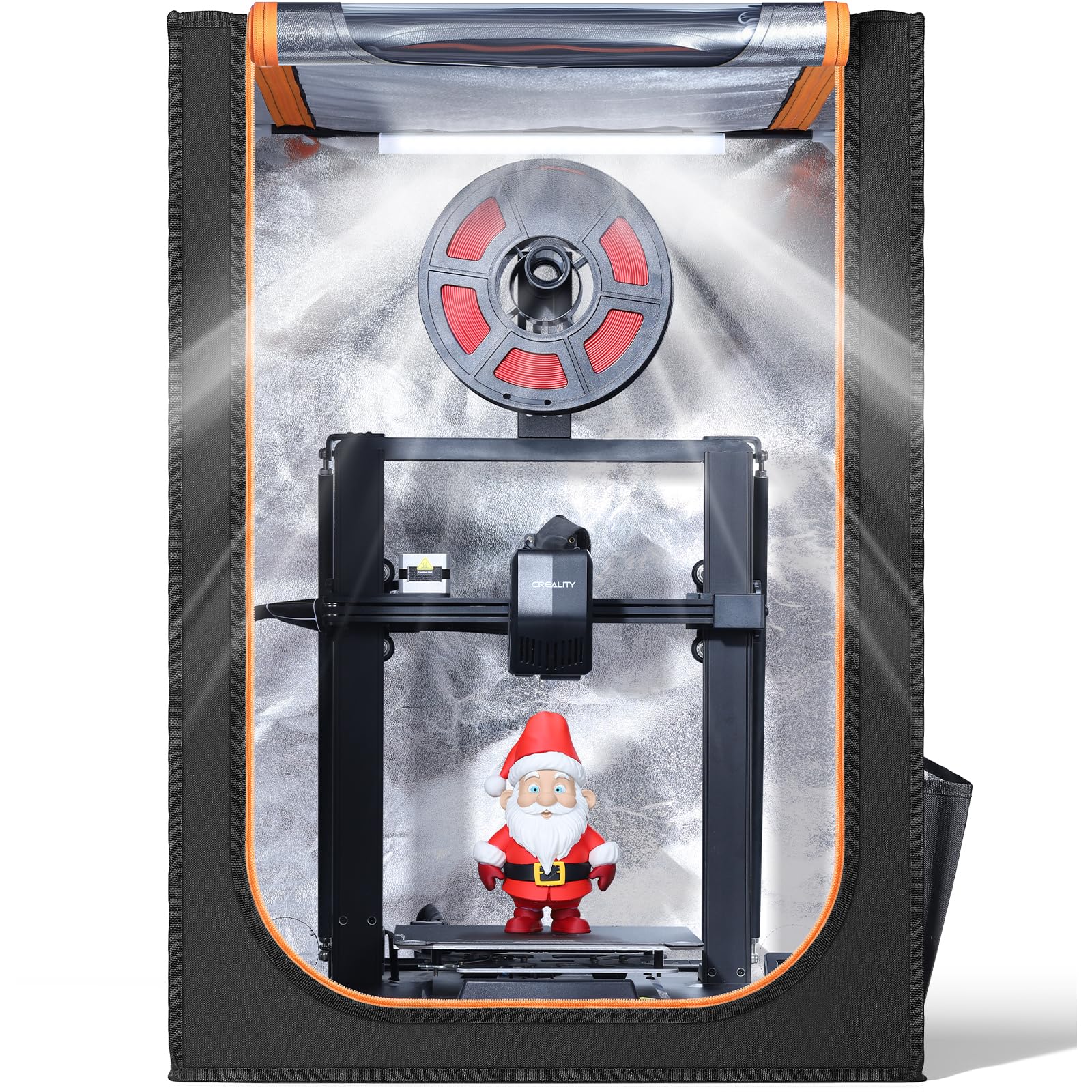
3D Printer Enclosure with LED Light,Dustproof Tent Constant Temperature Protective Cover for Creality Ender 3 V3 SE/KE/Ender 3/Ender 3 Pro/Ender 3V2/Ender 3S1/Neo/Anycubic Elegoo, Medium

Dryer Box of 3D Printer Filament, SUNLU 3D Filament Dryer Box S1, Keeping Filaments Dry During 3D Printing, Filament Holder, Compatible with 1.75mm, 2.85mm, 3.00mm Filament, Storage Box
Our Recommendation
Product B is the better buy for most people because it solves a more common and more directly print-killing problem: damp filament. It is also £10 cheaper, has a much larger review base at 2,989 reviews, and doubles as both a dryer and filament holder. Product A is useful, but it is more situational, whereas the SUNLU dryer box delivers broader day-to-day value for the money.
Detailed Comparison
What each product is for
Product A, the YOOPAI 3D Printer Enclosure, is about controlling the printer’s surroundings. It gives you a dustproof tent, a more stable temperature around the machine, and an integrated LED light for visibility. Product B, the SUNLU Filament Dryer Box S1, is about controlling the filament before and during printing. It keeps spools dry, can act as a filament holder, and supports 1.75mm, 2.85mm, and 3.00mm filament sizes. So this is not really apples-to-apples: one protects the printer, the other protects the material.
Display / visibility
Winner: Product A
The YOOPAI enclosure includes LED lighting, which is a real practical advantage if your printer lives in a dim workshop, spare room, or garage. Better visibility makes it easier to monitor first layers, spot stringing or lifting early, and generally keep an eye on the machine without opening the cover. The SUNLU dryer box doesn’t exist to improve visibility, and while it may have a display for temperature controls, that is not the same as lighting the whole setup. If seeing the printer clearly matters, Product A wins comfortably.
Performance
Winner: Tie, because they improve different things
Product A improves print consistency by reducing drafts, dust, and temperature swings around the printer. That can be especially useful for materials that dislike sudden cooling, and it may help with warping on open-frame machines like the Ender series. Product B improves print quality by drying filament, which is often the bigger culprit behind stringing, popping, weak layer adhesion, and ugly surface finish, especially with PLA left out for ages, or more moisture-sensitive materials such as PETG, TPU, and nylon. If your current issue is warped corners or unstable ambient conditions, the enclosure wins. If your issue is moisture-sick filament, the dryer box wins. In pure print-fix terms, neither is universally better.
Build quality and design
Winner: Product B
The SUNLU dryer box is a more focused, purpose-built tool. Its design is simpler: hold the spool, warm it, feed filament straight into the printer, and keep the filament protected. That usually means fewer compromises and less faff in day-to-day use. The YOOPAI enclosure has more moving parts in terms of usability because it must fit a wide range of printers, provide access, and still remain stable as a tent-style cover. Tent enclosures are convenient, but they can feel a bit more makeshift than a dedicated dryer unit. With 2,989 reviews versus 1,102 for the enclosure, SUNLU also has the stronger track record in the marketplace, which suggests more proven user confidence.
Battery life
Winner: Not applicable, but Product B is more self-contained
Neither product is a battery-powered device in the usual sense, so “battery life” doesn’t really apply here. If we interpret this as ongoing convenience and continuous operation, Product B has the edge because it is designed to keep working while filament is being used, acting as both storage and feed system. Product A is passive protection around the printer and depends entirely on the printer’s own operation. For users who want a set-and-forget accessory that directly supports printing, the dryer box is the more self-contained tool.
Price and value for money
Winner: Product B
At £29.99, the SUNLU dryer box is £10 cheaper than the YOOPAI enclosure at £39.99. That’s a meaningful saving in this price bracket, especially when the cheaper product also has the stronger review count and addresses one of the most common causes of print defects: damp filament. The enclosure can absolutely be worth £39.99 if you need environmental control, but it is more situational. For broad value, the dryer box gives more immediate benefit to more users, particularly in the UK where humidity can be a real nuisance in home workshops. The numbers point to Product B as the better value purchase.
Game library / features
Winner: Product A, narrowly, for extra convenience features
Neither product has a game library, obviously, but if we translate this category into features and versatility, Product A offers more extras: LED lighting, dust protection, and temperature stabilisation. It is the more multi-purpose accessory for the printer area. Product B is more specialised, but it does its job well: drying, storage, and filament feeding for 1.75mm, 2.85mm, and 3.00mm spools. If you want the richer feature set around the printer itself, the enclosure wins. If you want the more useful functional feature set for print quality, the dryer still has the stronger practical case.
Overall user experience
Winner: Product B
For most makers, the SUNLU dryer box is the more immediately useful buy because filament quality affects every print. A dry spool can turn a frustrating printer into a reliable one, and the box is likely to help across more materials and more environments. It is also cheaper and better supported by review volume. The YOOPAI enclosure is excellent if you need to tame an open-frame printer, reduce dust, or print in a chilly room, but it is more of a situational upgrade. In everyday use, the dryer box is the one that tends to pay for itself faster.
Overall summary: buy the SUNLU dryer box if you want the smarter all-round purchase and you suspect moisture is hurting your prints. Buy the YOOPAI enclosure if your main problem is an exposed printer, draughts, dust, or wanting a more controlled print environment. If you can only choose one, the dryer box is the safer, better-value pick for most people — but the enclosure is the right answer for users specifically battling ambient conditions.
Buy the 3D Printer Enclosure if...
Buy Product A if your printer sits in a draughty room, garage, or workshop and you want more stable ambient conditions around the machine. It is also the better pick if you want LED-lit visibility and dust protection around an Ender-style open-frame printer. If you are fighting warping more than moisture, the enclosure makes more sense.
Buy the Dryer Box of if...
Buy Product B if you are seeing stringing, popping, poor layer bonding, or inconsistent extrusion and suspect wet filament. It is the better choice if you print with hygroscopic materials, leave spools out for long periods, or want one accessory that can improve results across multiple printers. It is also the stronger value at £29.99 and the more proven product by review count.
Curated by The Print Lab on All The Top Picks
As an Amazon Associate we earn from qualifying purchases.