Dry Filament or Build Better Prints: Which Upgrade Wins?
These two products solve very different 3D printing headaches, so the right choice depends on what is actually holding your prints back. Product A is an enclosure: it helps stabilise temperature, reduce dust, and make your printer setup tidier. Product B is a filament dryer: it tackles moisture, which is a major cause of stringing, popping, weak layers, and generally grumpy PLA, PETG, TPU or ABS. If you are deciding where to spend your £40-ish budget, this comparison should make the choice much clearer.
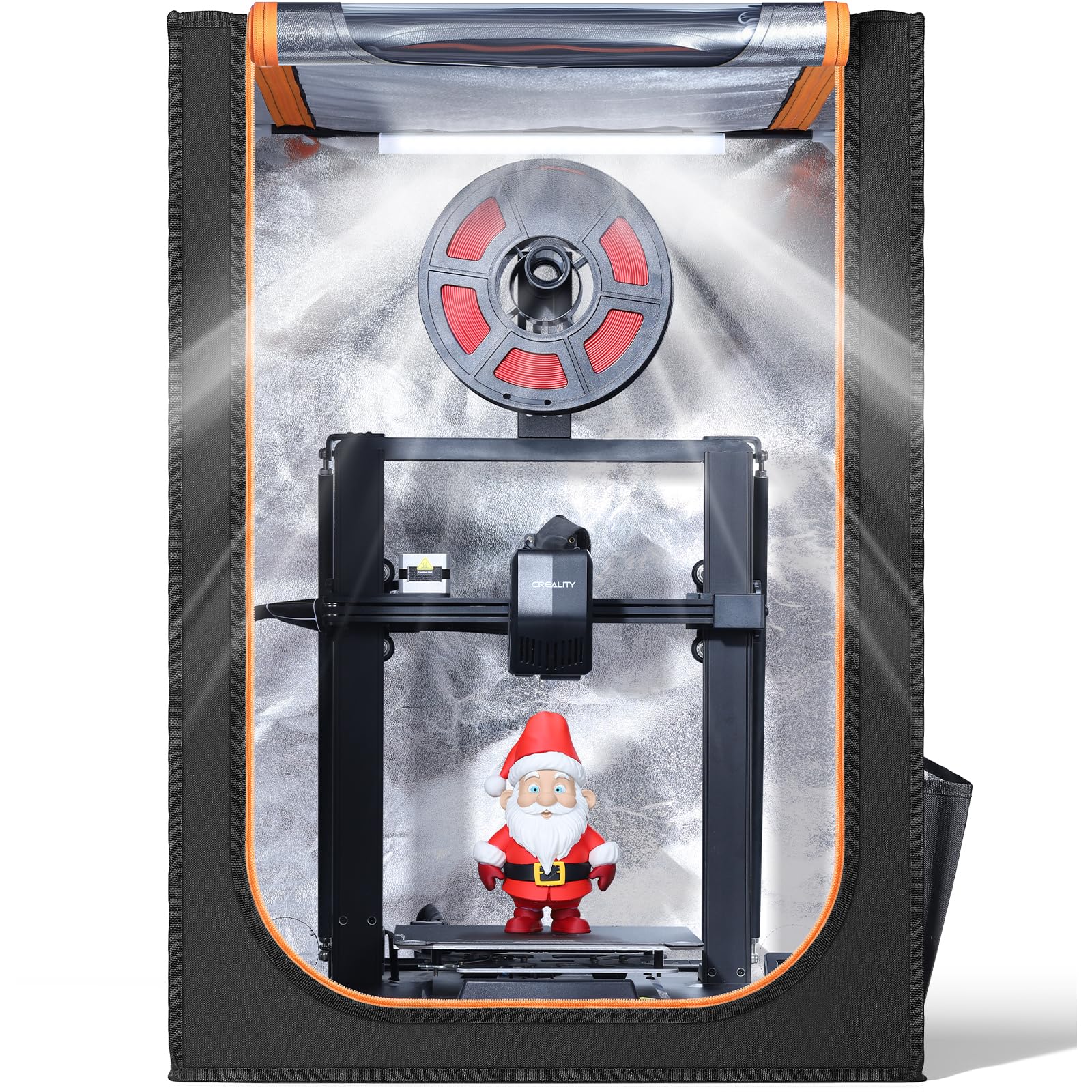
3D Printer Enclosure with LED Light,Dustproof Tent Constant Temperature Protective Cover for Creality Ender 3 V3 SE/KE/Ender 3/Ender 3 Pro/Ender 3V2/Ender 3S1/Neo/Anycubic Elegoo, Medium

3D Printer Filament Dryer, Sovol SH01 Filament Dehydrator Spool Holder, Dry Box for Keeping Filament Dry During 3D Printing, Compatible with 1.75mm, 2.85mm PLA PETG TPU ABS Material
Our Recommendation
Product B is the better buy for most people because it solves a more common and more damaging 3D printing problem: wet filament. At just £2 more than the enclosure, the Sovol SH01 offers direct improvements to extrusion consistency, surface finish, and reliability across PLA, PETG, TPU and ABS. The enclosure is useful, but it is more of a setup upgrade; the dryer is a print-quality upgrade.
Detailed Comparison
What each product is for
Product A, the YOOPAI enclosure, is about controlling the printer environment. It creates a dustproof tent around the machine, adds LED lighting, and can help keep temperatures more stable during a print. That makes it especially useful for open-frame printers like the Ender 3 family and similar bedslingers.
Product B, the Sovol SH01 filament dryer, is about controlling the filament itself. It stores a spool in a heated drying box so moisture can be driven off before or during printing. That matters a lot for hygroscopic materials such as PLA, PETG, TPU and ABS, especially if you live in a damp UK home, garage, or workshop.
Winner: Product B for most print-quality problems. Dry filament fixes a more common and more directly visible cause of bad prints than an enclosure does.
Build quality and design
The YOOPAI enclosure scores strongly on practicality. At £39.99 with a 4.6/5 rating from 1,102 reviews, it looks like a well-liked budget accessory. The design is straightforward: a soft tent-style cover that is easy to assemble, easy to move, and likely to fit a range of popular printers including Ender 3 V3 SE/KE, Ender 3/Pro/V2/S1/Neo, and some Anycubic/Elegoo machines. The LED light is a nice quality-of-life touch for visibility.
The Sovol SH01 is a more specialised box. At £41.99 and 4.2/5 from 2,517 reviews, it has a bigger review base but a slightly lower satisfaction score, which suggests more mixed experiences. However, its design is purposeful: a sealed heated chamber with spool-holder functionality, built to keep filament dry and ready to feed. If your priority is protecting filament from humidity, that design is exactly what you want.
Winner: Product A for general build and design appeal, Product B for purpose-built engineering. If judged on versatility and user satisfaction, the enclosure edges it. If judged on solving its core job, the dryer is more focused.
Performance
The enclosure can improve performance indirectly. By reducing drafts and helping maintain a more stable ambient temperature, it can reduce warping and layer splitting, especially with ABS and other temperature-sensitive materials. It can also keep dust off the printer and give a more controlled workspace. But it does not change the actual filament condition, so it will not fix moisture-related stringing, popping, blobs, or weak extrusion.
The filament dryer has a more direct impact on print quality. Moisture in filament causes very recognisable defects: sizzling at the nozzle, inconsistent extrusion, poor bridging, and brittle prints. The Sovol SH01 supports 1.75mm and 2.85mm filament and is compatible with PLA, PETG, TPU and ABS, which covers the materials most hobbyists use. If your prints are suffering because filament has sat out in a humid room, this is the more effective tool.
Winner: Product B. It addresses a bigger and more universal source of print defects, and it does so directly.
Price and value for money
The YOOPAI enclosure is cheaper at £39.99, undercutting the Sovol by £2.00. That is a tiny difference, so price alone should not drive the decision. The enclosure offers strong value if you need a safer, tidier, more temperature-stable print space and want the added LED light.
The Sovol SH01 costs £41.99, which is still very reasonable for a dryer from a known brand with over 2,500 reviews. For the extra £2, you are buying something that can improve every print made from damp filament, and it can keep working in the background while you print. In the UK, where humidity can be a constant nuisance, that is excellent value.
Winner: Product B, by a nose. The price gap is negligible, and the dryer is more likely to pay off in print quality.
Features and compatibility
The enclosure works with a wide spread of popular printers, especially Creality Ender 3 variants and some Anycubic/Elegoo models. That broad compatibility makes it a good “fits many setups” purchase. The LED lighting is a genuinely useful feature if your printer sits in a darker corner or you like watching first layers without squinting.
The Sovol dryer is compatible with 1.75mm and 2.85mm filament, and with PLA, PETG, TPU and ABS materials. That is a very practical feature set because it covers the main hobby filament types. The fact that it doubles as a spool holder is also handy: you can dry and print from the same box, which reduces handling and exposure to air.
Winner: Tie. The enclosure has broader printer compatibility and lighting; the dryer has stronger material compatibility and a more functional workflow.
Overall user experience
If you want a nicer printer station, the YOOPAI enclosure is the more satisfying purchase. It makes the printer look more finished, reduces dust, and can help with temperature consistency. It is also the better choice if your printer sits in a shared room and you want to tame noise, drafts, or general mess.
If you want better prints, the Sovol SH01 is the smarter buy. It targets one of the most common hidden causes of poor quality, and that makes it a more effective upgrade for most makers. Especially in the UK, where filament can absorb moisture faster than people expect, a dryer often delivers more immediate results than an enclosure.
Overall summary: choose the enclosure if your main problem is the printer environment. Choose the dryer if your main problem is print quality, stringing, or damp filament. For most people trying to improve day-to-day results, Product B is the better all-round purchase.
Buy the 3D Printer Enclosure if...
Buy Product A if your printer is in a cold, dusty, or drafty room and you want a more controlled printing environment. It is especially sensible if you run an Ender 3-style machine and want the LED light plus a tidier, more enclosed setup. If your filament is already stored dry and your main issue is warping or dust, this is the better fit.
Buy the 3D Printer Filament if...
Buy Product B if you are seeing stringing, popping, brittle parts, or inconsistent extrusion, especially with PETG or TPU. It is also the better choice if you live somewhere humid or your filament has been open for a while. If you want the purchase most likely to improve print quality straight away, this is the one.
Curated by The Print Lab on All The Top Picks
As an Amazon Associate we earn from qualifying purchases.