Choose the right arc tool: TIG versatility or plasma cutting speed?
These two machines solve very different workshop problems, so the right choice depends on what you actually need to cut or weld. Product A is a TIG and MMA/ARC stick welder aimed at fabrication, repair work, and cleaner weld control, while Product B is a dedicated plasma cutter built for fast, precise metal cutting. If you are trying to buy just one machine, the decision comes down to whether welding versatility or cutting performance matters more. The price gap is only £40, but the use case difference is much bigger than that.

200AMP TIG & MMA/ARC/Stick 2 in 1 DC Inverter Welder Welding Machine with HF ARC Start, Digital Control, HIGH Duty Cycle 60% + Accessories
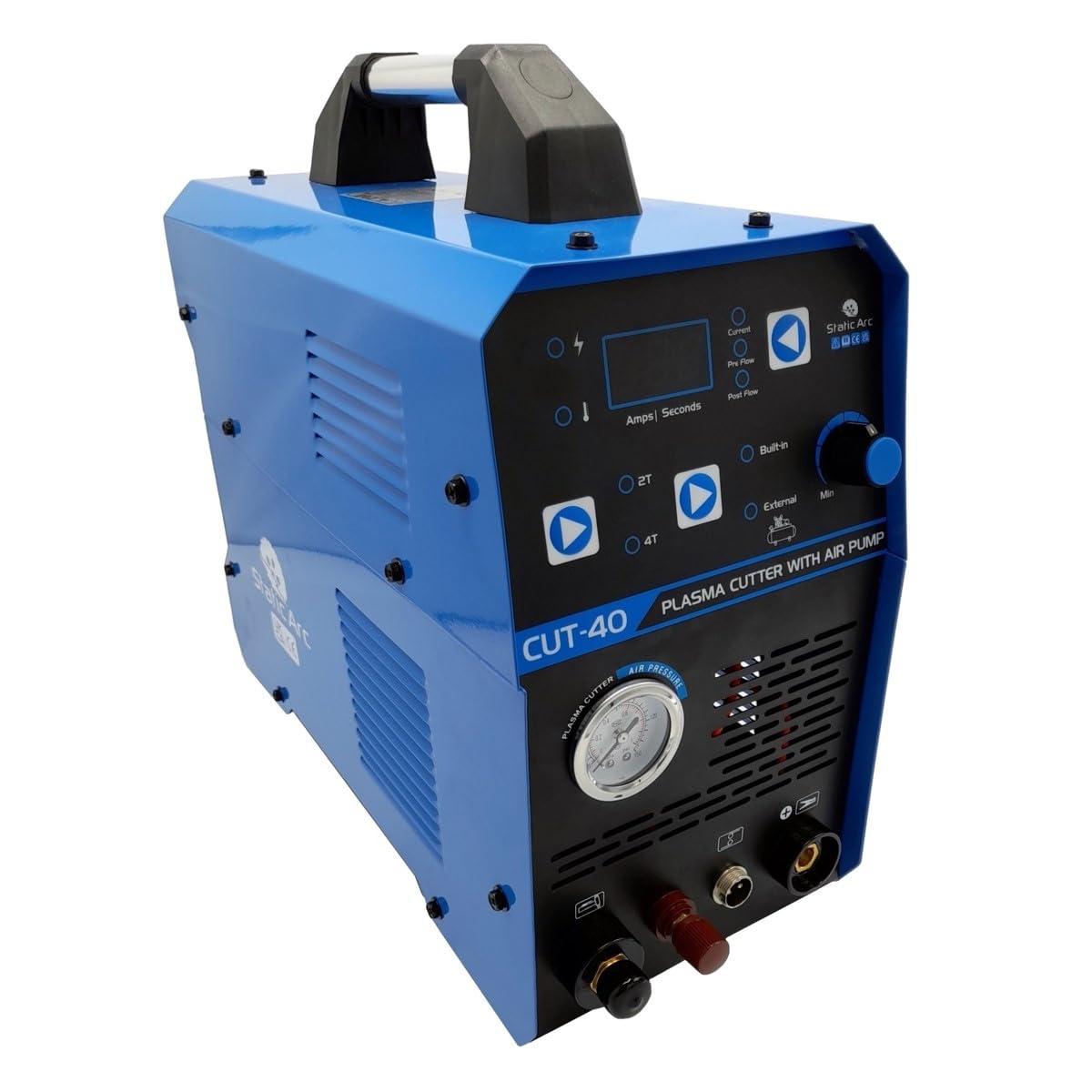
Cut 40 Inverter Plasma Cutter w/INBUILT AIR Compressor Non-Touch Pilot ARC 40A
Our Recommendation
Product A is the better all-round purchase because it is cheaper by £40, rated higher, and gives you two welding processes plus HF start and digital control. Product B is a good specialist cutter, but it is narrower in use and costs more. If you want the most capability for the least money, Product A is the clear recommendation.
Detailed Comparison
Display
Product A has the stronger control-and-feedback story because it includes digital control, which is valuable on a welder where fine adjustments to current and arc behavior matter. That makes it easier to dial in settings for thin material, repair work, and different electrodes or TIG tasks. Product B’s listing does not highlight comparable digital control detail, so on interface clarity and setting precision, Product A wins.
Performance
This is where the products split clearly. Product A is a 200A DC inverter welder with TIG and MMA/ARC/Stick capability, HF arc start, and a 60% duty cycle, so it is the more versatile machine for joining metal across a range of workshop jobs. Product B is a Cut 40 plasma cutter with an inbuilt air compressor and non-touch pilot arc, which is excellent for cutting steel quickly and cleanly, especially when you want minimal start-up fuss. If your priority is welding, Product A wins decisively; if your priority is cutting, Product B is the only one of the two that is purpose-built for it.
For general capability, Product A wins because it covers two major welding processes and offers 200A output, which is a stronger all-round spec than a 40A cutter if you need fabrication flexibility. Product B wins only in its specialist lane: plasma cutting is faster and often cleaner than grinding or oxy-fuel-style approaches, and the pilot arc plus built-in compressor make it more convenient than a cutter that needs separate air supply planning. But as a single purchase for most home workshops, Product A delivers more total utility.
Build quality and design
Product A appears better suited to a broad range of welding tasks thanks to its inverter design, HF start, and accessories bundle. The 60% duty cycle is a useful sign that it is intended for sustained use rather than occasional light duty, and the 200A rating suggests a more robust internal power stage. Product B’s built-in compressor is a clever design advantage because it reduces setup complexity and makes the cutter more portable as a self-contained system. However, plasma cutters with integrated compressors can be more specialized and may trade versatility for convenience.
Overall, Product A wins on design for users who want a more complete workshop machine, while Product B wins on compact self-contained cutting convenience. If you are comparing build quality purely by practical workshop usefulness, Product A has the edge because it does more jobs with fewer compromises.
Battery life / runtime / power source practicality
Neither product is battery powered, so traditional battery life does not apply. In practical terms, Product A is the easier machine to justify if you already have a stable mains supply and want a welding setup that can run longer sessions thanks to its 60% duty cycle. Product B’s built-in compressor reduces the need for external air equipment, which is a practical runtime advantage in the sense of fewer accessories and less setup time. Still, for raw session endurance and workshop flexibility, Product A wins.
Price and value for money
Product A is £219.99, while Product B is £259.99, so Product A is £40 cheaper. That matters because Product A also has the higher user rating at 4.6/5 from 14 reviews versus 4.3/5 from 11 reviews. For the money, Product A offers more capability: TIG plus MMA/ARC/Stick, HF start, digital control, and a 200A output. Product B is more expensive but only does one job, even if it does that job well. Value for money clearly goes to Product A.
Game library / features
Neither product has a game library, so the meaningful comparison is feature set. Product A wins on features because it gives you two welding modes in one machine plus HF arc start and digital control. That makes it suitable for hobby fabrication, basic professional repair work, and learning multiple welding techniques. Product B’s standout features are the non-touch pilot arc and inbuilt compressor, which are genuinely useful, but they still serve a narrower purpose. If you need one machine to cover more tasks, Product A is the better-equipped option.
Overall user experience
Product A is the easier recommendation for most buyers because it is more versatile, cheaper, and better reviewed. It should feel more rewarding to own if you are doing mixed metalwork, repairs, or want to learn TIG and stick welding without buying separate machines. Product B is better only when your main pain point is cutting metal and you value the self-contained compressor setup. If you frequently cut sheet, plate, or rusty material and do not need welding capability, Product B may feel more specialised and efficient.
Overall summary: Product A is the better buy for most people because it delivers more capability for less money, with stronger ratings and a broader welding feature set. Product B makes sense only if plasma cutting is your primary task and you specifically want an all-in-one cutter with an integrated compressor. For general workshop value, Product A wins.
Buy the 200AMP TIG & if...
Buy Product A if you need a versatile workshop welder for TIG and stick/ARC jobs, especially if you repair, fabricate, or want one machine that can handle different metals and thicknesses. It is also the better choice if budget matters, because it costs less and has the stronger rating. Choose it if you value a broader tool over a specialist cutter.
Buy the Cut 40 Inverter if...
Buy Product B if your main job is cutting metal and you want a plasma cutter with the convenience of an inbuilt air compressor. It is the better fit for users who will use the non-touch pilot arc regularly and do not need welding capability. Choose it if cutting speed and setup simplicity matter more than versatility.
Curated by Off Grid Power on All The Top Picks
As an Amazon Associate we earn from qualifying purchases.