Budget reach or Nikon reliability: which 10x42/12x42 wins?
If you’re torn between a very cheap 12x42 binocular and Nikon’s much pricier PROSTAFF P3 10x42, you’re really choosing between maximum magnification per pound and a more trusted, better-finished all-rounder. Both are rated 4.6/5, but the price gap is huge at £102.16, so the real question is whether the budget model can genuinely compete in the field. For bird watching, wildlife, and casual stargazing in the UK, that choice matters even more because damp weather, dim evenings, and shaky hands quickly expose the weak points in optics. Here’s the straight answer.
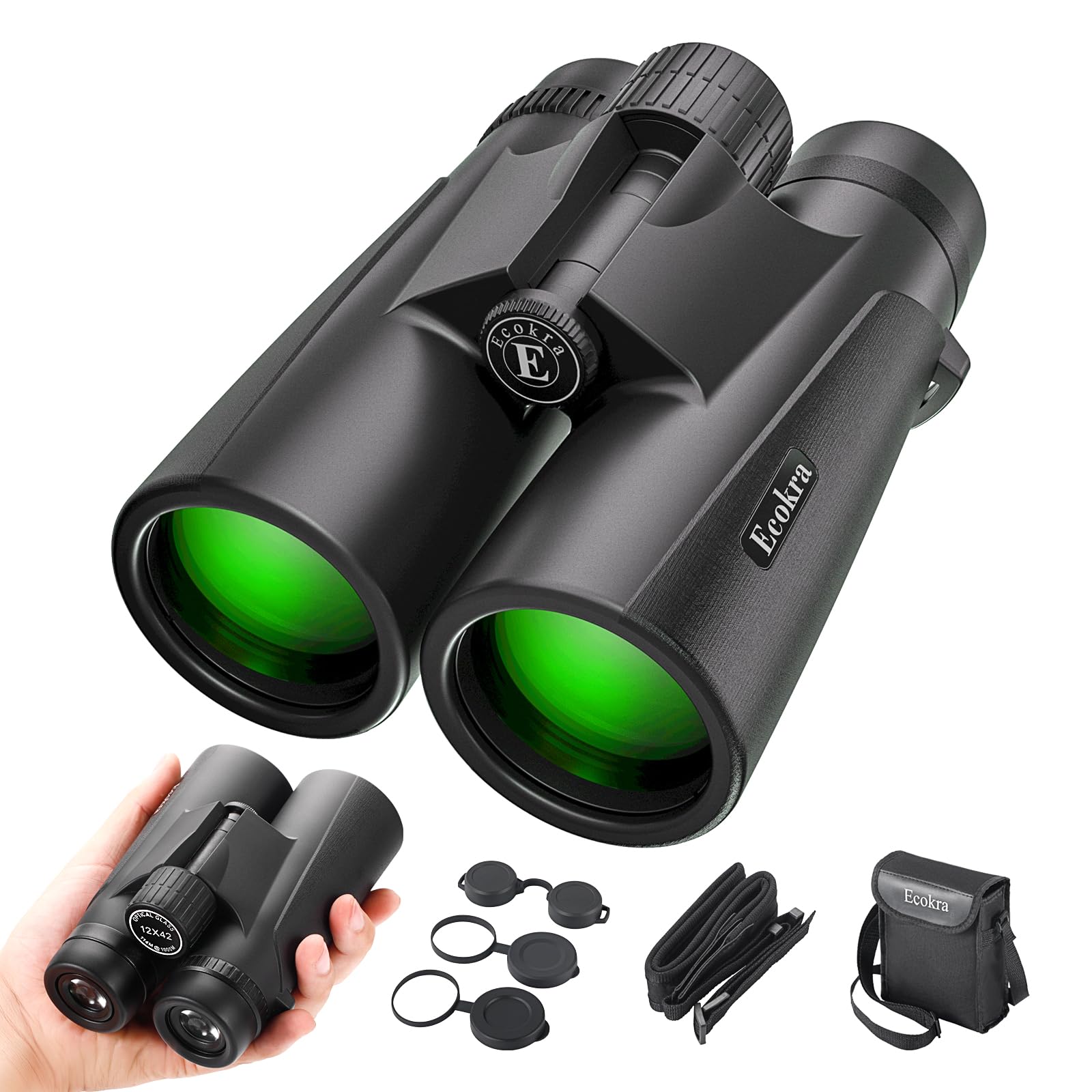
12x42 HD Binoculars for Adults, Super Bright High Power Binoculars with Large View, Clear Low Light Night Vision, BAK4, FMC Prisms, Waterproof Compact Binocular for Bird Watching Hunting Stargazing

Our Recommendation
The Nikon PROSTAFF P3 10x42 is the better buy for most people because it offers a more reliable image, easier hand-held viewing, and stronger long-term build quality. The Ecokra is dramatically cheaper and has the higher 12x magnification, but that extra power is harder to hold steady and usually comes with more compromise at this price. If you want binoculars you’ll actually enjoy using for years in UK weather, Nikon is the safer, smarter choice.
Detailed Comparison
Display / image quality
Winner: Nikon PROSTAFF P3 10x42
The Ecokra 12x42 advertises “HD”, BAK4 prisms, FMC coatings, and “clear low light night vision”, which sounds impressive on paper, but those are common marketing terms in this price bracket. At £26.84, you may get a decent daytime view, but consistency, edge sharpness, colour fidelity, and glare control are usually where budget binoculars give themselves away. Nikon’s PROSTAFF P3 line is built around a more established optical formula, and the 10x42 format is a sweet spot for delivering a bright, steady image without asking too much of the user.
In UK conditions, where cloudy skies and woodland shade are normal, the Nikon is the safer bet for a cleaner, more contrasty view. The 42mm objective lenses on both help with brightness, but the Nikon’s better optics and more dependable coatings should give it the edge in real-world clarity. If you want the image that is most likely to look crisp rather than merely “bright enough”, Nikon wins.
Performance
Winner: Nikon PROSTAFF P3 10x42
The Ecokra’s 12x magnification sounds attractive because it promises more reach for birds, distant wildlife, or even the Moon and bright star fields. But higher magnification also magnifies hand shake, and 12x is noticeably harder to hold steady than 10x, especially without a tripod. For casual stargazing in Britain, where you may be standing in a cold field or garden with no support, that extra power can become a drawback.
The Nikon 10x42 is simply easier to use well. It gives enough magnification for birds at distance and a satisfying view of the night sky, while remaining more stable and easier to acquire targets with. If you are scanning hedgerows, estuary birds, or sweeping the Milky Way from a dark-sky site in Scotland, Northumberland, or Wales, the Nikon will likely feel more controlled and less frustrating. The Ecokra may appear to offer more “power”, but Nikon wins on practical performance.
Build quality and design
Winner: Nikon PROSTAFF P3 10x42
The Ecokra claims waterproofing and compactness, and at this price it may be perfectly adequate for light use. But the difference between “works when new” and “keeps working after years of damp UK weather” is where brand engineering matters. Nikon has a long reputation for dependable build quality, better quality control, and more trustworthy sealing and mechanical feel.
The PROSTAFF P3 is designed as a proper field binocular, not just a specification sheet bargain. Focus action, hinge feel, eyecups, and overall handling are more likely to be smooth and durable. For birders and walkers who want something that can live in a rucksack, survive drizzle, and be used regularly, Nikon is the more reassuring choice. The Ecokra is the winner only if you judge design by “looks like a binocular and is very cheap”; Nikon wins on actual long-term construction.
Battery life
Winner: Tie
Neither product is an electronic device, so battery life is not a meaningful differentiator. Both are passive optical binoculars and require no charging or replacement cells. If you meant “all-day usability”, the Nikon may still feel better because it is more comfortable and less tiring to use steadily, but strictly speaking this category is a tie.
Price and value for money
Winner: Ecokra 12x42
This is the biggest gap in the comparison. At £26.84, the Ecokra costs £102.16 less than the Nikon, which is a massive saving. For someone who wants a very inexpensive first binocular, a spare pair for the car, or a casual option for holidays and occasional daytime use, that price is undeniably attractive.
But value is not just the lowest upfront cost; it is also how often you end up wishing you had bought better. If the Ecokra’s optics, focus, or durability disappoint, the cheap purchase becomes poor value quickly. The Nikon costs far more, but it is much more likely to deliver a satisfying experience every time you use it. So the Ecokra wins on raw price, while Nikon wins on value for serious use.
Game library / features
Winner: Nikon PROSTAFF P3 10x42
Since these are binoculars, “game library” translates to feature set and versatility. The Ecokra’s headline features are 12x magnification, BAK4 prisms, FMC coatings, waterproofing, and compactness. That is a strong spec list for the money, and the 12x reach may appeal to people who want to inspect distant subjects more closely.
However, the Nikon’s feature set is more refined in practice: 10x42 is a proven all-round format, and Nikon’s optical and mechanical execution tends to make those features more usable. For birding, hunting, travel, and stargazing, the Nikon is the more versatile tool because it balances magnification, brightness, and steadiness better. The Ecokra offers more numbers on the page; the Nikon offers a better overall feature experience.
Overall user experience
Winner: Nikon PROSTAFF P3 10x42
The Ecokra may be the right choice for someone who wants the cheapest possible binocular with respectable specs and is happy to accept compromises. But the Nikon will almost certainly feel better in the hand, easier to focus, steadier to use, and more confidence-inspiring in real conditions. In the UK, where weather is often damp, evenings are often dim, and outdoor sessions can be brief and spontaneous, that ease of use matters a lot.
For bird watching, the Nikon’s steadier 10x view is a real advantage. For stargazing, both are limited by being hand-held binoculars rather than telescopes, but the Nikon’s more controlled image will make scanning the sky more enjoyable. The Ecokra is the bargain; the Nikon is the better instrument.
Overall summary: if your priority is absolute minimum spend, the Ecokra 12x42 is the obvious budget pick. But if you want the binocular that is more likely to satisfy you every time you use it, the Nikon PROSTAFF P3 10x42 is the clear winner. The extra £102.16 buys you a better optical experience, better usability, and more dependable long-term ownership.
Buy the 12x42 HD Binoculars if...
Buy Product A if your budget is tightly capped and you mainly want a low-cost binocular for occasional use. It makes sense as a spare pair, a starter option for a child or beginner, or a casual daytime companion for holidays and simple wildlife spotting. If you are happy to trade refinement for a very low price, it is the bargain choice.
Buy the Nikon PROSTAFF P3 if...
Buy Product B if you want a binocular that feels dependable, sharper, and easier to use in the field. It is the better choice for regular birdwatching, travel, and stargazing from UK gardens or dark-sky sites where steadiness and image quality matter. If you value buying once and being satisfied, the Nikon is worth the extra money.
Curated by Star Seeker on All The Top Picks
As an Amazon Associate we earn from qualifying purchases.