Best Standing Desks Under £200 in 2026
Under £200, you can still get a genuinely useful electric standing desk, but you need to be realistic about what’s included. Expect smaller desktop sizes, simpler control panels, fewer premium finishes, and less-refined motors than you’d find on pricier models — but if you choose well, you can still get a desk that supports healthy sit-stand work all day.
If you’re shopping for the best standing desks under £200, the main goal is finding the best mix of stability, height range, and usable desktop space without paying for features you don’t need. At this budget, the biggest wins usually come from desks that offer a decent lifting capacity, a height range that works for both seated and standing use, and a frame that doesn’t wobble too much when raised. You’re unlikely to get premium dual-motor performance, ultra-thick desktops, or the quietest lifting action in the market, so the key is choosing the model that gives you the most practical workspace for the money.
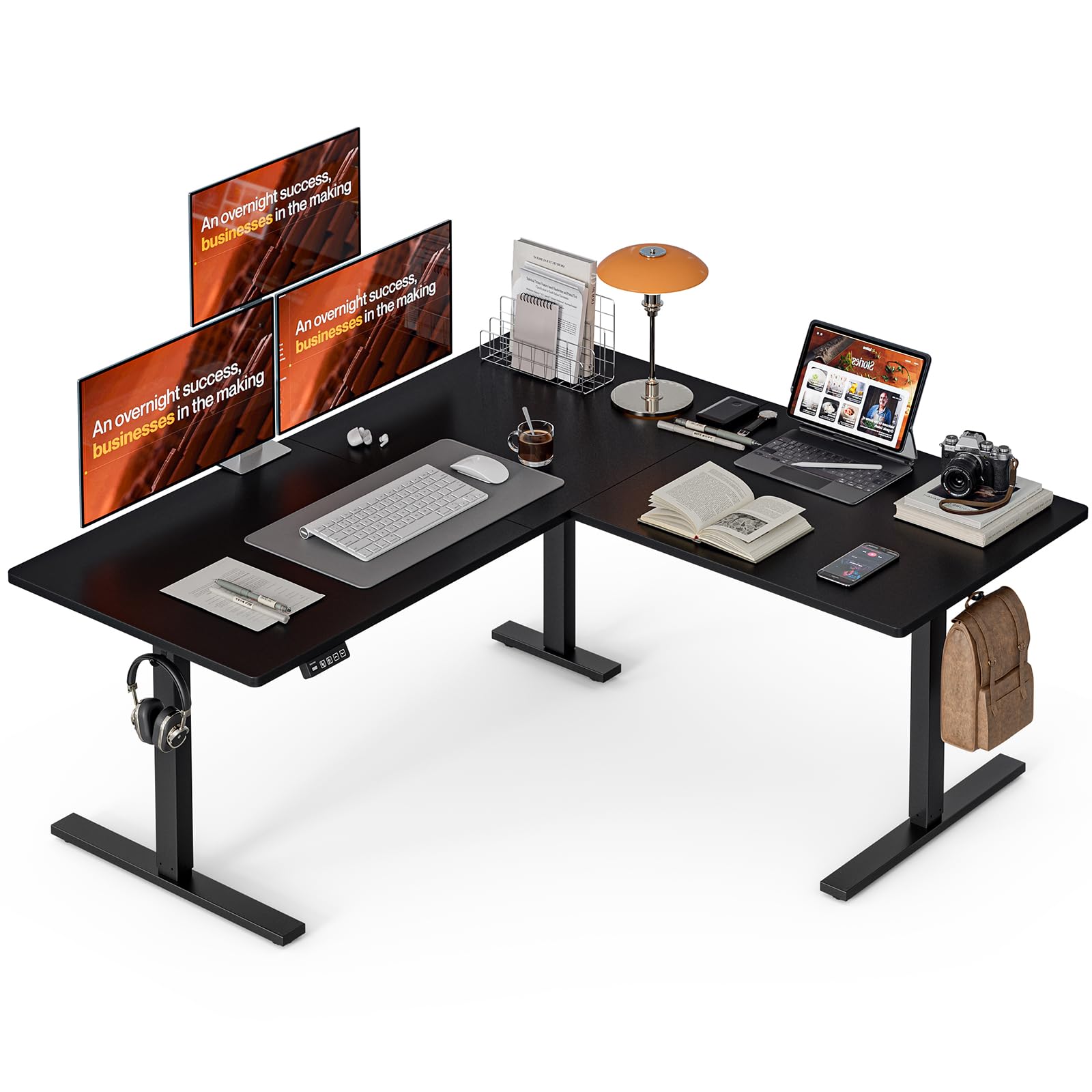
1) Grandder L Shaped Standing Desk, 160 x 140 cm Adjustable Height Electric Standing Corner Desk, Sit-Stand Computer Ergonomic Table For Home Office, Black — £139.99
This is the standout choice because it gives you something most desks at this price can’t: serious surface area. The L-shaped layout is ideal if you work with a laptop, monitor, notebook, and accessories at the same time, or if you want to create a proper corner workstation without buying extra furniture. For home office users, that extra space matters just as much as motor quality, because a cramped desk quickly becomes an ergonomic problem — you end up hunching, reaching, and cluttering your setup.
At £139.99, this desk also leaves room in the budget for the essentials that actually improve comfort: a monitor arm with VESA compatibility, a footrest, or a better chair. That’s important because a standing desk alone doesn’t solve posture problems; your screen height, keyboard position, and chair setup still need to be right. A larger desk can make it easier to keep your monitor at eye level and maintain a neutral wrist position, which is exactly what you want for long work sessions.
The compromises are clear. L-shaped desks under £200 usually trade away compactness and may be less suitable for small rooms. Corner desks can also be harder to position cleanly, and if the frame is not especially heavy-duty, you may notice more movement at standing height than with a more expensive desk. You’re also less likely to get the same refined motor speed, memory control quality, or premium desktop finish you’d see on higher-end models. If the desk uses a basic lifting system, it may still be perfectly usable, but it probably won’t feel as smooth or as quiet as a dual-motor premium option.
This is best for people who need workspace more than they need a minimalist footprint. It suits home workers with a dedicated room or corner, anyone running a multi-monitor setup, and users who want a budget standing desk that can function as a proper all-day workstation rather than just a laptop perch.
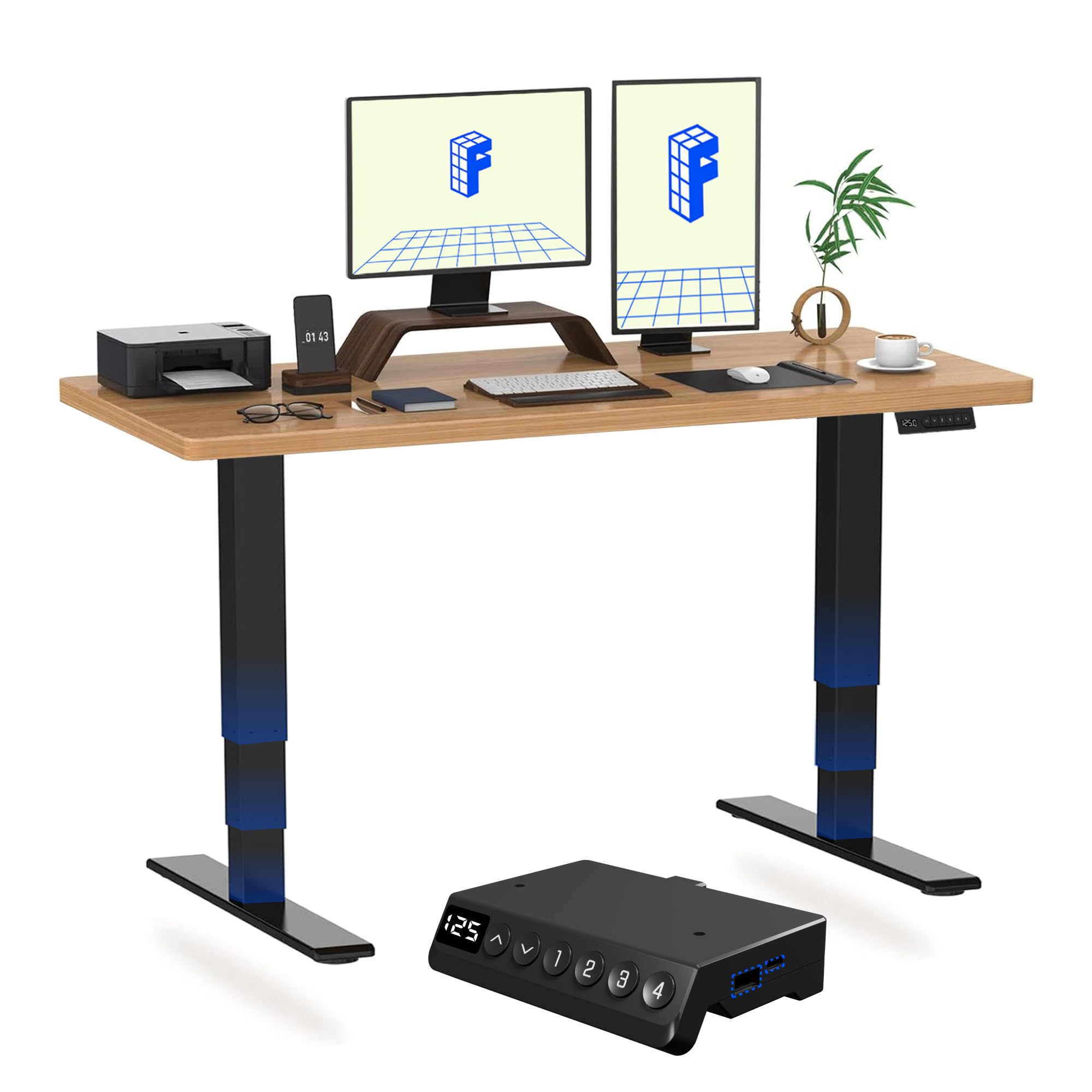
2) FLEXISPOT E6 MAX ONE PIECE Electric Standing Desk with USB Dual Motors 3 Stage Height Adjustable Sit Stand Up with Memory Smart Panel (Black Frame + 120x60cm Maple Top) — £195.49
This is the more traditional pick and the better option if you want a cleaner, simpler standing desk footprint. The key advantage here is the dual-motor design, which is generally the right direction to go in if you care about smoother lifting and better long-term feel. Dual motors usually distribute load more evenly than single-motor systems, which can help with stability and make height changes feel more controlled. The memory smart panel is another useful feature at this price, because presets make sit-stand transitions easier and more consistent throughout the day.
The 120 x 60 cm top is compact enough for smaller rooms, yet still workable for a laptop, one monitor, and a few accessories. For many users, that’s enough — especially if you pair it with a monitor arm that supports VESA mounting, freeing up valuable desktop space. In practical terms, this is the kind of desk that can support a tidy ergonomic setup rather than a sprawling one.
The compromises are mostly about size and value. At £195.49, it is very close to the top of the budget, so you’re paying more for the motor system and control features rather than for a larger work area. The desktop is also smaller than the Grandder, which means less flexibility if you use multiple screens, paperwork, or creative tools. While dual motors are a plus, this is still a budget desk, so don’t expect the same low noise level, lift speed, or ultra-solid frame feel you’d get from a more expensive model. If you’re tall, have a heavy setup, or want a desk that feels like a premium office product, you may still notice the limitations.
This is best for people who want a straightforward sit-stand desk for a smaller home office, especially if they value preset controls and a cleaner rectangular layout over maximum surface area. It’s also a good fit for users who plan to keep the desktop relatively light and need a desk that’s easy to integrate into a compact room.
What trade-offs should buyers expect at this price tier?
The main trade-off under £200 is that you’re balancing function against refinement. Desks in this bracket can absolutely support better posture and healthier working habits, but they often do so with simpler frames, less robust materials, and fewer premium usability features. Expect lower weight capacities than higher-end models, more visible flex at full height, and motors that may be slower or less quiet. Desktop finishes can also be more basic, and cable management is often an afterthought rather than a built-in strength.
This is why it’s so important to think beyond the headline price. A desk with a decent height range and a stable frame is more valuable than one with flashy extras you’ll never use. If you’re using a monitor arm, check VESA compatibility so you can raise your screen properly. If you work long hours, make sure your chair is equally supportive — a chair with adjustable armrests, a proper tilt mechanism, and a sensible weight limit can make just as much difference as the desk itself. Standing desks work best as part of a complete ergonomic setup, not as a standalone fix.
Is it worth stretching the budget?
If you can stretch into the next tier up, it is often worth it. Around the £250–£350 mark, you’re more likely to find stronger frames, better lifting stability, improved motor quality, and larger or better-finished desktops. That extra spend can also buy you a more reliable control panel, smoother height transitions, and a desk that feels less compromised at standing height. For users planning to work 8–10 hours a day, those improvements can be noticeable.
That said, if your budget is fixed at under £200, the Grandder is the best all-round value because it gives you the most usable workspace, while the FLEXISPOT is the better pick if you prefer a more conventional desk with dual motors and memory controls. In short: choose the Grandder for space and flexibility, choose the FLEXISPOT for a tidier format and a better lift system. Both can work well, but the right choice depends on whether your priority is surface area or mechanism quality.
Love picks like this?
Get weekly product recommendations straight to your inbox.
Curated by Desk Command on All The Top Picks
As an Amazon Associate we earn from qualifying purchases.