5 Alternatives to the Focusrite Scarlett 2i2 Studio 3rd Gen Bundle
If the Scarlett 2i2 Studio 3rd Gen is out of stock, has crept above your budget, or you’re wondering whether your money is better spent on a bigger interface or better monitoring, it’s worth comparing a few alternatives. The right choice depends on whether you need more inputs, a newer preamp design, or a more honest playback setup for mixing, streaming, and podcasting.
Original Product
The Focusrite Scarlett 2i2 Studio 3rd Gen bundle is still a strong all-round starter set at £239.99, especially if you want a simple 2-in/2-out USB interface, a condenser mic, and headphones in one box. But there are good reasons to look elsewhere: some alternatives give you more connectivity, some improve the recording chain with a newer generation interface, and others shift your budget toward monitoring, which can make a bigger difference to your final sound than a bundled mic ever will.
Focusrite Scarlett 2i2 Studio 4th Gen USB Audio Interface Bundle — £245.00
This is the closest like-for-like alternative, costing only £5.01 more than the 3rd Gen bundle. The practical difference is that you’re paying a tiny premium for a newer generation interface, which is the smarter move if you want the most current Scarlett platform without changing your workflow. The 2-in/2-out layout is still ideal for solo recording, podcasting, voiceover, and singer-songwriter demos, and you still get the convenience of an all-in-one bundle with a condenser microphone and headphones included.
The key upgrade here is less about flashy extras and more about refinement. In real use, a newer generation interface typically means better conversion, improved monitoring features, and a more polished user experience. For musicians, that translates to cleaner capture of vocals and acoustic instruments, and a slightly more confidence-inspiring setup when tracking at home. Build quality should feel familiar if you’ve used Scarlett before: compact, sturdy, and easy to place on a desk without taking over the room.
Verdict: choose the 4th Gen bundle if you were already leaning toward the 2i2 Studio but want the newer version for almost no extra money. It’s the safest upgrade pick and the best direct replacement.
Focusrite Scarlett 8i6 3rd Gen USB Audio Interface — £269.99
At £269.99, the Scarlett 8i6 costs £30 more than the 2i2 Studio 3rd Gen bundle, but it’s a very different proposition. The main reason to buy it is connectivity: the 8i6 gives you more inputs and outputs, which matters if you record more than one source at a time, want to keep synths, drum machines, or external processors permanently wired in, or need a more flexible routing setup for streaming and content creation.
Compared with the 2i2 Studio bundle, you are giving up the included microphone and headphones, so the headline price is not the whole story. If you need a full starter kit, the 8i6 may end up costing more once you add a mic and monitoring headphones separately. However, if you already own those pieces, the 8i6 is the more serious long-term interface. It’s better suited to small studio setups where you may expand into multi-mic recording, stereo hardware integration, or more complex podcast routing.
Build quality is in the same dependable Scarlett family, so you’re not buying a flimsy box; you’re buying more capability. For musicians who are already beyond the absolute beginner stage, that extra headroom is useful. The trade-off is obvious: more flexibility, but less value as a complete bundle.
Verdict: choose the 8i6 if you’re building a more capable home studio and already own your mic and headphones. It’s the better “grow into it” interface, not the best cheap starter pack.
Yamaha HS5 powered studio monitors — £537.83
The Yamaha HS5 is not an interface alternative in the usual sense; it’s a monitoring alternative, and that matters because many buyers of the Scarlett bundle are really trying to build a first recording setup. At £537.83, this is dramatically more expensive than the original bundle — roughly £298 more — but it changes the quality of what you hear while recording and mixing. The HS5 is a 5-inch studio monitor, and that smaller driver size is part of its appeal: it delivers a tight, focused nearfield sound that helps reveal mids, vocal placement, EQ problems, and compression issues.
In practical terms, if you’re serious about recording and mixing, better monitors can improve your results more than upgrading a budget microphone. The HS5s won’t flatter your tracks; they’ll tell you the truth. That can be a shock at first, especially if you’re used to consumer speakers or headphones, but it’s exactly what helps you make better decisions. You’ll need an audio interface with balanced outputs to get the best from them, so this is a buy for people who already have, or are planning, a proper interface setup.
Build quality is excellent and workmanlike, with the kind of robust finish Yamaha is known for. The downside is obvious: they’re expensive, and the 5-inch driver won’t produce deep bass like a larger monitor, so you may still want to learn your room and reference on headphones. But as a long-term studio investment, they’re serious tools.
Verdict: choose the HS5 if your priority is mixing accuracy rather than an all-in-one recording bundle. They’re not for casual buyers, but they are a major upgrade for anyone who wants honest playback.
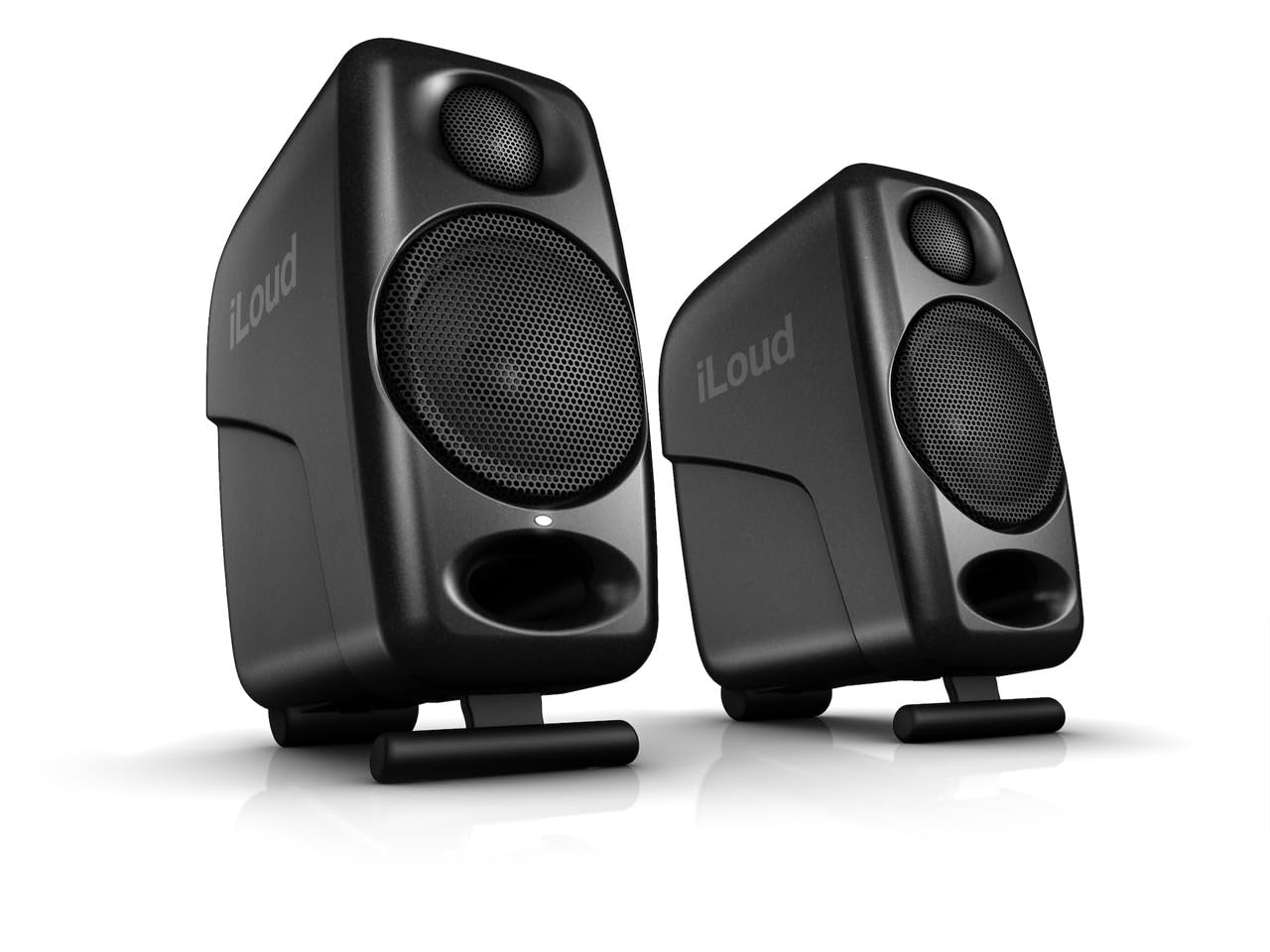
IK Multimedia iLoud Micro Monitor — £207.53
At £207.53, the iLoud Micro Monitor is actually £32.46 cheaper than the Scarlett 2i2 Studio 3rd Gen bundle, but it serves a completely different role. This is a compact monitoring solution rather than an interface package, and that makes it interesting for creators with limited desk space. The appeal is obvious: very small footprint, active amplification, and a reputation for sounding far bigger than their size suggests.
For musicians working in bedrooms, small offices, or portable production setups, the practical benefit is convenience. You can get a decent monitoring environment without committing to large speakers. That said, because these are tiny monitors, they won’t replace proper full-size studio speakers for low-end judgment. If you’re mixing bass-heavy music, kick drums, or subby electronic production, you’ll still need to cross-check on headphones or another system. They’re more about useful nearfield reference than full-range truth.
Build quality is solid and very much geared toward portability and modern desktop use. Compared with the Scarlett bundle, the trade-off is that you’re not buying a recording chain at all — you’re buying a better listening environment. That makes them a smart companion purchase, but not a direct substitute if you still need an interface, microphone, and headphones.
Verdict: choose the iLoud Micro Monitor if space is tight and you already own an interface, or if you want a compact monitoring upgrade for a desktop studio. They’re excellent for portability, but they’re not a full recording solution.
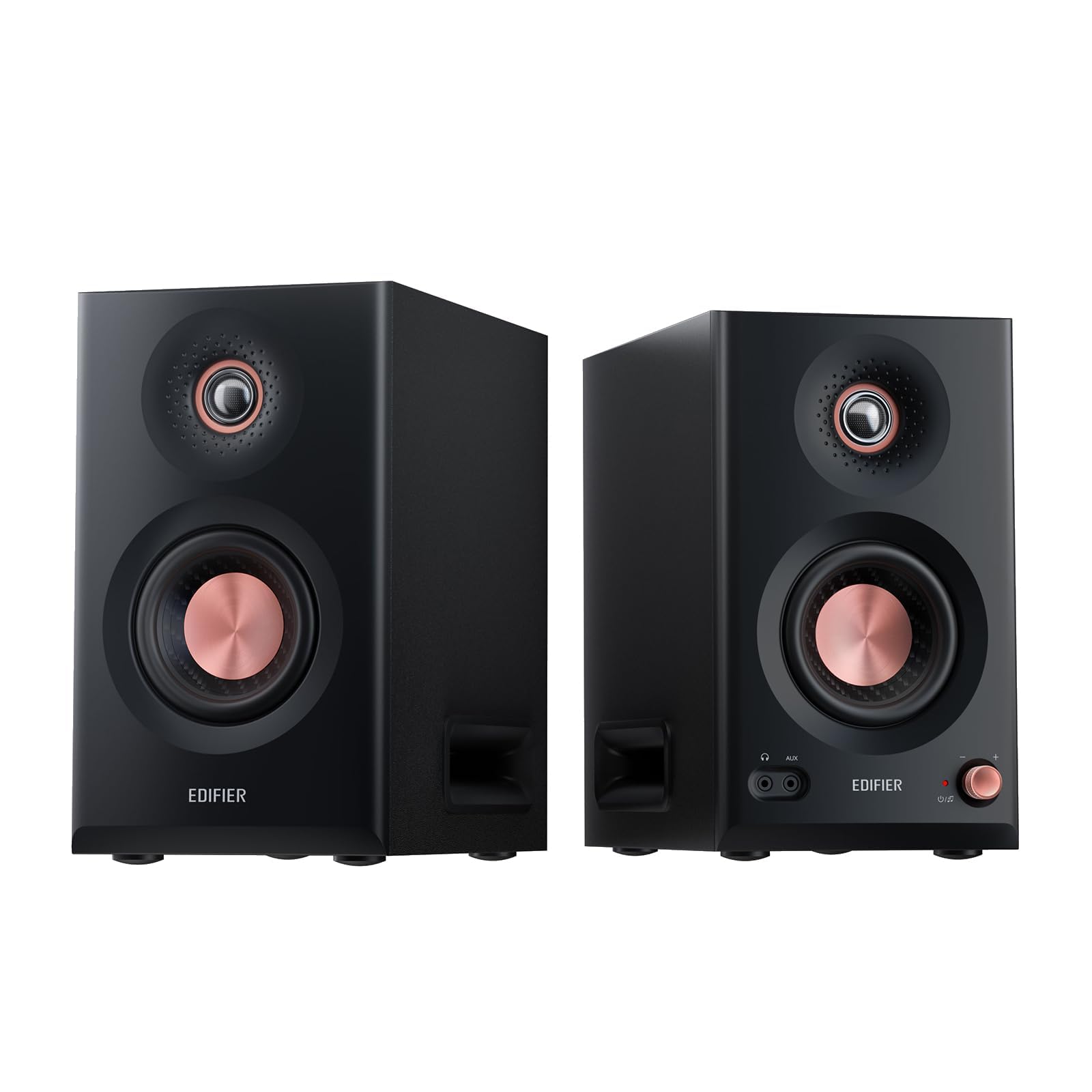
Edifier MR5 2.0 Studio Monitor Bookshelf Speakers — £279.99
The Edifier MR5 sits between the compact IK option and the pricier Yamaha pair, at £279.99 — £40 more than the Scarlett 2i2 Studio 3rd Gen bundle. What makes it interesting is the feature set: a 3-way active design, 110W output, Hi-Res certification, LDAC Bluetooth 6.0, room calibration, and multiple inputs including XLR, TRS, and RCA. That’s a lot of flexibility for the money, and for many home users it’s more practical than a bare-bones studio monitor.
In real-world use, the 3-way design should help separate lows, mids, and highs more cleanly than a basic two-way bookshelf speaker, which can be useful for both music production and general listening. The room calibration feature is especially appealing for UK home studios where untreated rooms can skew the sound. The downside is that these are more of a hybrid studio/multimedia speaker than a purist reference monitor, so they may not be as brutally revealing as Yamaha HS5s. If you want a more enjoyable listening experience without giving up serious connectivity, they’re a compelling middle ground.
Build quality looks strong on paper, and the feature list is generous, but this is the kind of product where implementation matters. The practical attraction is versatility: they can serve as desktop monitors, TV speakers, or a secondary production setup. Compared with the Scarlett bundle, though, you’re again shifting away from recording gear and toward playback.
Verdict: choose the Edifier MR5 if you want flexible, feature-rich speakers for a home studio and everyday use. They’re a smart value pick for creators who want one speaker system to do several jobs.
Overall, the best alternative depends on what problem you’re actually trying to solve. If you want the nearest replacement for the Scarlett 2i2 Studio 3rd Gen, the 4th Gen bundle is the cleanest answer. If you need more inputs and expect your setup to grow, the Scarlett 8i6 is the better long-term interface. If your recordings already sound fine but your mixes don’t translate, spend on monitors instead — and that’s where the Yamaha HS5, IK iLoud Micro Monitor, or Edifier MR5 become more relevant than another starter interface bundle.
For songwriters, streamers, and podcasters, the most important question is whether you need capture, monitoring, or expansion. The Scarlett 2i2 Studio bundle is strong because it covers the basics in one purchase, but the alternatives above can be better if your priorities are clearer than the original bundle’s all-in-one convenience.
Alternatives

Focusrite Scarlett 8i6 3rd Gen USB Audio Interface Recording, Songwriting, & Streaming High-Fidelity, Studio Quality Recording, With Transparent Playback


Focusrite Scarlett 2i2 Studio 4th Gen USB Audio Interface Bundle for the Songwriter with Condenser Microphone and Headphones for Recording, Streaming, and Podcasting
Edifier MR5 2.0 Studio Monitor Bookshelf Speakers: VGP2025 Gold Award, 110W Hi-Res Certified, 3-Way Active Design, LDAC BT6.0, Room Calibration, XLR/TRS/RCA Inputs for Home Studio & Multimedia - Black
Still Buy the Original If...
Buy the original Scarlett 2i2 Studio 3rd Gen if you want a proven, simple 2-in/2-out setup with a condenser mic and headphones included at a sensible price. It’s still one of the easiest ways to start recording vocals, streaming, or podcasting without piecing a system together.
Love picks like this?
Get weekly product recommendations straight to your inbox.
Curated by Keys & Strings on All The Top Picks
As an Amazon Associate we earn from qualifying purchases.
