5 Alternatives to the FLASHFORGE AD5X (Including Better Budget Picks for Some Buyers)
The FLASHFORGE AD5X is aimed at people who want fast, multi-colour printing with as little faff as possible, but it won’t suit everyone. Some buyers are looking for a cheaper route into 3D printing, others want a bigger build volume, and plenty just want to compare whether the AD5X’s multi-material convenience is actually worth the money.
Original Product

If you’re searching for alternatives to the FLASHFORGE AD5X, the first thing to decide is what problem you’re actually trying to solve. The AD5X is a £399 multi-material, multi-colour machine with automatic calibration and filament backup, so it’s really about convenience and productivity. The alternatives below cover very different use cases: one is a cheaper starter printer, one is for bigger jobs, and the rest are consumables or accessories that can improve the results you get from a printer you already own.
1) Creality Ender 3 V3 SE — £169.00
If the AD5X feels a bit rich for your blood, the Ender 3 V3 SE is the obvious budget alternative. At £169, it’s around £230 cheaper than the FLASHFORGE, which is a massive saving if you mainly want to get into printing without spending premium money on multi-colour features you may not use every day.
Feature-wise, this is a very different beast. The Ender 3 V3 SE is a single-material printer with a 250mm/s advertised speed, CR Touch auto-levelling, a strain sensor, Sprite direct extruder, and dual Z-axis support. In practical terms, that means it’s set up to be beginner-friendly and reliable for standard PLA, PETG, and similar jobs, but it doesn’t offer the AD5X’s multi-material or multi-colour workflow. You’ll be swapping filaments manually, and if you want colour changes mid-print, you’ll be doing it the old-fashioned way.
Build quality is decent for the money. Creality’s Ender line has a huge user base, so there’s loads of community support, upgrades, and troubleshooting help. That said, it’s still a budget machine, so you should expect a more basic frame, fewer premium automation features, and a bit more tinkering over time than you’d get from a more advanced all-in-one system.
Verdict: choose the Ender 3 V3 SE if you want a proper entry-level printer that gets you printing cheaply and quickly. It’s the right pick for beginners, hobbyists, and anyone who cares more about learning the craft than having four-colour prints out of the box.
2) Creality Ender 5 Max — £689.00
The Ender 5 Max sits at the opposite end of the scale. At £689, it costs £290 more than the AD5X, but you’re paying for something the FLASHFORGE doesn’t prioritise: serious build volume. With a 15.75 x 15.75 x 15.75 inch build area, this is the machine for people who want to print big parts, prototypes, props, or multiple items in one go.
Compared with the AD5X, the Ender 5 Max is much less about colour and material management and much more about scale and speed. It advertises up to 700mm/s max printing speed, auto levelling, a 300°C hotend, precise linear rails, and a dual Z-axis setup. That 300°C capability is important because it opens the door to more demanding materials than a basic printer, while the larger frame means fewer compromises when your project doesn’t fit on a standard bed.
In build quality terms, the Ender 5 Max feels like the more industrial option. The larger chassis and linear rail setup should appeal to makers who value rigidity and consistency on bigger prints. The trade-off is that large-format printers are naturally more demanding in terms of space, setup, and calibration. They’re not usually the easiest machines for a total beginner, and you’ll need to be comfortable managing longer print times and more material use.
Verdict: pick the Ender 5 Max if your priority is size rather than colour. It’s a better fit for advanced hobbyists, cosplay makers, prop builders, and anyone who regularly prints large parts that would be annoying or impossible on a smaller multi-material machine.
3) Creality Hyper Rainbow PLA Filament — £25.99
This one isn’t a printer, but it’s a smart alternative if what you really want from the AD5X is colourful output rather than true multi-material printing. At £25.99, the Hyper Rainbow PLA is £373.01 cheaper than buying the AD5X itself, and that’s a pretty strong reminder that you may not need a whole new printer to get more visual impact from your prints.
The big selling point here is the long-gradient rainbow effect, plus a 600mm/s speed rating and ±0.03mm dimensional accuracy. In practical terms, this filament can give you eye-catching colour transitions across a single print without needing a multi-filament setup. If you print decorative models, toys, display pieces, or cosplay props, the result can look far more premium than plain PLA.
Compared with the AD5X, the trade-off is obvious: you get colour variety, but not colour control. You can’t assign separate colours to different parts of a model like you can with a true multi-material printer. Also, the final look depends heavily on print size and how much filament the model uses, so the rainbow effect may be subtle on small parts and dramatic on larger ones.
Build quality for filament is all about consistency, and Creality’s claim of tight dimensional accuracy is the main reason to consider it. Good filament can make a budget printer behave better and reduce the chances of clogs, under-extrusion, or messy surfaces. That said, it won’t magically fix a poorly tuned machine.
Verdict: choose this if you want colourful prints on a budget and don’t actually need multi-material printing. It’s ideal for makers who care about appearance, not multi-colour engineering complexity.
4) Build Plate Glue 60ML — £16.99
At first glance, build plate glue might seem like a strange alternative to a £399 printer, but for many buyers it’s the more practical purchase. If you already own a printer and are looking at the AD5X because you’re frustrated with print failures, warping, or first-layer issues, this £16.99 adhesive is a very cheap way to improve day-to-day reliability.
This glue is compatible with a wide range of materials including PLA, ABS, PETG, PC, PA, and TPU, and it’s designed to improve adhesion on PEI steel plates. The practical impact is straightforward: better bed grip, fewer failed prints, and less warping on tricky jobs. That’s especially useful for larger parts or materials that like to curl at the edges.
Compared with the AD5X, this is obviously not a replacement in the feature sense. You won’t get multi-colour printing, automatic calibration, or filament backup. But if your main pain point is getting prints to stick consistently, a good adhesive can solve a real problem for a tiny fraction of the cost of a new machine. It’s also a useful consumable for people with Bambu Lab machines, but the wider lesson applies to many printers: sometimes the cheapest upgrade is the most effective one.
Build quality here is about formulation and usability rather than hardware. A decent adhesive should apply evenly, clean up reasonably well, and hold up across repeated prints without becoming a sticky mess. The 60ml size also makes it a low-risk buy if you’re just experimenting.
Verdict: choose build plate glue if you’re trying to improve print success rather than buy a new printer. It’s best for owners of an existing machine who want better adhesion, fewer warped parts, and less wasted filament.
5) BIQU CryoGrip Pro Glacier Build Plate — £17.99
Another accessory rather than a full printer, the BIQU CryoGrip Pro Glacier is a very sensible alternative if your real issue is build surface performance. At £17.99, it’s £381.01 cheaper than the AD5X and could make a much bigger difference to your daily printing than you might expect, especially if your current plate is inconsistent or annoying to remove prints from.
This is a double-sided spring steel sheet designed for the Bambu Lab A1 Mini, with a 184 x 184mm size and a focus on firm adhesion. In practical terms, a good spring steel build plate can make life easier in two big ways: better first-layer reliability and easier part removal once the print is done. That means fewer failed starts and less risk of damaging prints when you take them off the bed.
Compared with the AD5X, you’re not getting any of the headline printer features. No multi-colour. No automatic calibration. No filament backup. But if you already own a compatible machine and just want better print handling, this kind of upgrade can be brilliant value. It’s especially appealing for people who print lots of small parts and want a more dependable surface.
Build quality is the key selling point here. Spring steel plates tend to feel more premium than basic sheets, and a well-made coated surface can dramatically improve consistency. The downside is compatibility: this is aimed at a specific printer size, so it’s not a universal fix.
Verdict: choose the CryoGrip Pro if you already own a compatible printer and want a better build surface rather than a whole new machine. It’s a smart upgrade for users who care about adhesion, print removal, and repeatability.
Which alternative is best?
If you want the closest thing to a full printer alternative on a budget, the Ender 3 V3 SE is the strongest value pick. If you need more size and power, the Ender 5 Max is the more serious machine, but it costs more than the AD5X and makes sense only if you’ll use the larger build volume. If your goal is simply better-looking or more reliable prints, the filament, glue, and build plate options may give you a bigger real-world improvement for far less money.
That’s the key trade-off with the FLASHFORGE AD5X: you’re paying for convenience and multi-material productivity. If that’s what you need, it’s a compelling machine. If not, one of these alternatives may be the smarter buy.
Alternatives

Creality Hyper Rainbow PLA Filament for Ender 3 V3 Plus, 3D Printer Filament Designed for High Speed 600mm/s, 1kg(2.2lbs)/Spool Gradient Rainbow PLA, Dimensional Accuracy ± 0.03 mm (Long Gradient)

Creality Ender 3 V3 SE 3D Printer with 250mm/s Printing Speed CR Touch Strain Sensor for Auto Leveling Sprite Direct Extruder Dual Z-axis and Y-axis, 3D Printer for Beginner Print 8.6 * 8.6 * 9.8in
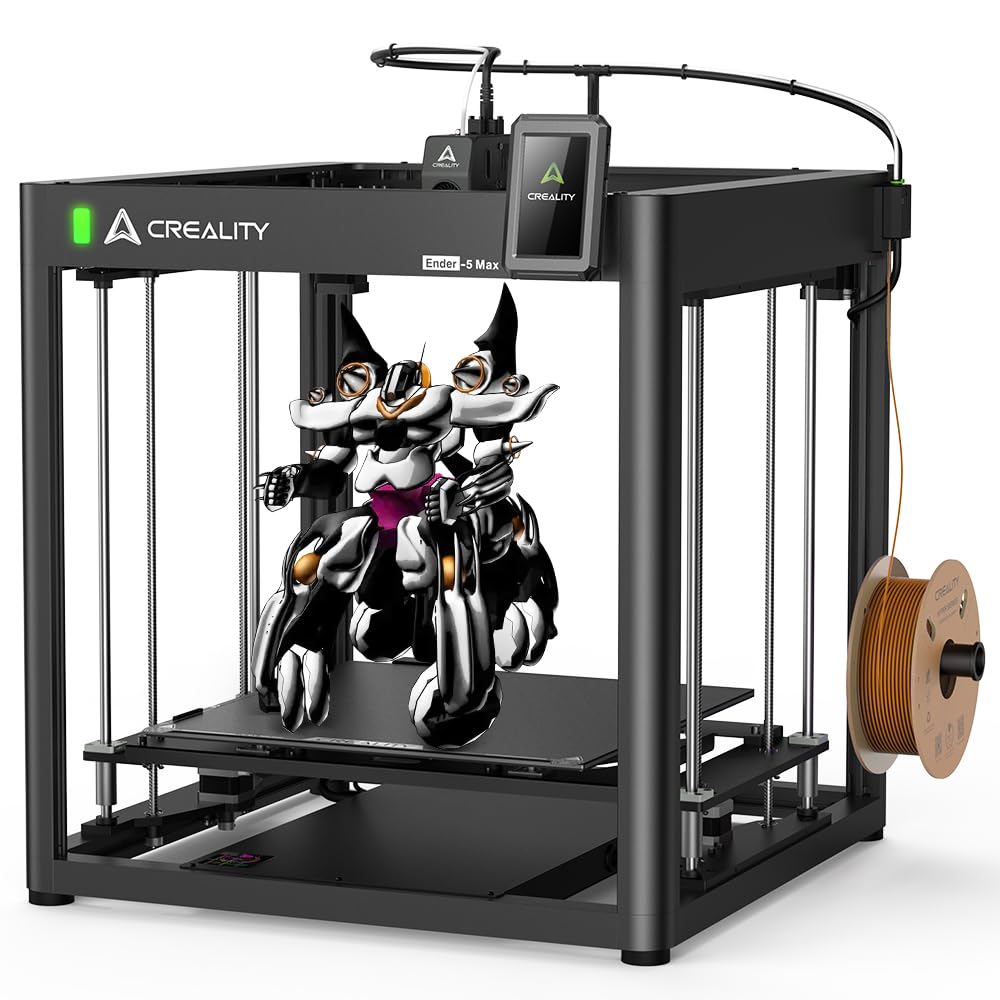
Creality Ender 5 Max 3D Printer, 700mm/s Max Printing Speed Large 3D Printer Build Volume 15.75x15.75x15.75 inch, Auto Leveling 300℃ High Temp Precise Linear Rail Dual Z Axis

Build Plate Glue 60ML, Compatible with Bambu Lab A1/P2S/A1 Mini/P1/X1 PLA/ABS/PETG/PC/PA/TPU Filament, Strong Adhesive Heatbed PEI Steel Plate Liquid Glue Reduce Warping
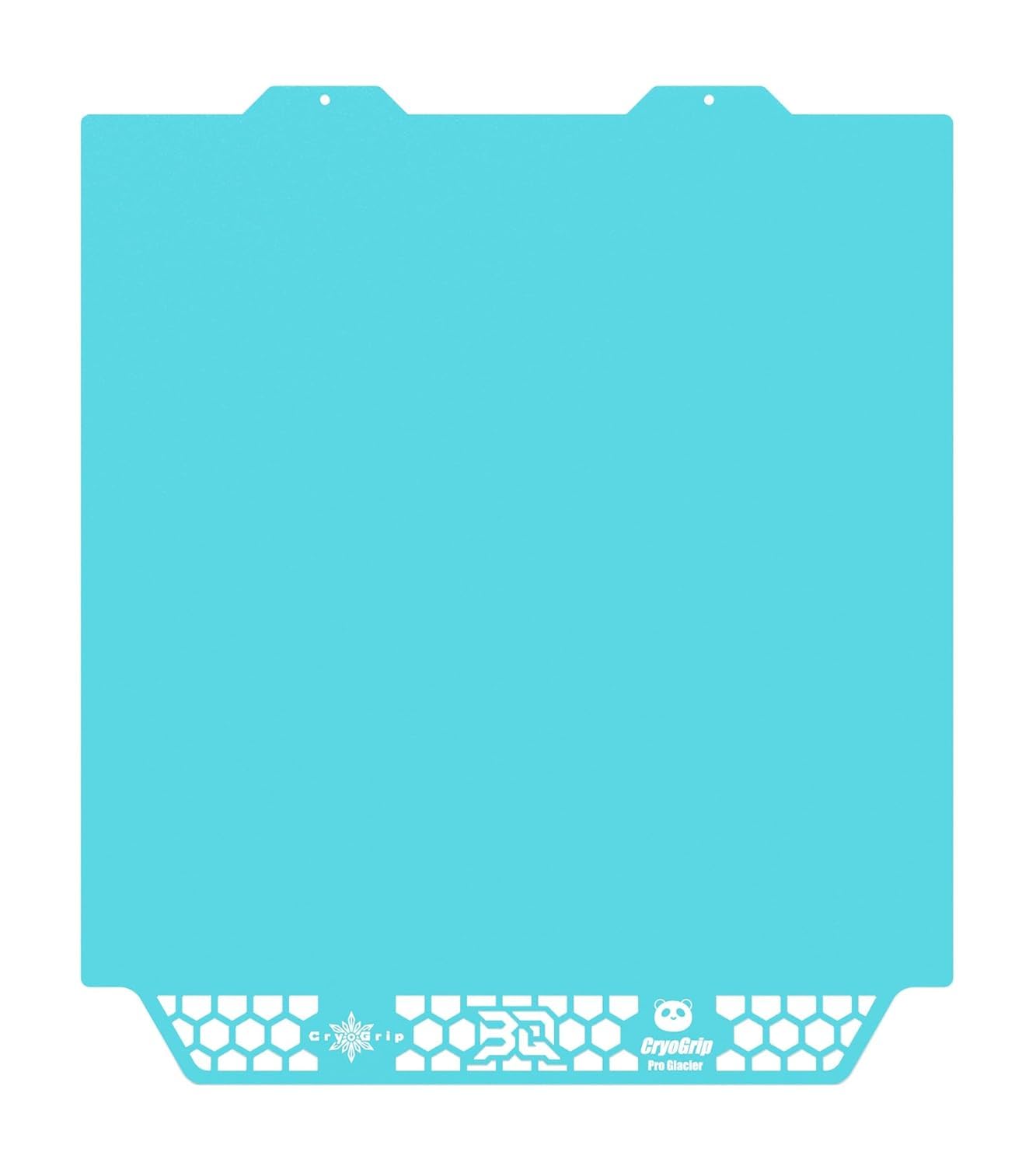
BIQU CryoGrip Pro Glacier-Original Panda Build Plate, Double Sided Spring Steel Sheet for Bambu-Lab A1 Mini Printer, Upgrade Build Plate, Firm Adhesion, 184x184mm
Still Buy the Original If...
The original AD5X is still the right choice if you specifically want fast multi-colour printing, automatic calibration, and filament backup in one integrated machine. If you value convenience and productivity over saving money, it’s the most complete option here.
Love picks like this?
Get weekly product recommendations straight to your inbox.
Curated by The Print Lab on All The Top Picks
As an Amazon Associate we earn from qualifying purchases.