3 Alternatives to the Arturia MINIBRUTE 2 Analogue Synthesizer
The Arturia MINIBRUTE 2 is a serious analogue synth, but it isn’t always the easiest buy if it’s out of stock, stretched beyond budget, or simply not the right fit for your workflow. Some players want a more compact controller-style synth, a deeper bass-focused monosynth, or a modern analogue keyboard with more preset memory and performance features.
Original Product

If you like the MINIBRUTE 2’s hands-on approach but want to spend less, the Arturia MicroFreak is the most affordable route. At £255, it swaps the MINIBRUTE 2’s 25-key analogue keyboard feel for a 25-key hybrid synth with a PCB keyboard, wavetable and digital oscillators, and analogue filters. What’s better here is value: you get a highly experimental sound engine, a compact footprint, and a far lower price. What’s worse is playability for traditional keyboardists — the PCB keybed is not the same as a proper weighted or hammer-action feel, and it won’t satisfy players who want a more piano-like response. Choose the MicroFreak if you’re a sound designer, producer, or learner who wants maximum sonic range in a small, affordable box.
If your priority is bass, sequencing, and classic mono-synth punch, the Novation Bass Station II is a strong alternative. Priced at £349, it offers two oscillators plus an additional sub oscillator, a pattern-based step sequencer, an arpeggiator, and 64 factory patches. Compared with the MINIBRUTE 2, it’s typically more focused and easier to dial in for fat bass lines and leads, with a workflow that encourages quick results. The downside is that it’s less of a semi-modular playground and less expansive for experimental patching. It also doesn’t give you the same broad hybrid character or the same sense of modular exploration. Pick the Bass Station II if you want a gig-friendly monosynth for techno, house, synthwave, or bass-heavy studio work.
For players who want a premium modern monosynth with a more polished performance feel, the MOOG Messenger is the standout option. At £580, it sits between the MINIBRUTE 2 and higher-end boutique synths, and it brings 32 keys, a 64-step sequencer, 256 presets, and RES BASS compensation. Compared with the MINIBRUTE 2, it feels more immediate for classic Moog-style bass and lead sounds, and the preset count makes it much easier to recall sounds for live sets and recording sessions. What’s better is the richer preset workflow and the reputation for thick analogue tone. What’s worse is the higher price than the Bass Station II and a less experimental, less modular approach than the MINIBRUTE 2. Choose the Messenger if you want a serious analogue keyboard synth that sounds big, stores sounds easily, and is ready for stage or studio use.
In short, the MINIBRUTE 2 is still the best pick if you want a semi-modular analogue synth with a highly hands-on workflow and lots of sound-design potential. But if you want a cheaper experimental synth, a bass-focused monosynth, or a more preset-friendly premium keyboard, these alternatives make excellent sense.
Alternatives

Arturia - MicroFreak Synthesizer Keyboard - 25-Key Hybrid Synth with PCB Keyboard, Wavetable & Digital Oscillators, Analog Filters Blue
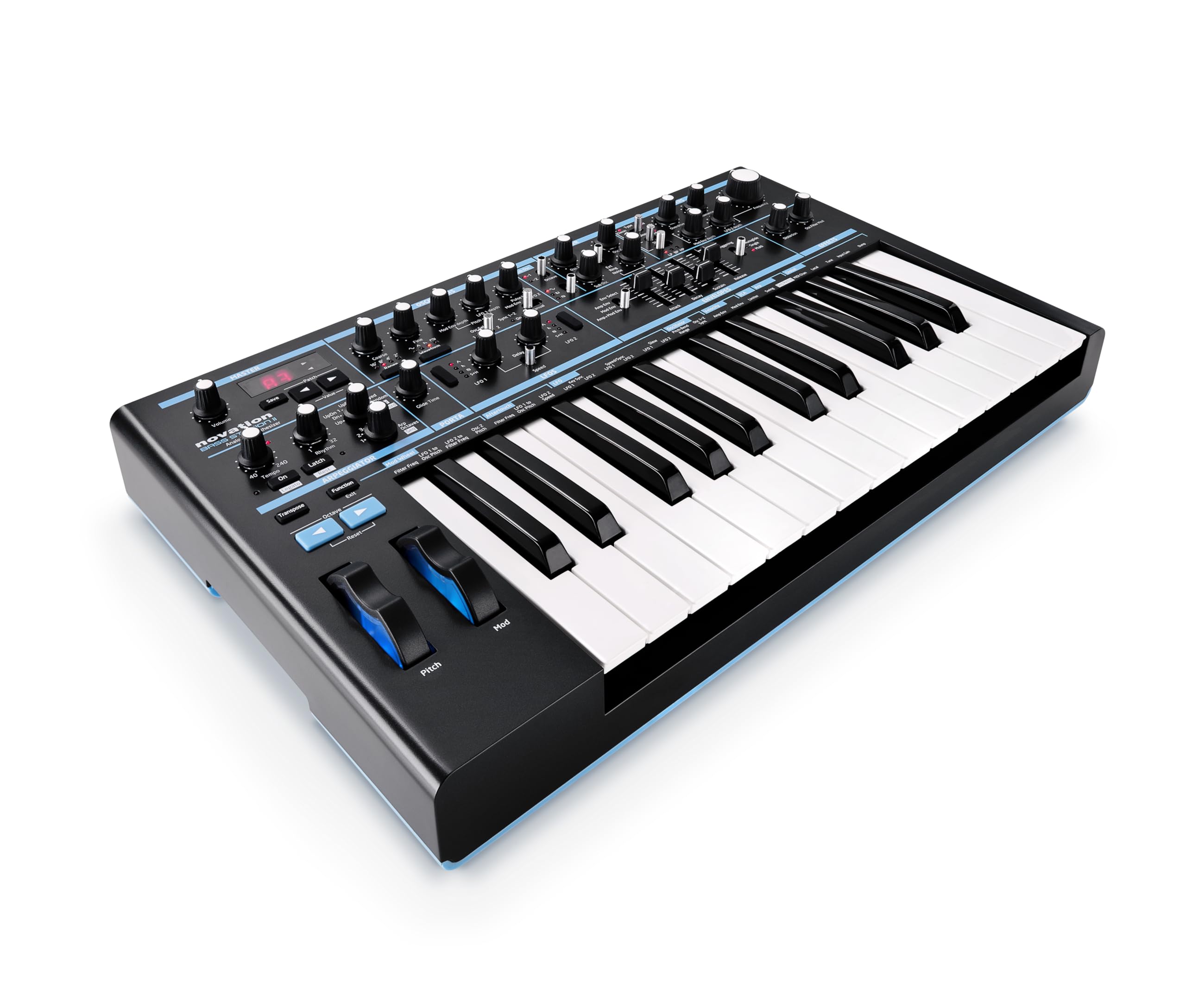
Novation Bass Station II Analogue Monosynth – includes 64 factory patches, pattern-based step sequencer and arpeggiator, two oscillators plus an additional sub oscillator
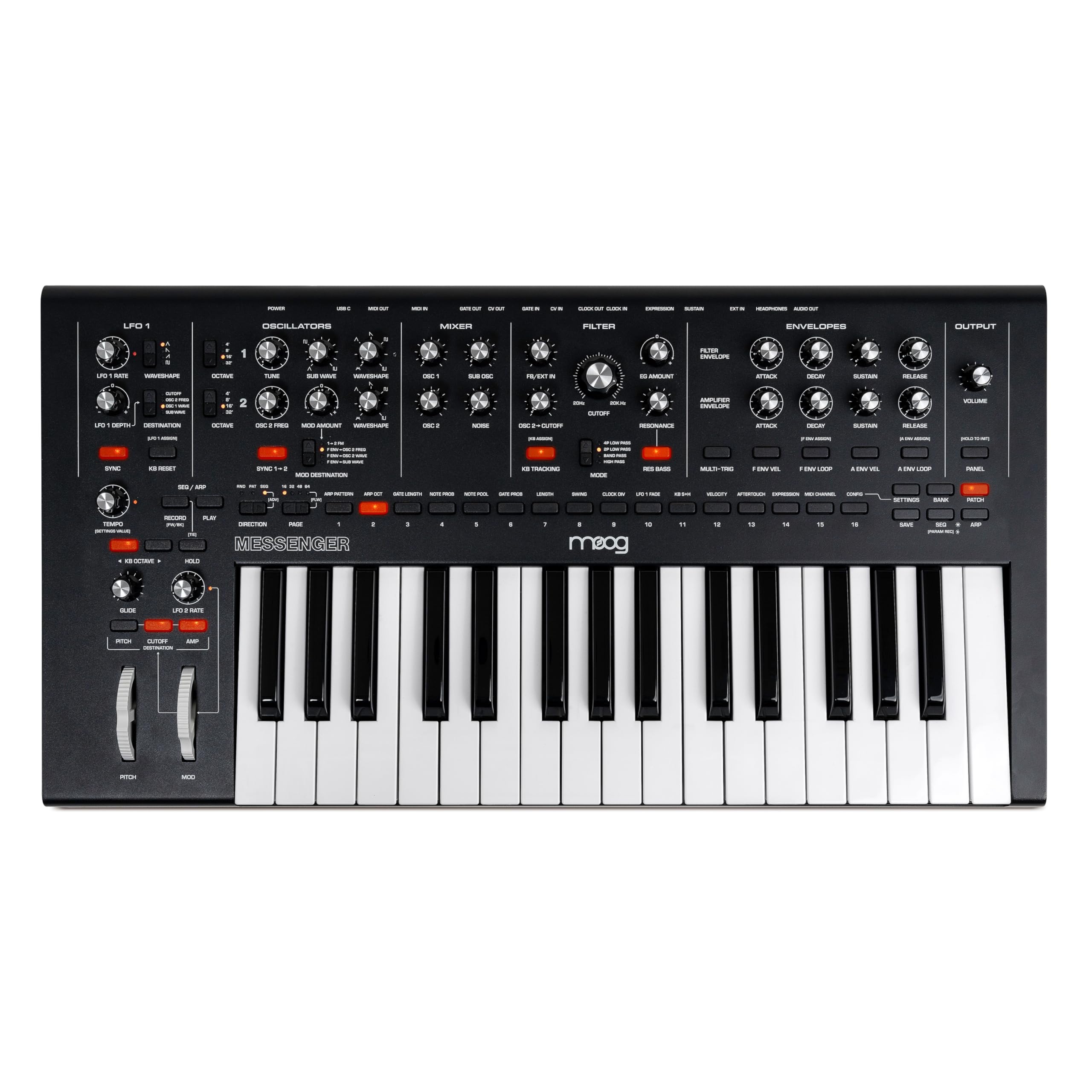
MOOG Messenger - Next-Gen Monophonic Analog Keyboard Synthesizer with 32 Keys, 64-Step Sequencer, 256 Presets and RES BASS Compensation
Still Buy the Original If...
Buy the original if you want the most flexible hands-on analogue workflow, semi-modular patching, and a synth that rewards deep sound design. It’s the best choice for players who want one instrument to cover experimentation, performance, and studio patching.
Love picks like this?
Get weekly product recommendations straight to your inbox.
Curated by Keys & Strings on All The Top Picks
As an Amazon Associate we earn from qualifying purchases.
![Novation Launchkey 61 [MK4] – 61 key Semi-Weighted, USB, MIDI Keyboard Controller with DAW Integration. Chord & Scale Modes, 8 Drum Pads, & Arpeggiator — Includes Software Bundle for Music Production](https://m.media-amazon.com/images/I/61b2BKPXqEL.jpg)
![Novation Launchkey 49 [MK4] – 49 key Semi-Weighted, USB, MIDI Keyboard Controller with DAW Integration. Chord & Scale Modes, 8 Drum Pads, & Arpeggiator — Includes Software Bundle for Music Production](https://m.media-amazon.com/images/I/6167fZ8c9qL.jpg)
